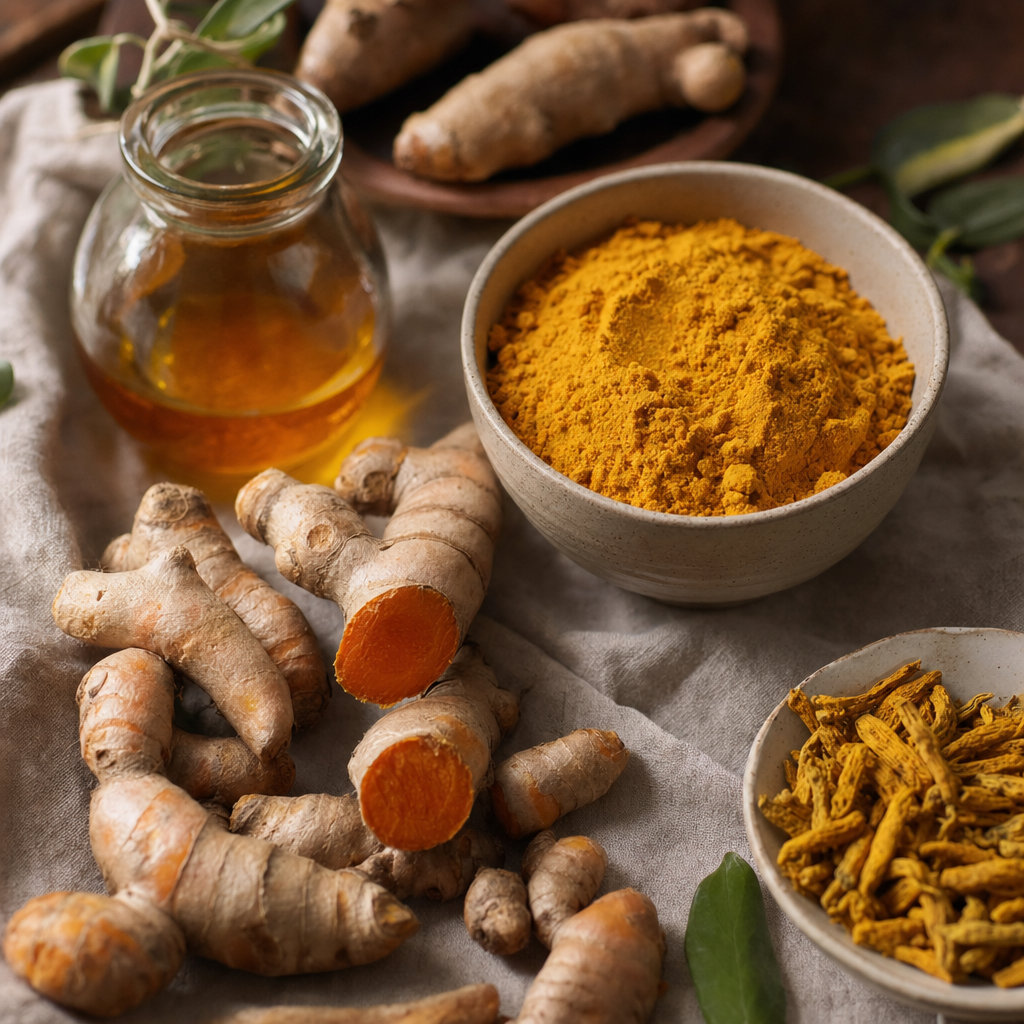
Turmeric: The Golden Root That's Been Supporting Skin Health for Centuries
When you think of turmeric, you might picture golden milk lattes or Indian curries—but this ancient botanical has quietly become one of the most studied natural ingredients in skincare. Known scientifically as Curcuma longa and traditionally called Indian saffron, turmeric has been central to Ayurvedic and traditional Chinese medicine practices for over 4,000 years. Today, modern skincare enthusiasts are rediscovering what herbalists have always known: this humble golden root offers genuine support for clearer, calmer, more radiant skin.
What Is Turmeric?
Turmeric is a rhizome—an underground stem—from the ginger family, native to South Asia. The vibrant golden-yellow colour comes from its most active compound, curcumin, which makes up only 2–8% of the raw root by weight. This is why concentrated turmeric extracts and standardised curcumin formulations have become popular in both wellness and skincare: they deliver a higher dose of the compound that research suggests may offer the most benefit.
When you use whole turmeric powder in skincare (the kind you'd find in your kitchen spice rack), you're working with a gentler, more traditionally aligned preparation. When you use a curcumin-rich extract or serum, you're getting a more concentrated, bioavailable form. Both have their place in a natural skincare ritual—it's about intention and your skin's needs.
Key Properties: Why Turmeric Matters for Skin
Turmeric contains several active compounds beyond curcumin, including volatile oils, polysaccharides, and flavonoids. These work together to give turmeric its traditional reputation as a skin-supporting ingredient.
Traditionally used for calming and soothing. Across Ayurvedic texts and traditional practice, turmeric has been applied topically to support skin comfort and reduce the appearance of redness. Many herbalists recommend it for reactive or sensitised skin.
May help support skin clarity. Some preliminary research suggests that curcumin may help support the skin's natural ability to manage breakout-prone conditions, though higher-quality evidence is still needed. According to NIH NCCIH, initial evidence indicates turmeric might support certain skin health markers, but clinical studies in humans remain limited.
Traditionally valued as an antioxidant. Turmeric's polyphenols and flavonoids have been studied for their antioxidant properties, which may help protect skin from environmental stressors and free radical damage—one reason it's been used in traditional beauty rituals for centuries.
May support skin texture and radiance. Traditional use suggests turmeric can help promote a more even, luminous complexion when used consistently as part of a topical ritual.
Skin Benefits: What the Research and Tradition Tell Us
While turmeric is not a substitute for medical treatment, both traditional use and emerging research offer insight into why this ingredient deserves a place in your natural skincare routine.
Supporting clearer skin. Some studies have explored curcumin's potential to support skin prone to congestion and breakouts. The mechanism is thought to relate to turmeric's traditionally recognised soothing properties, though more human clinical trials are needed to confirm efficacy. If you struggle with occasional breakouts or reactive skin, turmeric may be worth exploring—but consistency and patch-testing are essential.
Calming redness and sensitivity. Turmeric has been traditionally used in Ayurvedic skincare to reduce the appearance of redness and support skin comfort. Many people report that turmeric masks or serums help their skin feel calmer and look more even-toned, particularly when used 2–3 times weekly.
Supporting skin's natural glow. The antioxidant compounds in turmeric are thought to help protect skin from oxidative stress, which can contribute to dullness and premature signs of ageing. Regular use may help your complexion appear brighter and more radiant over time.
Traditionally used for mature skin. In Ayurvedic beauty rituals, turmeric has long been recommended for ageing skin, possibly due to its antioxidant profile and traditional reputation for supporting skin firmness and elasticity.
How to Use Turmeric in Your Skincare Ritual
Turmeric can be incorporated into your routine in several ways, depending on your skin type and preferences. Start low and go slow—turmeric is potent, and patch-testing is non-negotiable.
Turmeric face masks (DIY or commercial). The most traditional method is a paste made from turmeric powder mixed with a carrier like yoghurt, honey, or coconut oil. Apply to clean skin, leave for 10–15 minutes, and rinse gently with warm water. Use 1–2 times weekly. A word of caution: turmeric can temporarily stain lighter skin tones yellow, so be prepared and consider using it in the evening.
Turmeric serums and concentrated extracts. If you prefer a mess-free option, look for serums or oils that feature turmeric extract or curcumin. These are typically more concentrated and absorb quickly. Apply a few drops to damp skin after cleansing, before your moisturiser.
Golden milk as an internal ritual. While this article focuses on topical use, it's worth noting that turmeric consumed as golden milk (turmeric, milk, and warming spices) has been traditionally used to support overall wellness and may indirectly support skin health through systemic antioxidant support. However, topical application is the primary focus for direct skin benefits.
Turmeric in oil infusions. Some practitioners create turmeric-infused oils by steeping turmeric powder in a carrier oil for several weeks, then straining and using as a facial oil. This method is gentler than a mask and can be used daily if your skin tolerates it.
Best Combinations: Turmeric + Other Natural Ingredients
Turmeric works beautifully alongside other skin-supporting botanicals. Here are time-tested pairings:
Turmeric + honey. Honey is traditionally used to support skin hydration and comfort. Together, turmeric and honey create a soothing, nourishing mask ideal for sensitive or reactive skin. Mix 1 teaspoon turmeric powder with 1 tablespoon raw honey, apply, and leave for 15 minutes.
Turmeric + coconut oil. Coconut oil is traditionally valued for its skin-softening properties. This combination works well for dry or mature skin. Mix turmeric powder with virgin coconut oil to create a gentle, hydrating paste.
Turmeric + neem. Both turmeric and neem are traditionally used in Ayurvedic skincare for breakout-prone skin. Combining them in a mask may offer enhanced support for clarity and calm. Use equal parts turmeric and neem powder mixed with a carrier oil or water.
Turmeric + rose water. Rose water is traditionally used to tone and refresh skin. Mixing turmeric with rose water creates a lightweight, hydrating mask that's ideal for sensitive or combination skin types.
Turmeric + aloe vera gel. Aloe vera gel is traditionally used to soothe and cool the skin. This pairing is excellent for irritated or sun-exposed skin, though remember that aloe latex (the yellow substance beneath the plant's skin) should never be used topically or internally without professional guidance—use only the clear inner gel.
Safety, Patch-Testing, and Important Considerations
Turmeric is generally well-tolerated when used topically, but there are important precautions to follow.
Patch-test first. Always perform a patch test before applying turmeric to your full face. Apply a small amount to your inner arm or behind your ear, wait 24 hours, and observe for any redness, itching, or irritation. This is especially important if you have sensitive skin or are using a concentrated extract.
Temporary staining. Turmeric can temporarily stain skin yellow or orange, particularly on lighter skin tones. This is harmless and fades within hours to a day, but it's worth knowing before your next social event. Use turmeric masks in the evening or when you're staying home.
Avoid if you're allergic to ginger. Since turmeric is in the ginger family, people with ginger allergies may react to turmeric. If you have a known ginger allergy, consult a healthcare professional before using turmeric topically.
Internal use considerations. While this article focuses on topical skincare, it's important to note that turmeric supplements and high-dose curcumin preparations are not appropriate for everyone. If you're pregnant, breastfeeding, taking blood thinners, or have liver concerns, speak to a qualified healthcare professional before consuming turmeric internally or using high-bioavailability curcumin formulations.
Concentration matters. According to NIH NCCIH, standard turmeric formulations are generally recognised as safe (GRAS) as a food ingredient in the US. However, high-bioavailability formulations (designed to increase curcumin absorption) may carry moderate safety concerns and warrant professional guidance before use.
Quality and sourcing. Choose organic, ethically sourced turmeric powder to minimise pesticide exposure and support sustainable farming practices. If using a turmeric extract or serum, look for third-party tested products from reputable brands.
Building Your Turmeric Skincare Ritual
Consistency is key when working with turmeric. Most people begin to notice improvements in skin clarity, tone, and radiance after 4–6 weeks of regular use. Here's how to build a simple, effective routine:
Week 1–2: Introduction. Start with a turmeric mask once weekly. Mix 1 teaspoon turmeric powder with 1 tablespoon honey or coconut oil, apply for 10–15 minutes, and rinse gently. Observe how your skin responds.
Week 3–4: Increase frequency. If your skin tolerates it well, increase to twice weekly. You can alternate between a mask and a serum or oil if you've introduced a turmeric product.
Week 5+: Customise. Once your skin has adjusted, you can use turmeric 2–3 times weekly or as part of your daily routine (if using a diluted serum). Listen to your skin and adjust frequency based on how it responds.
Combine with other practices. Turmeric works best as part of a holistic skincare ritual that includes gentle cleansing, hydration, sun protection, and lifestyle support (sleep, hydration, stress management, and a nutrient-rich diet).
The Wisdom Behind the Golden Root
Turmeric's 4,000-year history in traditional medicine isn't accidental. Across cultures and centuries, this golden root has earned its reputation as a skin-supporting botanical. While modern research is still catching up to traditional wisdom, the evidence we do have—combined with countless personal testimonies—suggests that turmeric deserves a place in your natural skincare practice.
The key is patience, consistency, and respect for this ingredient's potency. Turmeric isn't a quick fix; it's a gentle, time-honoured ally that works best when integrated into a mindful, holistic approach to skin health. Whether you're dealing with occasional breakouts, reactive skin, or simply seeking a more radiant complexion, turmeric offers a natural, accessible, and beautifully golden path forward.
Start with a patch test, choose high-quality organic turmeric, and give your skin time to respond. Your clearest, most luminous skin may be just a golden mask away.