Turmeric and Curcumin in Skincare: The Anti-Inflammatory Beauty Science Behind the Golden Glow
If you've scrolled through natural beauty feeds lately, you've probably seen turmeric popping up everywhere—from golden milk lattes to face masks. But beneath the wellness trend lies genuine science. Turmeric, and specifically its active compound curcumin, has emerged as one of the most studied botanicals for skin health, with research suggesting real anti-inflammatory and antioxidant benefits for topical beauty routines.
Why Turmeric Matters for Your Skin
Turmeric (Curcuma longa) has been used in Ayurvedic and traditional medicine for centuries, but modern skincare science is finally catching up. According to NIH NCCIH, initial research indicates turmeric may offer benefits for skin health through its anti-inflammatory and antioxidant properties. Curcumin, the primary active compound in turmeric, works by neutralising free radicals and modulating inflammatory pathways in the skin—the same mechanisms that drive redness, sensitivity, and uneven texture.
The beauty of curcumin lies in its versatility. Whether you're dealing with occasional breakouts, post-inflammatory redness, or general dullness, turmeric addresses the root cause: inflammation. Unlike harsh actives that strip or irritate, curcumin supports your skin's natural healing response, making it ideal for sensitive, reactive, or compromised skin barriers.
The Science of Curcumin for Topical Beauty
Research published in dermatology journals suggests that curcumin's anti-inflammatory action can help reduce redness and calm irritated skin. The compound also demonstrates antioxidant activity, meaning it helps protect skin cells from environmental stressors like pollution and UV exposure. When applied topically, curcumin penetrates the skin's outer layers and works to reduce inflammatory markers—the chemical signals that trigger redness, swelling, and sensitivity.
One key advantage: curcumin is fat-soluble, which means it absorbs best when combined with oils or other lipid-rich carriers. This is why traditional turmeric beauty recipes pair the spice with coconut oil, sesame oil, or milk—these carriers enhance absorption and efficacy.
Golden Glow Anti-Inflammatory Face Mask with Turmeric & Lavender
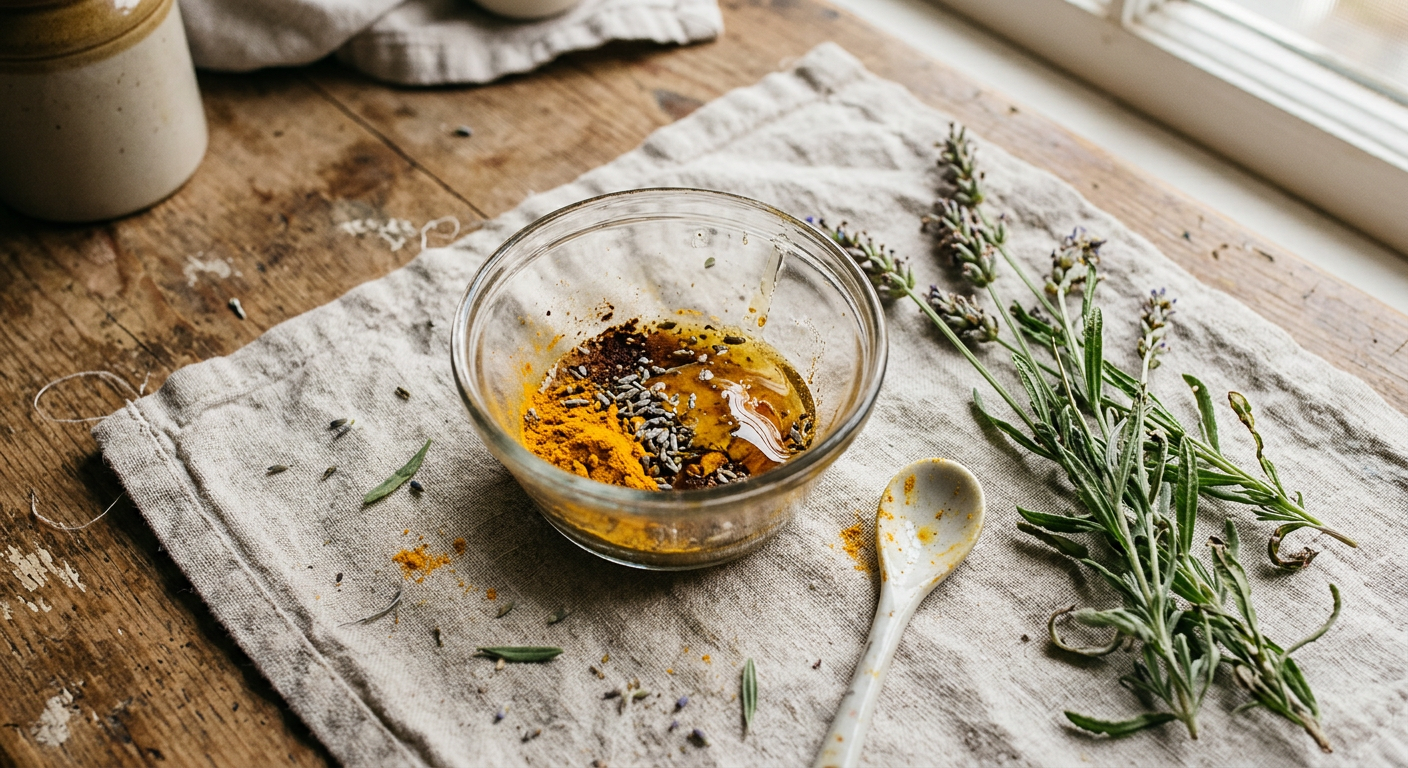
This simple, two-ingredient-plus-carrier mask combines turmeric's anti-inflammatory power with lavender's soothing, skin-calming properties. It's designed for all skin types, though it's especially beneficial for reactive, inflamed, or acne-prone skin.
Ingredients (for one application):
- 1 teaspoon organic turmeric powder
- 3 drops pure lavender essential oil
- 2 tablespoons raw honey (or 1.5 tablespoons coconut oil for very dry skin)
- ½ teaspoon jojoba oil (to aid absorption and prevent staining)
Step-by-Step Method:
1. Prepare your base: In a small glass or ceramic bowl, combine the honey and jojoba oil. Stir gently until well blended.
2. Add turmeric: Sprinkle the turmeric powder into the honey-oil mixture. Stir thoroughly to break up any lumps. The mixture should resemble a smooth paste with no visible powder particles.
3. Incorporate lavender: Add the three drops of lavender essential oil and mix well. The essential oil will distribute more evenly if you stir for 30 seconds. The final consistency should be spreadable but not runny.
4. Perform a patch test: Before applying to your face, test a small amount (about the size of a pea) on your inner forearm or behind your ear. Wait 24 hours and observe for any redness, itching, or irritation. This is non-negotiable, especially if you have sensitive skin or are new to turmeric topicals.
How to Use:
1. Cleanse: Wash your face with a gentle, pH-balanced cleanser and pat dry completely.
2. Apply: Using clean fingertips or a small brush, apply the mask evenly across your face, avoiding the delicate eye area and lips. Aim for a thin, even layer—you don't need to cake it on.
3. Set a timer: Leave the mask on for 10–15 minutes. Do not exceed 20 minutes, as turmeric can stain skin if left too long.
4. Rinse thoroughly: Use lukewarm water and gentle circular motions to rinse away the mask. You may need to rinse 2–3 times to remove all residue. Follow with a splash of cool water to close pores.
5. Moisturise: Apply your regular facial moisturiser or a hydrating serum while skin is still slightly damp to lock in hydration.
6. Frequency: Use this mask 1–2 times per week. If your skin is very sensitive, start with once weekly and increase frequency only if well tolerated.
Lavender's Role in This Recipe
Lavender essential oil brings multiple benefits to this anti-inflammatory blend. According to The Herbal Academy, lavender is traditionally recognised for its calming and skin-soothing properties. When used topically in diluted form (as in this recipe), lavender may help reduce redness, support skin comfort, and add a grounding sensory experience to your routine. The combination of lavender and turmeric creates a synergistic effect—turmeric addresses inflammation at a biochemical level, while lavender's aromatic and topical properties support nervous system calm and skin barrier comfort.
Important Safety & Patch Test Guidance
Patch Test First: Turmeric can stain skin temporarily (a golden-yellow tint that fades within hours to a day). More importantly, some people experience sensitivity to turmeric or lavender essential oil. Always perform a 24-hour patch test on a small, inconspicuous area before applying any new topical remedy to your face.
Turmeric Staining: If staining occurs, it is temporary and harmless. You can minimise staining by:
- Using the smallest effective amount of turmeric
- Not leaving the mask on longer than 15 minutes
- Ensuring the jojoba oil is well distributed (it acts as a barrier)
- Applying sunscreen the next day (turmeric-stained skin may be slightly more photosensitive)
Lavender Essential Oil Safety: Essential oils are concentrated plant extracts and must always be diluted before topical use. Never apply undiluted lavender oil directly to skin. In this recipe, three drops are diluted across two tablespoons of honey and oil, making it safe for facial application. If you have very sensitive skin, reduce to 2 drops or omit the essential oil entirely and use the turmeric-honey-oil base alone.
Avoid If: You are pregnant, breastfeeding, taking blood-thinning medications, or scheduled for surgery within two weeks. Turmeric has mild anticoagulant properties and may interact with certain medications. Consult your healthcare provider before use.
Eye Contact: If the mask accidentally contacts your eyes, rinse immediately with plenty of cool water. Do not use this mask on the eye area intentionally.
Allergic Reactions: Discontinue use immediately if you experience itching, burning, severe redness, swelling, or hives. Rinse thoroughly and seek medical advice if symptoms persist.
Storage & Shelf Life
This mask is best made fresh for each use. If you prefer to batch-prepare, store in a clean glass jar in the refrigerator for up to 3 days. The honey acts as a natural preservative, but the essential oil will begin to oxidise over time, reducing efficacy. Always check for signs of separation, discolouration, or off odours before use.
Maximising Results: A Holistic Approach
While this mask is powerful on its own, turmeric and curcumin work best as part of a complete skincare ritual. Consider pairing this weekly mask with:
- Internal support: A turmeric-based tea or golden milk (consult a practitioner about appropriate dosage for your individual health profile)
- Consistent cleansing: A gentle, non-stripping cleanser twice daily
- Sun protection: Daily broad-spectrum SPF 30+, especially if using turmeric topicals
- Hydration: A lightweight, non-comedogenic moisturiser suited to your skin type
- Sleep and stress: Adequate rest and stress-management practices, as these directly influence skin inflammation
Practitioner Disclaimer
This content is educational and is not intended to diagnose, treat, cure, or prevent any disease. Turmeric and curcumin are generally recognised as safe for topical use at the concentrations in this recipe, but individual responses vary. If you have a diagnosed skin condition (such as eczema, psoriasis, rosacea, or severe acne), are taking medications, or have concerns about your skin health, speak to a qualified dermatologist or healthcare professional before introducing new topical remedies. This mask is a supportive beauty ritual, not a medical treatment.