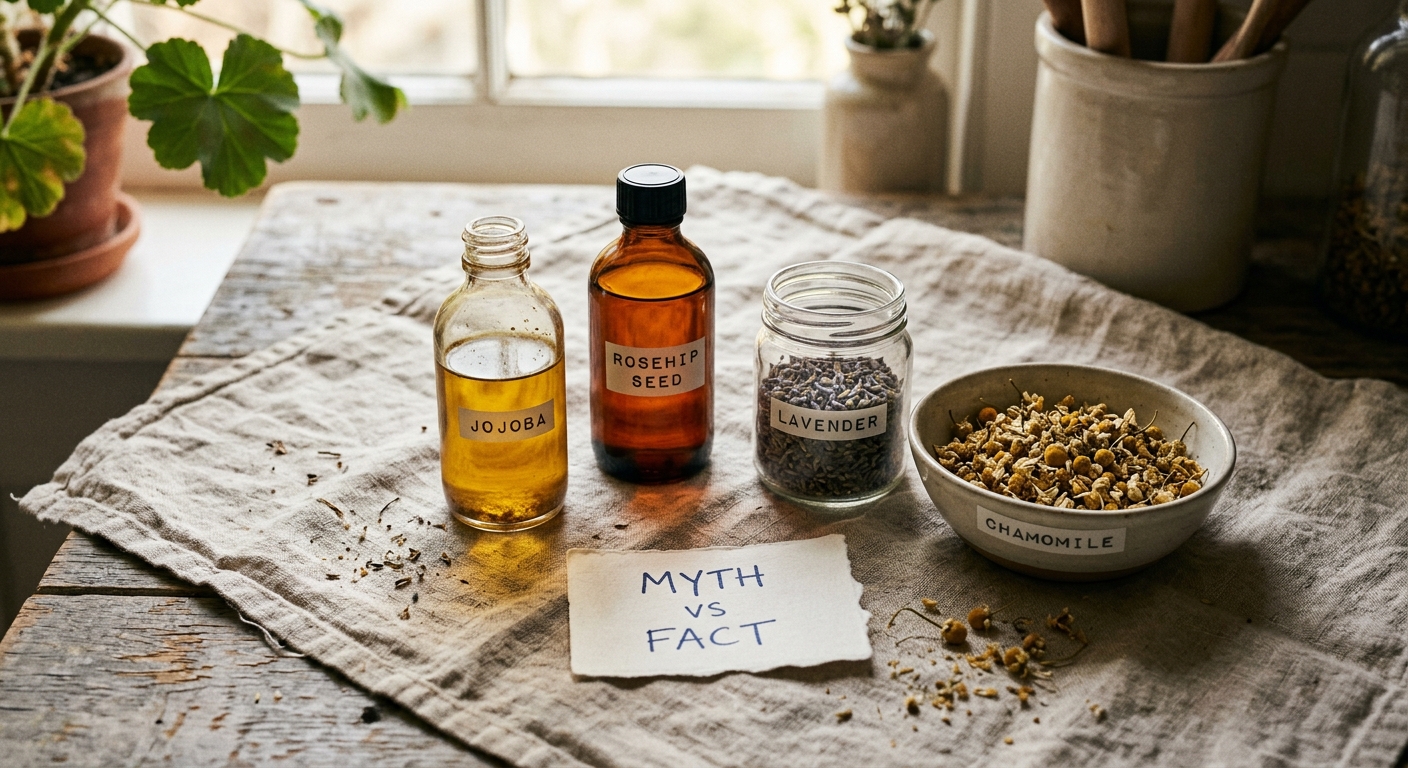
Top 5 NatureGlow Tips for Beginners: Myths Debunked and Facts You Need to Know
If you're new to natural skincare, you've probably encountered plenty of conflicting advice. Some claim that all-natural means all-safe. Others insist that botanical ingredients can't possibly work as well as synthetics. The truth? Natural beauty is nuanced—and it's time to separate the myths from the facts.
This guide cuts through the noise and gives you five essential truths about NatureGlow skincare, along with a simple, beginner-friendly DIY recipe to get you started on the right foot.
Myth #1: "Natural Means It's Always Safe for Your Skin"
The Misconception:
Many people assume that because an ingredient comes from nature, it's automatically gentle and safe for everyone. This is one of the most dangerous myths in natural skincare.
The Fact:
Natural does not equal universally safe. Poison ivy is natural. So is ragweed pollen. Just because something grows in nature doesn't mean it won't trigger an allergic reaction, cause irritation, or interact with your skin condition. Even gentle botanicals like chamomile or rose can cause sensitivity in people with specific allergies. The difference between a remedy and a reaction often comes down to individual skin chemistry, concentration, and patch testing.
What This Means for You:
Always patch test new ingredients on a small area of skin (inner arm or behind the ear) for 24–48 hours before applying to your face. This simple step prevents costly mistakes and protects your skin barrier.
Myth #2: "DIY Natural Skincare Is Always Cheaper Than Store-Bought"
The Misconception:
The assumption that homemade = budget-friendly is tempting, but it's not always true.
The Fact:
Quality botanical ingredients—especially organic, ethically sourced ones—can be expensive. A small bottle of rose hip seed oil or sea buckthorn oil costs more than you might expect. When you factor in the time to source, blend, and store your recipes properly, DIY isn't always the money-saver people imagine. That said, a well-made batch can last months and serve multiple purposes (face, body, hair), which does stretch your investment further than single-use products.
What This Means for You:
DIY natural skincare is worthwhile for the control and customization it offers, not necessarily the cost savings. Buy quality ingredients in bulk when possible, and make recipes that serve multiple purposes to maximize value.
Myth #3: "More Ingredients = Better Results"
The Misconception:
The idea that a complex, multi-ingredient blend is more effective than a simple formula is widespread in both natural and conventional beauty.
The Fact:
Simplicity is often more effective. A well-formulated three-ingredient mask can outperform a ten-ingredient blend because each ingredient has a clear role and doesn't compete for efficacy. Complex formulas also increase the risk of irritation and make it harder to identify which ingredient caused a reaction if one occurs. Dermatologists and skincare chemists often recommend starting with minimal ingredients and adding complexity only when needed.
What This Means for You:
Begin with simple recipes featuring 3–5 key ingredients. Master the basics before experimenting with elaborate blends. This approach also makes patch testing easier and helps you understand what actually works for your skin.
Myth #4: "All Botanical Oils Clog Pores"
The Misconception:
Many people avoid plant oils entirely, believing they'll cause breakouts or congestion.
The Fact:
Not all oils are created equal. The "comedogenic rating" varies widely. Oils like jojoba, rosehip, and squalane (derived from olives) have low comedogenic ratings and won't clog pores for most people. Heavier oils like coconut and mineral oil are more likely to cause congestion in acne-prone skin. The key is matching the oil to your skin type and using it in appropriate amounts. Many people find that the right oil actually balances sebum production and improves skin clarity.
What This Means for You:
Don't dismiss all oils. Instead, choose lightweight, low-comedogenic options and test them on a small patch first. For oily or acne-prone skin, use oils sparingly—a few drops go a long way.
Myth #5: "Natural Skincare Works Overnight"
The Misconception:
People expect immediate results from botanical remedies, the same way they might from prescription treatments.
The Fact:
Natural skincare works on a different timeline. While some ingredients (like caffeine in green tea) offer immediate de-puffing effects, most botanical benefits emerge over weeks and months of consistent use. Your skin cells turn over roughly every 28 days, so meaningful changes in texture, tone, and clarity take at least 4–6 weeks to become visible. This isn't a weakness of natural skincare—it's simply how skin biology works. Patience and consistency are the real active ingredients.
What This Means for You:
Commit to a routine for at least 4–6 weeks before deciding whether it's working. Track your skin with photos taken in the same lighting each week. Natural skincare rewards consistency, not quick fixes.
---
Your Beginner's DIY Recipe: Simple Hydrating Botanical Face Oil
Now that you understand the myths and facts, here's a straightforward recipe to start your NatureGlow journey. This lightweight oil works for most skin types and teaches you the fundamentals of blending.
Skin Benefits
This formula provides gentle hydration, supports skin barrier function, and delivers antioxidants without heaviness. It's suitable for normal to slightly dry skin and can be adapted for oily skin by using fewer drops.
Ingredients (Exact Amounts)
- 30 ml jojoba oil — chosen for its similarity to skin's natural sebum, low comedogenic rating, and ability to balance moisture without clogging
- 10 ml rosehip seed oil — rich in vitamins A and C, supports skin renewal and brightens dull tone
- 5 drops chamomile essential oil — calming and soothing; chosen for its gentle profile and anti-inflammatory properties
- 3 drops lavender essential oil — supports skin comfort and adds a pleasant scent; antimicrobial properties make it a gentle preservative aid
- 1 vitamin E capsule (pierce and squeeze) — natural antioxidant that extends shelf life and protects skin from environmental stress
Why These Ingredients
Jojoba forms the base because it's the most skin-compatible oil and won't turn rancid quickly. Rosehip adds targeted benefits without adding weight. The essential oils are kept minimal (8 drops total in 45 ml) to ensure safety and prevent sensitization. Vitamin E acts as a natural preservative and boosts antioxidant power.
Step-by-Step Method
1. Gather your supplies: Use a clean glass bottle (dark glass is ideal to protect from light degradation), a small funnel, and a pipette or dropper.
2. Measure the base oils: Pour 30 ml jojoba oil into the bottle using the funnel.
3. Add rosehip oil: Carefully add 10 ml rosehip seed oil to the jojoba base.
4. Add essential oils: Drop in 5 drops chamomile and 3 drops lavender essential oil. Stir gently with a clean glass rod or chopstick for 30 seconds.
5. Add vitamin E: Pierce one vitamin E capsule and squeeze the contents into the bottle.
6. Final blend: Close the bottle and shake vigorously for 1 minute to fully combine all ingredients.
7. Label and date: Write the date on the bottle so you can track freshness.
How to Use
Apply 3–4 drops to clean, slightly damp skin. Warm the oil between your palms, then press gently into your face, neck, and décolletage. Use morning and evening, or as a nighttime treatment. For oily skin, use only 2 drops in the evening. For very dry skin, you can layer this oil over a hydrating toner or mist for extra moisture.
Patch Test Warning
Before using this blend on your face, perform a patch test: Apply 2–3 drops to the inner crease of your elbow or behind your ear. Wait 24–48 hours and observe for redness, itching, burning, or any adverse reaction. If you experience any sensitivity, discontinue use immediately. If you have known allergies to chamomile, ragweed, or lavender, skip this recipe or omit the essential oils and use the base oils alone. If you are pregnant, nursing, or taking medications, consult a healthcare provider before using essential oils.
Shelf Life
This blend will remain stable for 3–4 months when stored in a cool, dark place away from direct sunlight and heat. The vitamin E and essential oils act as natural preservatives, but this formula does not contain synthetic preservatives, so it will eventually oxidize. If the oil develops a rancid smell, discard it. Store in a dark glass bottle with a tight-fitting cap to maximize longevity.
Safety Notes
- Essential oils are potent. Never apply undiluted essential oils directly to skin. The dilution in this recipe (approximately 0.3% concentration) is safe for most adults, but essential oils should never be ingested.
- Avoid the eye area. This oil blend is formulated for the face and neck only. Keep away from eyes and mucous membranes.
- Pregnancy and nursing: Consult a qualified healthcare professional before using this blend if you are pregnant or breastfeeding, as some essential oils may not be appropriate during these periods.
- Sensitive or reactive skin: If you have eczema, rosacea, or severe acne, start with the base oils only (jojoba and rosehip) without essential oils, and patch test first.
- Sun exposure: Rosehip oil contains vitamin A, which can increase photosensitivity in some people. If using this blend during the day, apply sunscreen (SPF 30+) afterward.
---
Key Takeaways for Your NatureGlow Journey
Natural skincare is effective, but it requires knowledge, patience, and respect for your skin's individual needs. The myths we've debunked today are common because natural beauty is often oversimplified. The facts—that natural requires testing, that simplicity often wins, and that results take time—are less glamorous but far more reliable.
Start with this beginner's oil blend, patch test thoroughly, and give your skin at least 4–6 weeks to respond. Track your progress with photos. Notice how your skin feels, not just how it looks. And remember: the best skincare routine is the one you'll actually stick with, whether it's entirely DIY or a blend of homemade and store-bought products.
Your skin is unique. Honor that by approaching natural beauty with curiosity, caution, and consistency.