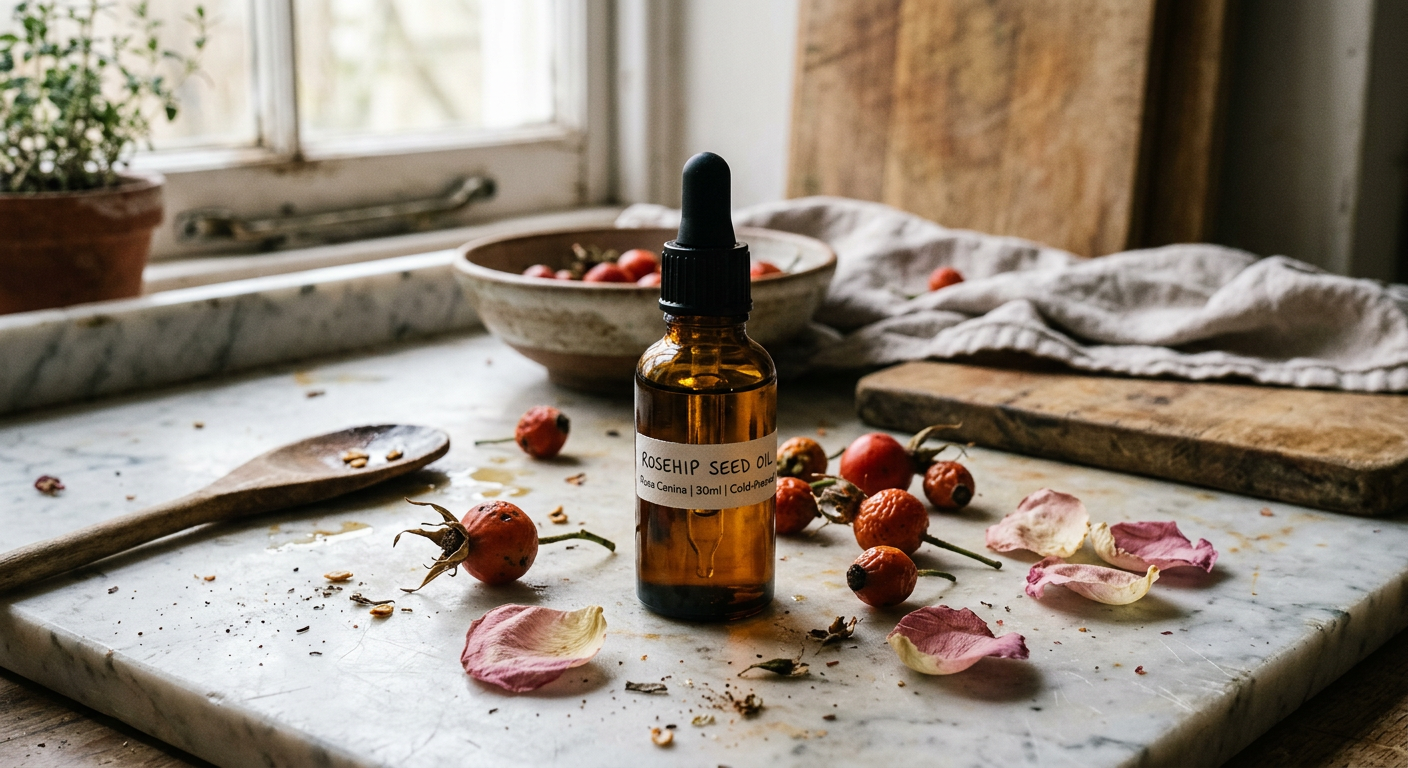
Rosehip Oil for Anti-Aging: The Vitamin C Serum Your Skin Needs
Natural anti-aging skincare doesn't require laboratory formulations or synthetic actives. Two botanical powerhouses—rosehip and sea buckthorn—deliver concentrated vitamin C and regenerative compounds that work with your skin's natural renewal cycle. This DIY rosehip oil serum combines both herbs to create a lightweight, nutrient-dense treatment that addresses fine lines, uneven texture, and loss of radiance without harsh chemicals or irritants.
Why Rosehip and Sea Buckthorn for Anti-Aging?
Rosehip (Rosa canina) has been used in traditional medicine for centuries, particularly in South American and European skincare practices. The seed oil is rich in vitamin C, vitamin A (retinol), and essential fatty acids—compounds that support collagen production and skin barrier repair. Sea buckthorn (Hippophae rhamnoides), a nutrient-dense berry native to Asia and Northern Europe, contains even higher concentrations of vitamin C alongside carotenoids and omega fatty acids. Together, these two herbs create a synergistic anti-aging formula that targets multiple signs of aging: fine lines, dullness, uneven tone, and loss of elasticity.
The Herbal Academy notes that vitamin C-rich botanicals support skin's natural collagen synthesis and protect against oxidative stress—two critical factors in visible aging. When combined in a carrier oil base, rosehip and sea buckthorn deliver these actives in a form your skin can absorb and utilize effectively.
Skin Benefits of This Serum
Brightens Dull, Tired Skin
Vitamin C is a natural brightening agent. Both rosehip and sea buckthorn contain this nutrient in bioavailable forms that gradually lighten hyperpigmentation, reduce the appearance of age spots, and restore luminosity to mature or sun-exposed skin.
Supports Collagen and Elasticity
Vitamin A (retinol) in rosehip stimulates fibroblast activity—the cells responsible for collagen production. Regular use can soften fine lines around the eyes and mouth, and improve overall skin firmness.
Reduces Inflammation and Redness
Sea buckthorn's high carotenoid content (beta-carotene, lycopene) calms reactive skin and reduces the appearance of redness, making this serum suitable for sensitive, mature, or compromised skin barriers.
Nourishes and Repairs the Skin Barrier
The omega-3 and omega-6 fatty acids in both oils strengthen the lipid barrier, reducing transepidermal water loss (TEWL) and improving hydration retention—essential for plump, youthful-looking skin.
Protects Against Environmental Damage
The antioxidant profile (vitamin C, vitamin E, carotenoids) neutralizes free radicals generated by UV exposure and pollution, slowing visible aging and preventing further damage.
Ingredients & Exact Amounts
Base Oils (Choose One or Combine)
- 30 ml rosehip seed oil (cold-pressed, organic)
- 20 ml sea buckthorn seed oil (cold-pressed, organic)
- 10 ml jojoba oil
Why These Amounts & Choices:
Rosehip and sea buckthorn are potent—using them at full strength can be too rich for some skin types. Jojoba oil acts as a lightweight carrier that mimics skin's natural sebum, improving absorption and preventing the serum from feeling greasy. The 30:20:10 ratio balances nutrient density with wearability. Jojoba's non-comedogenic profile makes it ideal for all skin types, including acne-prone skin.
Optional Antioxidant Boosters (Add Only If You Have Them)
- 2–3 drops vitamin E oil (mixed tocopherols, not synthetic dl-alpha-tocopherol)
- 1 drop carrot seed essential oil (optional; adds additional carotenoids and a subtle earthy scent)
Why These Additions:
Vitamin E extends shelf life and amplifies antioxidant protection. Carrot seed oil is not essential but deepens the formula's anti-aging profile. Both are optional—the base formula is complete without them.
What NOT to Add:
Do not add water, hydrosols, or glycerin to this formula. Oil and water do not mix; adding water creates a breeding ground for bacteria and mold. This is an oil serum, not an emulsion.
Step-by-Step Method
Step 1: Gather Your Supplies
You will need:
- A clean, dark glass bottle (30–50 ml amber or cobalt glass with a dropper top)
- A small glass bowl or beaker
- A glass stirring rod or clean wooden spoon
- Labels and a permanent marker
- Cheesecloth or a fine mesh strainer (optional, for filtering)
Step 2: Measure and Combine Base Oils
Pour 30 ml rosehip seed oil into your glass bowl. Add 20 ml sea buckthorn seed oil. Stir gently to combine. The mixture will be a warm golden-orange color—this is the natural pigment of sea buckthorn's carotenoids.
Step 3: Add Jojoba Oil
Measure 10 ml jojoba oil and add it to the bowl. Stir until fully blended. The serum should feel lightweight and absorb quickly when tested on the back of your hand.
Step 4: Add Optional Boosters (If Using)
If you are adding vitamin E oil, pierce a capsule or use a dropper to add 2–3 drops. If using carrot seed essential oil, add 1 drop only—this oil is potent and can irritate skin if overused. Stir thoroughly to distribute evenly.
Step 5: Bottle and Label
Using a clean funnel (or carefully pouring), transfer the serum into your dark glass bottle. Avoid plastic bottles; the oils can degrade plastic over time. Seal tightly with the dropper cap.
Label your bottle with:
- "Rosehip & Sea Buckthorn Anti-Aging Serum"
- Date made
- Expiration date (see Shelf Life section below)
- "For external use only. Patch test before use."
Step 6: Store Properly
Store in a cool, dark place—a bathroom cabinet away from direct sunlight, or a bedroom drawer. Do not store in the shower or near heat sources. Proper storage extends shelf life significantly.
How to Use This Serum
Frequency: 1–2 times daily (morning and/or evening)
Amount: 2–3 drops per application
Application Method:
1. Cleanse your face with a gentle, pH-balanced cleanser and pat skin dry (damp skin is fine; do not over-dry).
2. Dispense 2–3 drops of serum onto your fingertips or directly onto your face.
3. Gently press and smooth the serum across your face, neck, and décolletage using upward, lifting motions. Avoid the eye area initially (see below for eye use).
4. Allow 1–2 minutes for absorption before applying moisturizer or sunscreen.
5. If using in the morning, always follow with a broad-spectrum SPF 30+ sunscreen—vitamin C and retinol increase sun sensitivity.
Eye Area Use:
This serum is safe for the delicate eye area, but use sparingly. Apply 1 drop to each eye area using your ring finger (which applies the least pressure). The ring finger is the weakest finger and naturally applies gentler pressure to this sensitive zone.
Layering with Other Products:
Apply this serum to clean skin before heavier creams or oils. If you use other actives (vitamin C serums, niacinamide, AHAs), introduce this serum gradually and use on alternate days initially to avoid over-exfoliation or irritation.
Expected Timeline:
Visible improvements in skin texture and brightness typically appear within 2–4 weeks of consistent use. Fine lines and hyperpigmentation may take 6–8 weeks to show noticeable softening. Consistency is key; sporadic use will not deliver results.
Patch Test Warning: Essential Before First Use
Before applying this serum to your face, you must perform a patch test. This step is non-negotiable, even if you have used rosehip or sea buckthorn products before.
How to Patch Test:
1. Choose a small, inconspicuous area of skin—the inner forearm, behind the ear, or the inner elbow are ideal.
2. Cleanse the area and pat dry.
3. Apply 2–3 drops of the serum to the test area.
4. Leave it on for 24 hours without washing the area or applying other products.
5. Monitor for any signs of irritation: redness, itching, burning, swelling, or a rash.
If You Experience Any Irritation:
Discontinue use immediately. Wash the area gently with cool water and a mild cleanser. Apply a fragrance-free moisturizer if needed. Do not apply this serum to your face.
If No Irritation Occurs:
You can safely proceed to facial application. Start with 1–2 drops, 2–3 times per week, and gradually increase frequency as your skin acclimates.
Why Patch Testing Matters:
Even natural oils can trigger reactions in sensitive individuals. Allergies to rosehip or sea buckthorn, while rare, do occur. Some people experience photosensitivity when using vitamin A-rich oils, particularly if they have very fair or reactive skin. Patch testing identifies these issues before they affect your entire face.
Shelf Life and Storage
Expected Shelf Life: 6–9 months when stored correctly
Factors That Extend Shelf Life:
- Dark glass bottles (amber or cobalt) block light degradation
- Cool storage temperatures (60–70°F / 15–21°C is ideal)
- Airtight sealing—ensure your dropper cap is tight
- Minimal air exposure—do not leave the bottle open
Factors That Shorten Shelf Life:
- Exposure to direct sunlight or heat
- Storage in plastic bottles
- Repeated opening and closing (introduces oxygen)
- Bathroom storage with high humidity and temperature fluctuations
Signs Your Serum Has Expired:
- Rancid or off smell (oxidized oils smell musty or unpleasant)
- Separation or cloudiness that does not resolve with gentle shaking
- Thickening or change in texture
- Discoloration (darkening beyond the natural golden-orange hue)
If any of these signs appear, discard the serum and make a fresh batch. Expired oils lose potency and may cause skin irritation.
Extending Shelf Life:
Add 1–2 drops of vitamin E oil (mixed tocopherols) to your finished serum. Vitamin E is a natural preservative that slows oxidation. Alternatively, store your serum in the refrigerator (not freezer) to extend shelf life to 12 months. Cold storage does not harm the serum; simply allow it to warm to room temperature before use.
Safety Notes and Contraindications
For Most Skin Types:
This serum is gentle and suitable for all skin types, including sensitive, mature, acne-prone, and combination skin. However, individual responses vary.
Oily or Acne-Prone Skin:
If you have very oily skin, start with 1 drop, 2–3 times per week. The jojoba oil base is non-comedogenic, but some individuals find any oil serum too heavy. You may prefer to use this serum only at night or reduce frequency. Alternatively, dilute the serum further by mixing 1 part serum with 1 part lightweight hydrosol (rose water or witch hazel) in a separate container—though this reduces shelf life to 3–4 weeks and requires refrigeration.
Sensitive or Reactive Skin:
If you have conditions like rosacea, eczema, or dermatitis, patch test for a full 48 hours before facial use. The vitamin A content in rosehip can cause mild irritation or redness in very sensitive individuals during the first 1–2 weeks of use. This is normal and usually subsides as skin acclimates. If irritation persists beyond 2 weeks, discontinue use.
Pregnancy and Nursing:
Rosehip and sea buckthorn are considered safe for topical use during pregnancy and nursing. However, consult your midwife or healthcare provider before introducing new skincare products. Do not ingest this serum.
Photosensitivity:
Vitamin A and vitamin C can increase sun sensitivity. Always use broad-spectrum SPF 30+ sunscreen during the day if you use this serum in the morning. If you have a history of photosensitivity or are taking photosensitizing medications (certain antibiotics, NSAIDs), use this serum only at night.
Medication Interactions:
If you are using prescription retinoids (tretinoin, adapalene) or other topical medications, introduce this serum gradually and on alternate days. Combining multiple vitamin A sources can cause irritation. Consult your dermatologist before use.
Allergies:
True allergies to rosehip or sea buckthorn are rare but possible. If you have known allergies to plants in the Rosaceae family (roses, apples, almonds, strawberries) or Elaeagnaceae family (sea buckthorn relatives), patch test with extra caution or avoid this serum entirely.
Not for Internal Use:
This serum is formulated for topical application only. Do not ingest it. While rosehip and sea buckthorn are safe herbs when taken internally as teas or supplements, this particular oil formulation is not designed for consumption.
Keep Away from Eyes:
While this serum is safe for the eye area in small amounts, avoid direct contact with the eyes themselves. If the serum enters your eye, rinse immediately with cool water for 5–10 minutes.
Storage Away from Children and Pets:
Store this serum in a secure location away from children and pets. While topical application is safe, ingestion of large amounts of concentrated oils can cause gastrointestinal upset.
Troubleshooting Common Issues
Serum Feels Too Heavy or Greasy
Reduce the amount of rosehip and sea buckthorn oils, or increase the jojoba oil ratio. Try using 25 ml rosehip, 15 ml sea buckthorn, and 15 ml jojoba for a lighter texture. Alternatively, apply fewer drops or use only at night.
Serum Causes Breakouts
This is typically a sign of over-application or incompatibility with your skin type. Reduce frequency to 1–2 times per week, or use only at night. If breakouts persist after 2 weeks, discontinue use. Not all oils work for all skin types.
Serum Separates or Looks Cloudy
Oil separation is normal and not a sign of spoilage. Simply shake gently before each use. Cloudiness may indicate water contamination or very cold storage—allow the bottle to warm to room temperature and shake again. If cloudiness persists and is accompanied by an off smell, discard the serum.
Serum Smells Rancid
This indicates oxidation and spoilage. Discard immediately. Store your next batch in a cooler location or add vitamin E oil to extend shelf life.
Skin Feels Irritated or Red After Use
This may be normal adjustment (retinization) as your skin acclimates to vitamin A. Reduce frequency to 1–2 times per week and use only at night. If irritation worsens or persists beyond 2 weeks, discontinue use and consult a dermatologist.
Final Thoughts: Consistency and Realistic Expectations
This DIY rosehip and sea buckthorn serum is a powerful anti-aging tool, but it is not a miracle cure. Natural skincare works gradually, supporting your skin's innate renewal processes rather than forcing dramatic changes. Visible improvements in fine lines, texture, and radiance typically emerge over 4–8 weeks of consistent use.
The most important factors are consistency, sun protection, and realistic expectations. Use this serum daily, protect your skin from UV damage with sunscreen, and give your skin time to respond. Combined with a clean diet, adequate hydration, quality sleep, and stress management, this serum becomes part of a holistic anti-aging ritual that honors your skin's natural beauty.