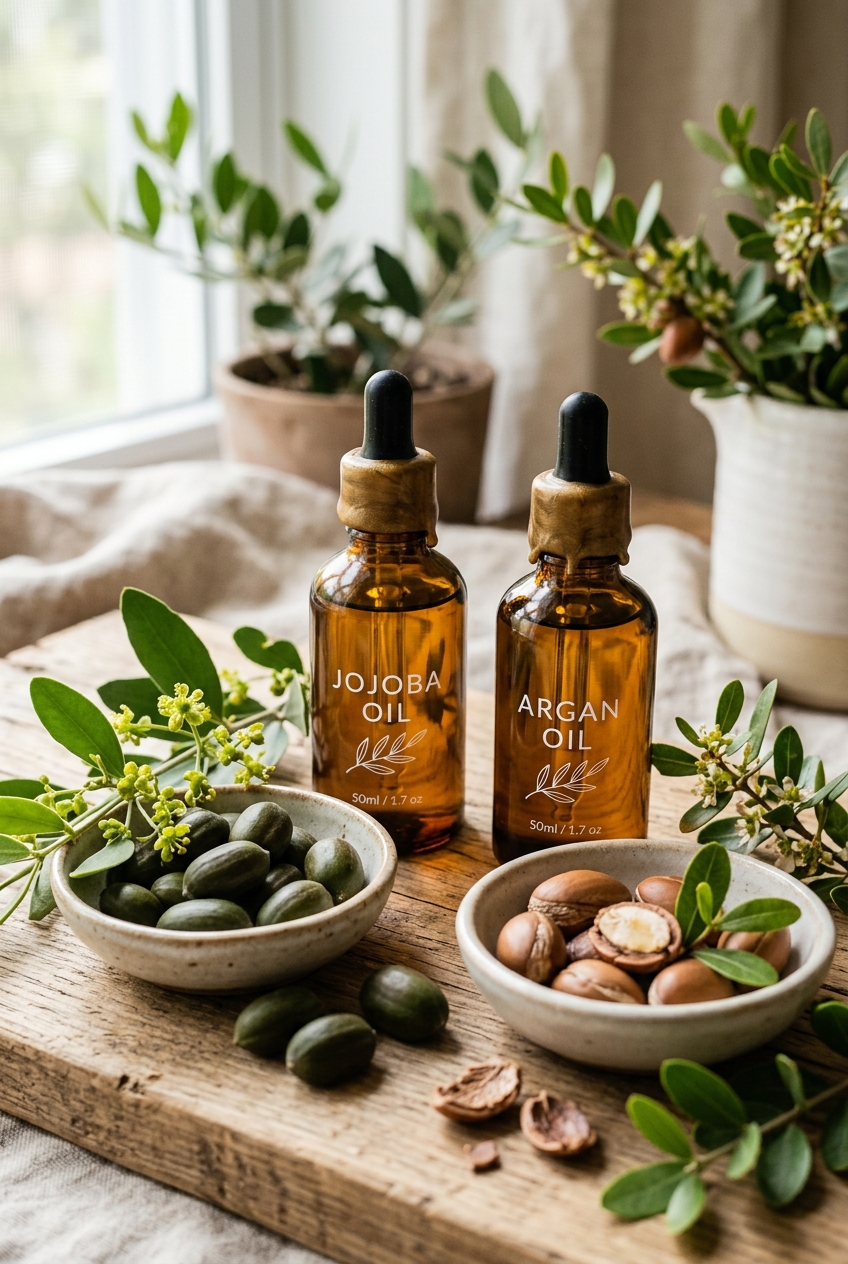
Jojoba Oil vs Argan Oil: Which One Is Right for Your Skin Type?
When it comes to natural facial oils, jojoba and argan are two of the most celebrated ingredients in clean beauty routines. But they're not interchangeable—and choosing the wrong one for your skin type can mean the difference between a glowing complexion and frustration. Let's break down how these oils work, who they're best for, and how to use them.
What Makes Jojoba Oil Special
Jojoba oil comes from the seeds of the jojoba plant, native to the American Southwest. What makes it unique is its molecular structure: it's remarkably similar to your skin's natural sebum, which means it absorbs quickly and won't leave a greasy residue.
Jojoba is lightweight, non-comedogenic (won't clog pores), and rich in vitamin E and B-complex vitamins. It's also naturally antimicrobial and anti-inflammatory, making it particularly effective for calming irritated skin.
Best for: Oily, combination, and acne-prone skin types. Because jojoba mimics sebum, it actually signals your skin that it's hydrated—which can help regulate oil production over time.
What Makes Argan Oil Powerful
Argan oil is extracted from the kernels of the argan tree, found primarily in Morocco. It's denser and richer than jojoba, with a higher concentration of fatty acids, antioxidants, and vitamin E.
Argan oil absorbs more slowly and leaves a subtle nourishing layer on the skin. It's excellent for addressing dryness, fine lines, and loss of elasticity. Its antioxidant profile makes it particularly good for anti-aging routines.
Best for: Dry, mature, and sensitive skin types. It's also beneficial for those with eczema or psoriasis, as its anti-inflammatory properties can soothe compromised skin barriers.
Side-by-Side Comparison
| Feature | Jojoba | Argan |
|---------|--------|-------|
| Absorption | Fast | Slow |
| Weight | Lightweight | Rich/dense |
| Comedogenic Rating | 2 (very low) | 0 (non-comedogenic) |
| Best for Oily Skin | Excellent | Not ideal |
| Best for Dry Skin | Good | Excellent |
| Vitamin E Content | Moderate | High |
| Price Point | Affordable | Premium |
How to Choose Based on Your Skin Type
Oily Skin: Jojoba is your match. Use 2–3 drops on damp skin as a lightweight moisturizer. Its sebum-mimicking properties help prevent your skin from overproducing oil.
Dry Skin: Argan oil will serve you better. Apply to damp skin and let it sink in for deeper hydration. You can also mix it with a hydrating serum for extra nourishment.
Combination Skin: You might benefit from both. Use jojoba on your T-zone and argan on drier areas like cheeks and around the eyes.
Sensitive or Compromised Skin: Start with jojoba if you're new to oils—it's gentler and less likely to trigger reactions. If your barrier is severely compromised, argan's richer antioxidant profile may be more supportive.
Mature Skin: Argan wins here. Its higher vitamin E and fatty acid content makes it ideal for addressing fine lines and supporting skin elasticity.
DIY Beauty Recipe: Balancing Oil Serum for All Skin Types
This recipe blends both oils to create a versatile serum that works across skin types. The ratio allows jojoba's lightweight absorption to balance argan's nourishing richness.
Ingredients:
- 1 tablespoon jojoba oil
- 1 tablespoon argan oil
- 3 drops frankincense essential oil
- 2 drops geranium essential oil
- 1 small glass bottle with dropper (10 ml or larger)
Instructions:
1. Prepare your container. Sterilize your glass bottle and dropper by rinsing with hot water and allowing to air dry completely.
2. Measure the base oils. Pour 1 tablespoon of jojoba oil into the bottle first, followed by 1 tablespoon of argan oil.
3. Add essential oils. Carefully add 3 drops of frankincense essential oil and 2 drops of geranium essential oil. Frankincense supports skin renewal and has grounding properties; geranium balances oil production and soothes irritation.
4. Seal and shake. Cap the bottle tightly and shake vigorously for 30 seconds to fully combine the oils and essential oils.
5. Label and store. Write the date on your bottle. Store in a cool, dark place away from direct sunlight. This serum will keep for up to 3 months.
How to Use:
Apply 2–3 drops to clean, damp skin each evening. Gently press into your face and neck using your fingertips. For oily skin, use only on drier areas or reduce to 1–2 drops. For dry skin, you can use morning and night.
Note: Always patch test new oils on a small area of skin first, especially if you have sensitive skin or are prone to reactions. If irritation occurs, discontinue use.
Storage and Shelf Life
Both jojoba and argan oils are stable, but they do oxidize over time. Store your DIY serum in a dark glass bottle away from heat and direct light. Properly stored, it will last 3 months. If your oil develops a rancid smell or changes color significantly, it's time to make a fresh batch.
Final Thoughts
Neither oil is universally "better"—it comes down to what your skin needs right now. Jojoba is the smart choice for oily and combination skin, while argan excels for dry and mature complexions. And if you want the best of both worlds, this balancing serum gives you the lightweight absorption of jojoba with the nourishing power of argan.
Start with whichever matches your primary skin concern, give it 2–3 weeks of consistent use, and pay attention to how your skin responds. Clean beauty is about listening to your skin and choosing ingredients that support its unique needs.