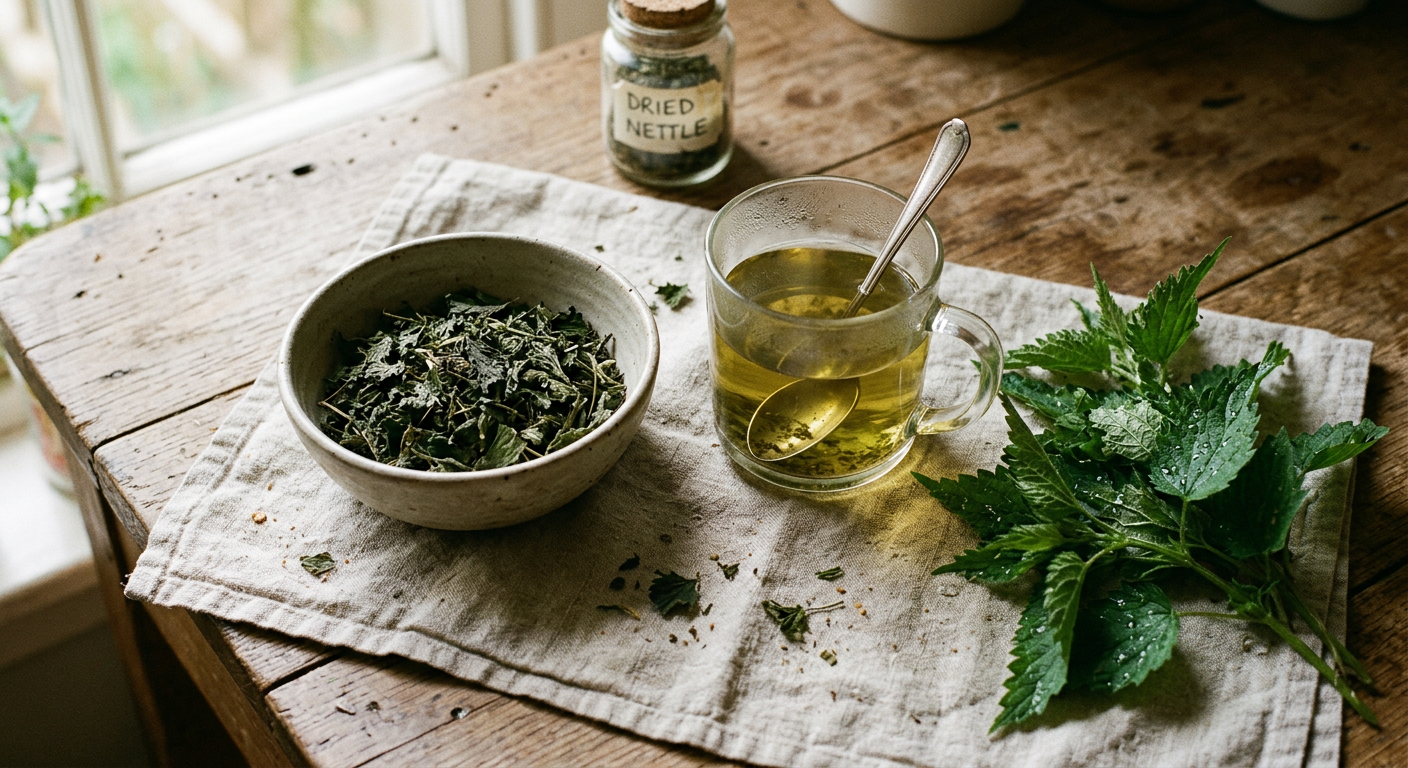
Ingredient Spotlight: Stinging Nettle — Nature's Golden Wellness Wonder
When you think of glowing skin, you might imagine expensive serums and clinical treatments. But some of the most powerful beauty allies grow wild in gardens and meadows—and stinging nettle is one of them. This humble plant, scientifically known as Urtica dioica, has been treasured across traditional medicine systems for centuries, and modern skincare is finally catching up to what herbalists have always known: nettle leaf is a nutrient-dense powerhouse that can transform your complexion from the inside out.
What Is Stinging Nettle?
Stinging nettle, also called common nettle, is a perennial plant native to Europe, western Asia, and North Africa, though it now grows across temperate regions worldwide. The plant is instantly recognizable by its heart-shaped leaves covered in fine hairs that deliver a mild sting when touched—hence the name. Despite this prickly reputation, once the plant is dried or processed, those hairs lose their sting, and what remains is one of nature's most nutrient-rich botanicals.
For skincare and wellness purposes, nettle leaf (the aerial parts of the plant) is what we use. It's traditionally been brewed into teas, infused into oils, and incorporated into topical preparations. The root, by contrast, is studied primarily for urinary and prostate health—a different application entirely. When we talk about nettle for skin, we're focusing on the leaf.
Key Properties and Nutritional Profile
What makes stinging nettle so valuable for skin health is its exceptional nutrient density. Nettle leaf contains:
- Minerals: calcium, magnesium, iron, selenium, and zinc—all essential for skin repair and collagen synthesis
- Vitamins: A, C, D, and K, which support skin barrier function and antioxidant protection
- Flavonoids and polyphenols: plant compounds with anti-inflammatory and antioxidant properties
- Chlorophyll: the pigment that gives nettle its green colour and contributes to its detoxifying reputation
- Silica: a trace mineral traditionally associated with skin elasticity and hair strength
This nutritional profile means that nettle doesn't just sit on your skin—it nourishes it at a deeper level, whether consumed as a tea or applied topically.
Traditional Uses and Modern Understanding
Across European herbalism, Traditional Chinese Medicine, and Ayurveda, stinging nettle has been valued for supporting skin clarity, reducing inflammation, and promoting overall vitality. The European Medicines Agency (EMA) recognizes nettle leaf as a traditional herbal remedy for symptomatic relief of minor articular pain when applied topically, and acknowledges its traditional use for supporting lower urinary tract health—though that's outside our skincare focus.
For skin specifically, nettle has been traditionally used to:
- Support the body's natural detoxification processes, which may help reduce congestion and breakouts
- Calm inflammatory skin conditions like eczema and psoriasis
- Strengthen the skin barrier through its mineral and silica content
- Promote a clearer, more even complexion
- Support scalp health and reduce dandruff when used in hair rinses
Modern research is still emerging, but preliminary studies suggest that nettle's flavonoid and polyphenol content does indeed have anti-inflammatory properties, which aligns with its traditional reputation.
Skin Benefits of Stinging Nettle
1. Anti-Inflammatory Support
Inflammation is at the root of many skin concerns—acne, rosacea, eczema, and general sensitivity all involve some degree of inflammatory response. Nettle leaf's flavonoid content may help calm this inflammation, whether you're experiencing a breakout or dealing with chronic skin conditions. When consumed as a tea or infused into a topical preparation, nettle may help reduce redness and soothe irritated skin.
2. Mineral-Rich Nourishment
Your skin barrier needs minerals to function optimally. Zinc supports sebum regulation and wound healing. Selenium acts as an antioxidant. Magnesium supports skin cell turnover. By consuming nettle tea or using nettle-infused oils topically, you're delivering these nutrients directly to where your skin needs them most.
3. Detoxification Support
While "detox" is an overused term in wellness, nettle does have a legitimate traditional reputation as a plant that supports the body's natural elimination processes. This may indirectly benefit skin by reducing the toxic burden that can manifest as congestion or breakouts. The chlorophyll content is particularly associated with this cleansing action.
4. Antioxidant Protection
Free radicals from UV exposure, pollution, and stress damage skin cells and accelerate aging. Nettle's polyphenols and vitamins A and C work as antioxidants, helping to neutralize these free radicals and protect your skin from premature aging.
5. Scalp and Hair Health
Beyond facial skin, nettle has a strong traditional reputation for supporting scalp health and promoting stronger, shinier hair. A nettle leaf rinse or infused oil can help reduce dandruff, calm scalp inflammation, and nourish hair follicles.
How to Use Stinging Nettle for Skin
Internal Use: Nettle Leaf Tea
The most accessible way to benefit from nettle is as a daily tea. This allows you to absorb its minerals and nutrients systemically, supporting skin health from within.
How to prepare:
- Use 1 teaspoon of dried nettle leaf per 8 oz of hot water
- Steep for 5–10 minutes (longer steeping extracts more minerals)
- Strain and drink 1–3 cups daily
- Nettle has a mild, slightly grassy flavour—you can blend it with other herbs like peppermint or chamomile for better taste
Timing: Drink nettle tea consistently for at least 4–6 weeks to notice changes in skin clarity and radiance. This is a slow-acting, nourishing approach rather than a quick fix.
Topical Use: Nettle-Infused Oil
Nettle-infused oil can be applied directly to the skin or added to your existing moisturizer for an extra nutrient boost.
How to make it:
- Fill a clean glass jar with dried nettle leaf
- Cover completely with a carrier oil (jojoba, sweet almond, or coconut oil work well)
- Seal and let infuse in a cool, dark place for 2–4 weeks, shaking occasionally
- Strain through cheesecloth and store in a dark glass bottle
How to use:
- Apply a few drops to clean, damp skin as a facial oil
- Mix into your moisturizer for added nourishment
- Use on the scalp as a hair treatment before shampooing
Topical Use: Nettle Tea as a Rinse or Compress
Brewed nettle tea can be used as a facial rinse, compress, or toner.
How to use:
- Brew a strong nettle tea (use double the leaf, steep for 10 minutes)
- Let it cool completely
- Use as a rinse after cleansing, or soak a clean cloth and apply as a 10-minute compress to irritated areas
- Store in the refrigerator for up to 5 days
Best Combinations: Nettle + Other Botanicals
Stinging nettle works beautifully alongside other skin-supporting herbs and ingredients. Here are some synergistic pairings:
Nettle + Chamomile
Both are anti-inflammatory and soothing. Brew them together as a tea for calm, clear skin, or use the cooled tea as a facial rinse for sensitive or reactive skin.
Nettle + Calendula
Calendula is traditionally used for wound healing and skin repair. Combined with nettle's mineral content, this pairing supports skin barrier restoration and is especially helpful for eczema-prone or compromised skin.
Nettle + Peppermint
Peppermint adds a cooling, refreshing quality and supports circulation. Together, they make an energizing tea that promotes clarity and radiance.
Nettle + Rose
Rose petals add astringent and soothing properties. This combination is particularly lovely for mature skin or those seeking a luxurious, calming ritual.
Nettle Oil + Jojoba Oil
Jojoba oil closely mimics skin's natural sebum, making it an ideal carrier for nettle infusions. This combination is excellent for all skin types, especially oily or acne-prone skin.
Nettle + Turmeric
While turmeric is a different botanical entirely, when combined with nettle in a tea or topical preparation, the anti-inflammatory properties of both may work synergistically. This pairing is traditionally used for inflammatory skin conditions.
Safety Notes and Patch Testing
Stinging nettle is generally regarded as safe and has an excellent safety profile across traditional use and modern research. However, as with any new botanical ingredient, mindful introduction is essential.
Patch Test First
Before using nettle-infused oil or strong nettle preparations on your face, always patch test:
- Apply a small amount to your inner arm or behind your ear
- Wait 24 hours and observe for any redness, itching, or irritation
- If no reaction occurs, you can proceed with confidence
Who Should Be Cautious
- Pregnant or nursing individuals: While nettle is traditionally used during pregnancy in some cultures, consult your healthcare provider before adding it to your routine
- Those on blood thinners or diuretics: Nettle may have mild diuretic properties; speak with your doctor if you're on medications
- Individuals with kidney disease: The mineral content, while beneficial for most, may require medical oversight in certain conditions
Allergies
True allergies to nettle are rare, but if you have known allergies to plants in the Urticaceae family, avoid nettle. If you experience any unusual symptoms after consuming or applying nettle, discontinue use and consult a healthcare professional.
Quality and Sourcing
Purchase dried nettle leaf from reputable herbalists or suppliers who can verify the plant's origin and confirm it hasn't been treated with pesticides. Wildcrafted nettle is wonderful if you're harvesting from a clean, unsprayed area—but be certain of your plant identification before harvesting.
The Ritual: Making Nettle Part of Your Glow Routine
The most transformative way to work with stinging nettle is to make it a consistent, mindful practice rather than a one-off treatment. Here's how to weave it into your daily ritual:
Morning: Start your day with a cup of nettle tea while you journal or meditate. This sets an intention of nourishment and self-care.
Evening: Apply nettle-infused oil to your face after cleansing, taking time to massage it in with intention. This becomes a grounding, sensory ritual that signals to your body that you're prioritizing rest and repair.
Weekly: Once a week, prepare a strong nettle tea and use it as a facial rinse or compress. This is your deeper nourishment moment—a time to pause and really tune into your skin's needs.
Over 4–6 weeks of consistent use, you may notice your skin feeling more resilient, clearer, and more radiant. The glow that emerges isn't just surface-level—it's the result of deep, systemic nourishment.
The Bottom Line
Stinging nettle, or common nettle, is far more than a garden nuisance. Its traditional reputation as a skin-supporting herb is grounded in its exceptional nutrient density and anti-inflammatory properties. Whether you're seeking to calm inflammatory skin conditions, support your skin barrier, or simply add a nutrient-rich ritual to your beauty routine, nettle leaf offers a gentle, accessible, and deeply nourishing path to natural glow.
The beauty of working with whole botanicals like nettle is that they work slowly and holistically. You're not forcing a dramatic change; you're supporting your skin's natural capacity to heal and radiate. That's the essence of clean beauty—working with nature, not against it.
Start with a simple cup of nettle tea. Notice how your skin responds over the coming weeks. Let this humble plant remind you that sometimes the most powerful beauty tools are the ones that have been growing wild all along.