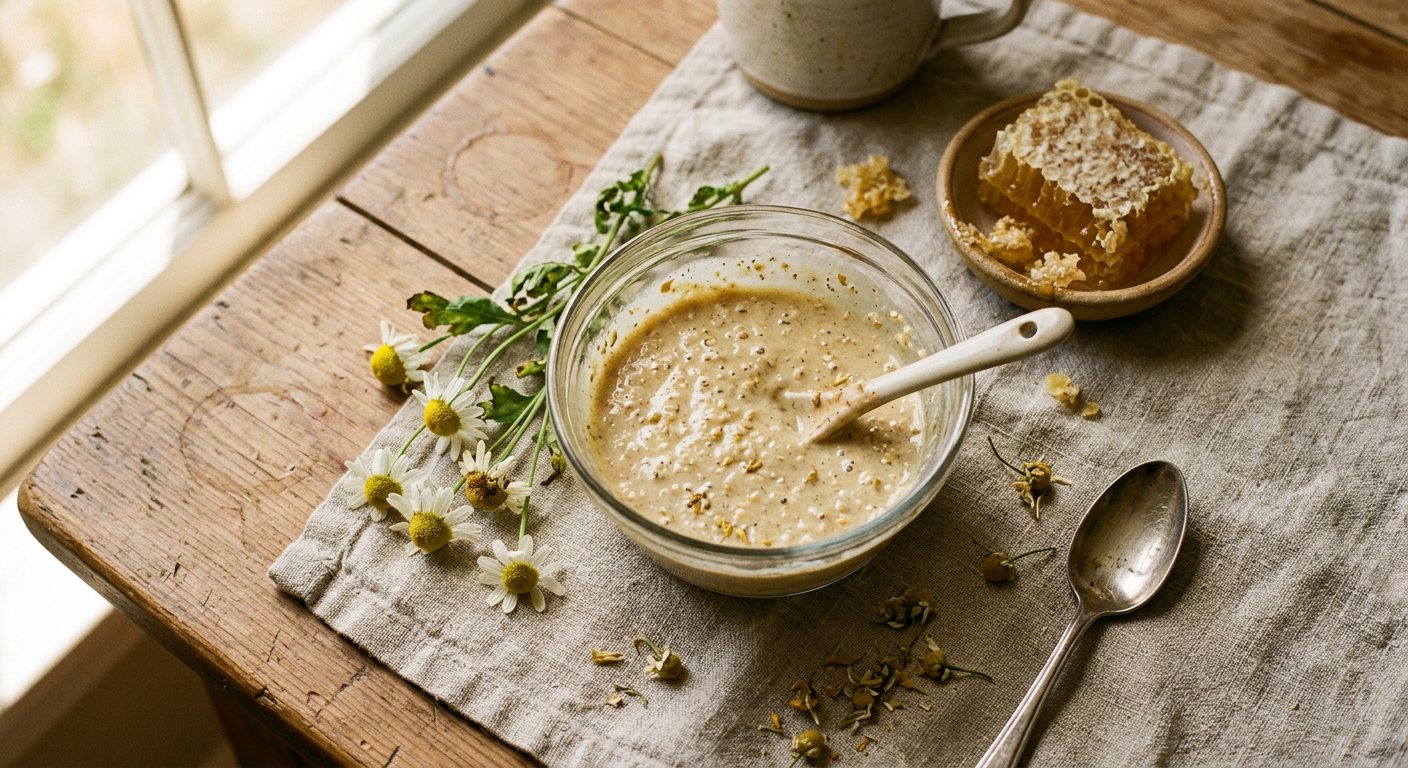
DIY Honey & Oat Face Mask for Sensitive Skin: A Gentle Tea Tree Alternative
If you've been exploring natural skincare remedies, you've likely encountered tea tree oil as a go-to solution for acne and blemished skin. While tea tree has a long history in traditional beauty practices, it's not always the right choice for sensitive or reactive skin. According to NIH NCCIH, tea tree oil shows limited evidence for acne support, and when used improperly—especially on delicate complexions—it can cause irritation, redness, and barrier damage. This is where a gentler, nourishing approach becomes essential.
This DIY Honey & Oat Face Mask is designed as a soothing alternative that harnesses the calming power of whole-food ingredients without the risk of sensitization. Perfect for those with reactive, inflamed, or compromised skin, this mask combines time-honoured botanical wisdom with modern skincare science to deliver genuine results.
Why This Mask Works for Sensitive Skin
Sensitive skin requires ingredients that calm inflammation, strengthen the skin barrier, and avoid harsh actives. This formula prioritizes gentleness while still delivering visible benefits—hydration, reduced redness, and a smoother texture. Unlike tea tree oil, which can be drying and potentially irritating when misapplied, each ingredient in this mask has been chosen specifically for its soothing and protective properties.
The combination of raw honey, colloidal oatmeal, and plant-based hydrosols creates a synergistic blend that works with your skin's natural healing processes rather than against them.
Ingredients & Why Each One Matters
Raw Honey (2 tablespoons)
Raw honey is a humectant—it draws moisture from the air into the skin and holds it there. Unlike processed honey, raw honey retains enzymes and trace minerals that support skin healing. Honey also has mild antimicrobial properties without the irritation risk of essential oils. It's been used in traditional skincare for centuries and is gentle enough for even the most reactive complexions.
Colloidal Oatmeal (1 tablespoon)
Colloidal oatmeal is finely ground oat kernel that dissolves into a creamy suspension. It contains beta-glucans and avenanthramides—compounds that reduce inflammation and soothe irritated skin. This ingredient is so gentle it's recommended by dermatologists for eczema and sensitive skin conditions. It creates a protective barrier while the mask sits on your skin.
Chamomile Hydrosol (1 tablespoon)
Chamomile hydrosol (also called chamomile floral water) is the byproduct of steam distillation—it contains the water-soluble benefits of chamomile without the concentration of essential oil. It's calming, anti-inflammatory, and helps reduce redness. This ingredient replaces water in the formula to add therapeutic benefit without diluting the mask's efficacy.
Vegetable Glycerin (½ teaspoon)
Glycerin is a humectant that locks moisture into the skin. It prevents the mask from drying out too quickly and ensures your skin stays hydrated throughout the treatment. A small amount goes a long way—too much will make the mask sticky.
Zinc Oxide (¼ teaspoon, optional)
If your skin is reactive or prone to redness, a small amount of non-nano zinc oxide adds a protective, soothing layer. Zinc is known to calm inflammation and support skin barrier repair. This ingredient is entirely optional; omit it if you prefer a lighter texture.
Step-by-Step Method
Step 1: Measure Your Ingredients
In a small glass or ceramic bowl (avoid metal, which can react with honey), measure out 2 tablespoons of raw honey, 1 tablespoon of colloidal oatmeal, and 1 tablespoon of chamomile hydrosol. Have your glycerin and optional zinc oxide nearby.
Step 2: Combine the Base
Pour the honey into the bowl first. Add the colloidal oatmeal and stir gently until the oatmeal begins to soften and the mixture becomes creamy. This should take about 1–2 minutes of stirring.
Step 3: Add Hydration
Slowly pour in the chamomile hydrosol while stirring. The mixture will become smoother and easier to apply. If you're using zinc oxide, add it now and whisk until there are no visible lumps.
Step 4: Add Glycerin
Stir in the vegetable glycerin last. This helps bind the ingredients and prevents the mask from setting too firmly on your skin.
Step 5: Check Consistency
The finished mask should be thick enough to stay on your face without dripping, but spreadable enough to apply with your fingers or a brush. If it's too thick, add a few drops more hydrosol. If it's too thin, add a pinch more oatmeal.
How to Use This Mask
Preparation:
Begin with clean, damp skin. Gently pat your face dry with a soft cloth, leaving skin slightly moist—this helps the mask adhere and prevents it from feeling tight.
Application:
Using clean fingers or a soft brush, apply an even layer of the mask to your face, avoiding the delicate eye and lip areas. Work in upward strokes to support your skin's natural contours. You should use approximately 1–1.5 tablespoons of mask per application.
Timing:
Leave the mask on for 10–15 minutes. Set a timer so you don't accidentally leave it on longer, which can over-dry your skin. As the mask dries, you may feel a gentle tightening—this is normal and indicates the oatmeal is working.
Removal:
Rinse with lukewarm water, using gentle circular motions with your fingertips to help exfoliate away the dried mask. Pat your skin dry with a clean towel.
Follow-Up:
Immediately apply your regular moisturizer or facial oil while your skin is still slightly damp. This locks in hydration and maximizes the mask's benefits.
Frequency:
Use this mask 1–2 times per week. If your skin is very reactive, start with once weekly and increase frequency only if your skin tolerates it well.
Patch Test Warning: Essential First Step
Before applying this mask to your entire face, perform a patch test to rule out sensitivity to any ingredient—even natural ingredients can trigger reactions in some individuals.
How to Patch Test:
1. Apply a small amount (about the size of a pea) of the finished mask to the inside of your wrist or behind your ear.
2. Leave it on for 10–15 minutes, then rinse gently.
3. Wait 24 hours and observe the area for any redness, itching, swelling, or irritation.
4. If no reaction occurs, the mask is safe to use on your face.
If you experience any irritation during the patch test, do not apply the mask to your face. Discontinue use and consult a dermatologist if the reaction persists.
Shelf Life & Storage
This mask is best made fresh and used immediately. However, if you'd like to prepare a batch ahead:
Refrigerator Storage: Store in a clean glass jar with an airtight lid in the refrigerator for up to 5 days. The cool temperature helps preserve the honey and hydrosol. Before each use, allow the mask to come to room temperature for easier application.
Freezer Storage: You can freeze individual portions in ice cube trays for up to 3 months. Thaw one cube in the refrigerator before use.
Signs of Spoilage: If the mask develops an off smell, visible mold, or changes color significantly, discard it immediately.
Safety Notes & Considerations
For Extremely Sensitive or Compromised Skin:
If you have active eczema, psoriasis, or a damaged skin barrier, consult a dermatologist before using any new skincare product, including this mask. While the ingredients are gentle, even mild formulations can sometimes trigger flare-ups in severely compromised skin.
Allergies & Sensitivities:
If you have a known allergy to oats (celiac disease or oat sensitivity), omit the colloidal oatmeal and replace it with an equal amount of finely ground rice flour or chickpea flour. If you're allergic to chamomile or ragweed, use rose hydrosol or witch hazel hydrosol instead.
Pregnancy & Nursing:
All ingredients in this mask are considered safe during pregnancy and nursing. However, if you're pregnant or nursing and have concerns about any ingredient, speak with your healthcare provider before use.
Interaction with Other Products:
This mask is compatible with most skincare routines. However, avoid using it on the same day as strong chemical exfoliants (like AHAs or BHAs) or vitamin C serums, as layering multiple actives can irritate sensitive skin. Use this mask on gentle skincare days.
Why Not Tea Tree Oil in This Formula:
While tea tree oil has traditional uses in skincare, it's not included in this mask because it carries a higher risk of irritation for sensitive skin. According to NIH NCCIH, tea tree oil shows limited evidence for acne and can cause contact dermatitis, especially in concentrated forms. For sensitive skin, gentler alternatives like honey and chamomile provide calming benefits without the irritation risk. If you're interested in learning more about tea tree's safety profile, consult a qualified healthcare professional.
Expected Results & Timeline
Most people notice results within 2–3 applications:
- Immediate (after first use): Skin feels hydrated and plump; redness may appear slightly reduced.
- After 1–2 weeks (2–3 applications): Texture becomes smoother; irritation and reactive patches calm noticeably.
- After 4 weeks (regular weekly use): Skin barrier feels stronger; sensitivity decreases; complexion appears more even and radiant.
Results vary based on individual skin type, underlying conditions, and overall skincare routine. Consistency is key—weekly use will deliver better results than sporadic applications.
Final Thoughts
This DIY Honey & Oat Face Mask offers a gentle, effective alternative to harsher actives like tea tree oil, especially for those with sensitive or reactive skin. By combining whole-food ingredients with proven soothing properties, you're giving your skin the care it deserves without unnecessary risk. The beauty of this formula is its simplicity—you likely have most ingredients in your kitchen already, making it an affordable, accessible way to elevate your natural skincare ritual.
Remember: skincare is personal. What works beautifully for one person may not suit another. Listen to your skin, patch test first, and adjust the formula as needed. If irritation persists or worsens, discontinue use and speak with a dermatologist.
Ready to explore more natural skincare remedies tailored to your unique skin type? Visit the remedy library at https://healingherbs.life/natureglow to read the full guide and discover other gentle, effective DIY formulas. Or take the free quiz at the same link to get a personalised 4-week herbal protocol designed specifically for your skin's needs.