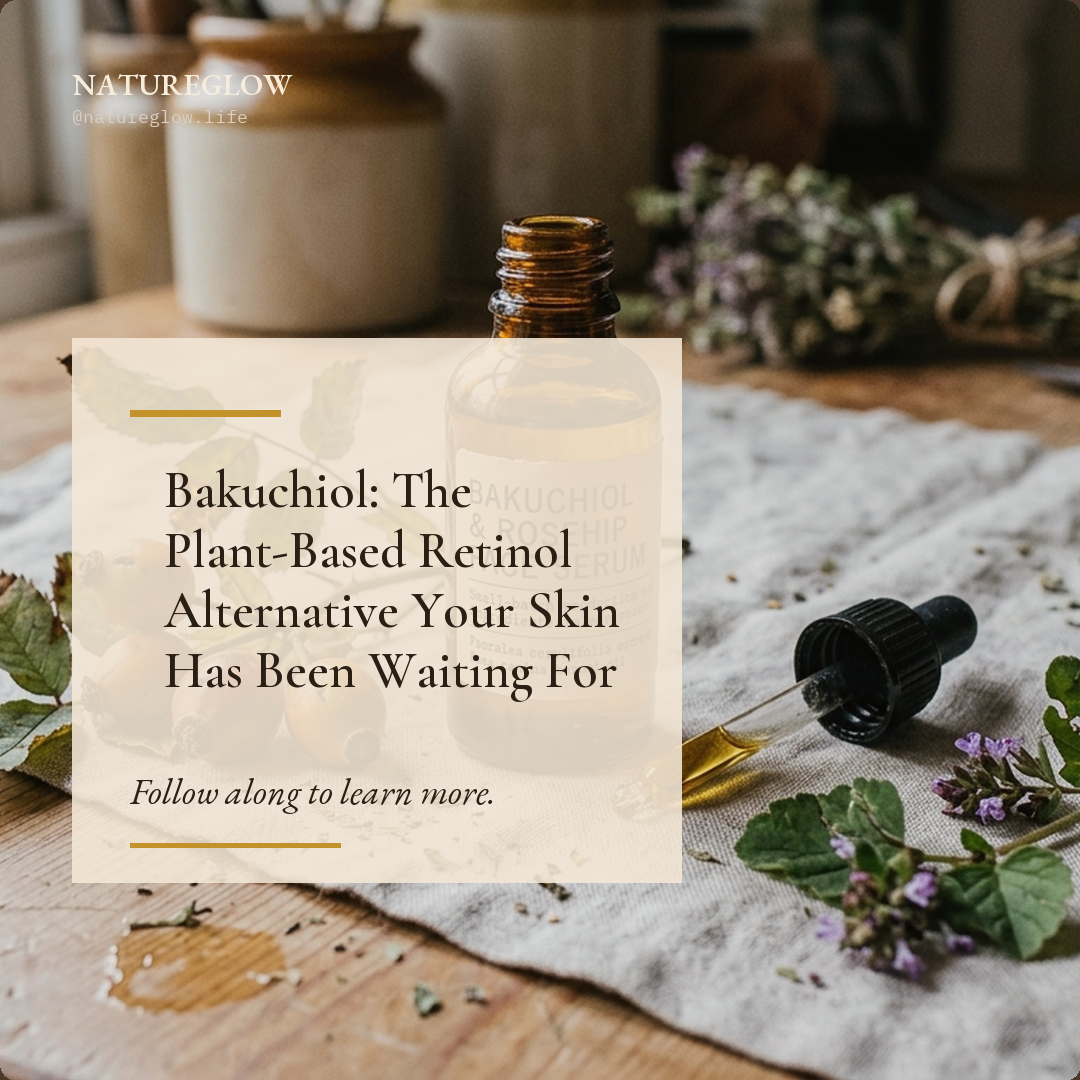
Bakuchiol: The Plant-Based Retinol Alternative Your Skin Has Been Waiting For
If you've scrolled through skincare feeds lately, you've probably heard the buzz around bakuchiol—the botanical ingredient that's quietly revolutionising how we think about anti-aging without the irritation. Unlike its synthetic cousin retinol, bakuchiol offers skin renewal benefits with a gentler approach, making it accessible to sensitive skin types and those new to active ingredients. Let's explore what bakuchiol actually is, how it works, and whether it deserves a place in your glow routine.
What Is Bakuchiol?
Bakuchiol is a meroterpene compound derived from the seeds and leaves of the Babchi plant (Cullen corylifolia, also known as Psoralea corylifolia), a traditional herb used in Ayurvedic and Chinese medicine for centuries. Unlike retinol—a vitamin A derivative that works by binding directly to retinoid receptors in skin cells—bakuchiol achieves similar skin-renewing effects through a completely different biochemical pathway. This distinction is crucial: it means bakuchiol can deliver retinol-like benefits without the photosensitivity, irritation, and downtime that often accompany traditional retinoids.
The ingredient has gained significant traction in the clean beauty space precisely because it bridges a gap. For those who find retinol too harsh, who are pregnant or breastfeeding (when retinoids are contraindicated), or who simply prefer plant-derived actives, bakuchiol offers a compelling alternative backed by emerging research.
How Bakuchiol Works on Skin
Bakuchiol's mechanism of action is elegantly different from retinol. Rather than activating retinoid receptors, bakuchiol works through multiple pathways to support skin renewal and resilience.
Cellular turnover and collagen support: Research suggests bakuchiol may help accelerate skin cell turnover—the natural process by which old, damaged cells are shed and replaced with fresh ones. This supports a smoother, more even complexion over time. Additionally, some evidence indicates bakuchiol may help support collagen production, the structural protein responsible for skin firmness and elasticity.
Antioxidant and anti-inflammatory action: Bakuchiol contains compounds with antioxidant properties, meaning it may help neutralise free radicals—unstable molecules that contribute to premature aging and skin damage. Its anti-inflammatory profile may also help calm reactive or sensitised skin, making it suitable for those dealing with redness or irritation.
Circadian rhythm alignment: An intriguing area of emerging research suggests bakuchiol may support skin's natural circadian rhythms—the internal biological clock that governs repair and renewal processes. This could explain why bakuchiol feels gentler than retinol while still delivering visible results.
Evidence for Anti-Aging and Skin Renewal
The scientific case for bakuchiol is still developing, but early studies are encouraging. A landmark 2019 study published in the British Journal of Dermatology compared bakuchiol to retinol in a 12-week trial and found that bakuchiol was comparably effective at reducing fine lines, improving skin texture, and evening skin tone—without the irritation profile associated with retinol. Participants using bakuchiol reported less redness, peeling, and photosensitivity.
Additional research has explored bakuchiol's potential in supporting skin barrier function and reducing signs of photoaging (sun damage). While the evidence base is smaller than that for retinol, the consistency of results across studies is noteworthy. It's important to note that bakuchiol is not a "proven cure" for aging—rather, it's a supportive ingredient that may help address common signs of aging when used consistently as part of a holistic skincare approach.
The herbal and natural beauty communities have embraced bakuchiol partly because of its traditional use in Ayurvedic skincare rituals, where it was valued for promoting skin clarity and radiance. Modern formulation has simply made it more accessible and stable in contemporary products.
How to Use Bakuchiol in Your Routine
Bakuchiol is remarkably versatile and, unlike retinol, doesn't require the careful introduction protocol many actives demand.
Starting out: You can introduce bakuchiol into your routine immediately—there's no need for the gradual "low and slow" approach retinol requires. Apply it to clean, dry skin in the evening, using a few drops or a pea-sized amount of serum. Pat gently until absorbed.
Frequency: Most people tolerate daily use of bakuchiol without irritation. However, if you have very sensitive skin, starting with three to four times per week and building up is a sensible approach.
Layering: Bakuchiol plays well with most skincare ingredients. Apply it after cleansing and any hydrating toners, but before heavier creams or oils. Its lightweight texture means it won't feel heavy under moisturiser.
Timing: While bakuchiol doesn't cause photosensitivity like retinol, applying it in your evening routine is traditional and allows skin to focus on repair overnight.
Best Combinations: Bakuchiol + Rosehip Oil and Beyond
One of bakuchiol's greatest strengths is its compatibility with complementary botanicals.
Bakuchiol + rosehip oil: This pairing is particularly synergistic. Rosehip oil is rich in vitamins A, C, and E, plus essential fatty acids that support skin barrier health and hydration. While rosehip oil's vitamin A content is gentle and won't trigger retinoid-like irritation, it complements bakuchiol's renewal action beautifully. Together, they create a nourishing, anti-aging layer that feels luxurious without heaviness. Apply bakuchiol serum first, then layer rosehip oil over the top.
Bakuchiol + niacinamide: Niacinamide (vitamin B3) supports skin barrier function and can help regulate sebum production. Combined with bakuchiol, this pairing is excellent for those managing breakouts alongside aging concerns.
Bakuchiol + hyaluronic acid: Hyaluronic acid is a humectant that draws moisture into skin. Layering it under bakuchiol helps ensure your skin is well-hydrated before the active ingredient is applied, reducing any potential for irritation and maximising efficacy.
Bakuchiol + peptides: Peptides are amino acid chains that signal skin to support collagen production. This combination amplifies the firming and renewal benefits both ingredients offer.
Avoid mixing with: Bakuchiol is generally safe to combine with most ingredients, but avoid layering it with other strong actives like vitamin C serums (pH-dependent) or AHAs/BHAs on the same evening—give these a night or two apart to prevent over-exfoliation.
Safety Profile and Who It's Suitable For
Bakuchiol has an excellent safety record, particularly compared to retinol and prescription retinoids.
General safety: Bakuchiol is well-tolerated by most skin types. It doesn't cause photosensitivity, meaning you don't need to increase SPF use (though daily sunscreen is always essential). It doesn't typically cause the peeling, redness, or "retinization" period associated with retinol. Allergic reactions are rare, though as with any botanical, patch-testing is wise before full application.
Who it's ideal for:
- Those new to active ingredients who want anti-aging support without irritation
- People with sensitive or reactive skin
- Pregnant and breastfeeding individuals (retinoids are contraindicated; bakuchiol is a safer alternative)
- Those with rosacea or inflammatory skin conditions
- Anyone seeking a gentler evening active
Who should patch-test first:
- People with known allergies to plants in the Fabaceae family (legumes)
- Those with very reactive or compromised skin barriers
- Anyone introducing multiple new products simultaneously
Considerations:
- Bakuchiol is not a replacement for sun protection. UV damage is the primary driver of visible aging; no topical ingredient can substitute for daily SPF.
- Results take time. Like retinol, bakuchiol works best with consistent use over 8–12 weeks. Patience is part of the ritual.
- Quality matters. Look for stabilised bakuchiol in opaque, airless packaging to preserve potency.
The Bigger Picture: Bakuchiol Within a Holistic Glow Routine
Bakuchiol shines brightest when it's part of a comprehensive approach to skin health. A robust skincare ritual includes:
- Gentle cleansing to remove impurities without stripping natural oils
- Hydration through toners, essences, or hydrating serums
- Active ingredients like bakuchiol, applied mindfully
- Nourishment via oils, butters, or rich creams suited to your skin type
- Sun protection every single day, rain or shine
- Lifestyle support through sleep, hydration, stress management, and a nutrient-rich diet
Bakuchiol is a powerful tool in this toolkit, but it's not a magic fix. The most radiant skin comes from consistency, patience, and treating skincare as a daily ritual of self-care rather than a transaction.
Final Thoughts
Bakuchiol represents an exciting evolution in natural skincare—proof that plant-derived ingredients can deliver sophisticated, science-backed results without compromise. Whether you're seeking a gentler entry into active ingredients, a retinol alternative that suits your lifestyle, or simply a way to support your skin's natural renewal processes, bakuchiol is worth exploring.
Start with a patch test on a small area of skin (inner arm or behind the ear) for 24–48 hours before incorporating it into your full routine. If no irritation occurs, introduce it gradually—perhaps two to three times per week initially—and observe how your skin responds. Most people find their skin becomes noticeably smoother, more even-toned, and more resilient within 8–12 weeks of consistent use.
Remember: the best skincare ingredient is the one you'll actually use consistently, with patience and intention. If bakuchiol resonates with your values and your skin's needs, it may just become a cornerstone of your glow ritual.