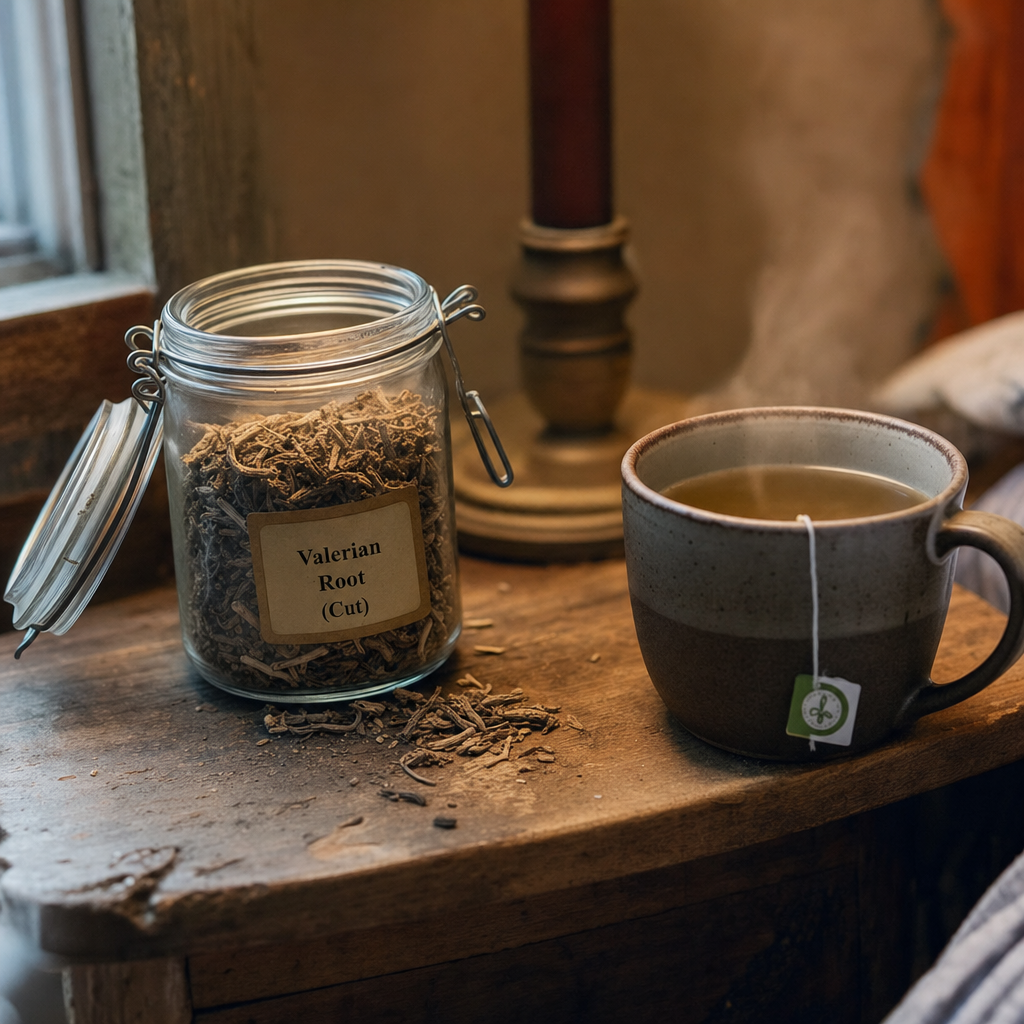
Valerian for Sleep: What the American Academy of Sleep Medicine Actually Says
When you search for natural sleep support, valerian root appears everywhere—in tea blends, capsules, and wellness protocols promising restful nights. But what does the science actually say about this centuries-old herb? The answer is more nuanced than marketing suggests, and understanding the real evidence matters if you're considering valerian for your sleep routine.
What Is Valerian?
Valerian (Valeriana officinalis), commonly known as garden valerian or valerian root, is a perennial plant native to Europe and western Asia. The herb has been used in traditional European herbal medicine for centuries, particularly as a nervine—an herb traditionally believed to support nervous system calm. The root is the part most commonly used in herbal preparations, dried and steeped as tea, extracted into tinctures, or encapsulated as a supplement.
The plant contains over 150 active compounds, including valerenic acid, volatile oils, and flavonoids. These constituents are thought to be responsible for valerian's traditional effects, though exactly how they work in the body remains an area of ongoing research.
Traditional Uses and Historical Context
Across European herbal medicine traditions, valerian has been valued for several purposes beyond sleep. Traditionally, it was used to support relaxation during times of nervous tension, to ease restlessness, and as a gentle calming aid. Some herbalists have traditionally recommended it for mild anxiety-related symptoms and to support a calm mood during stressful periods.
In traditional Chinese medicine and Ayurvedic practice, related valerian species have held similar roles as calming nervines. The herb's long history of use in folk medicine across multiple cultures speaks to its cultural significance, even if modern clinical evidence tells a different story.
What Modern Research Actually Shows
Here is where the narrative shifts importantly: there is not enough evidence to determine whether valerian is useful for any health conditions, according to the National Institutes of Health's National Center for Complementary and Integrative Health (NCCIH).
More specifically, when it comes to sleep, the evidence is inconsistent. Some small studies have suggested potential benefit for sleep onset or quality, but results have not been reliably replicated across larger, well-designed trials. The variability in study design, dosage, preparation method, and participant populations makes it difficult to draw firm conclusions.
Most significantly, the American Academy of Sleep Medicine (AASM) issued a formal recommendation in 2017 against the use of valerian for chronic insomnia in adults. The AASM graded the evidence as Grade D—the lowest level of recommendation—meaning the evidence does not support its use for this indication. This recommendation came after a systematic review of available clinical trials and represents the current consensus among sleep medicine specialists.
Why the Evidence Is Weak
Several factors explain why valerian's evidence base remains limited:
Study quality: Many valerian studies are small, conducted decades ago, and lack the rigorous design standards of modern clinical trials. Blinding is difficult (valerian has a distinctive taste and smell), and many studies did not adequately control for placebo effects.
Preparation variability: Valerian products vary widely in potency, extraction method, and active compound concentration. A tea made from dried root differs significantly from a standardised extract, making it hard to compare results across studies.
Individual variation: People respond differently to valerian. Some report subjective improvement in sleep, while others notice no effect. This individual variability makes population-level evidence harder to establish.
Dosage inconsistency: Studies have used widely different doses—from 400 mg to 1,000 mg or more—making it unclear what dose, if any, is effective.
Safety Considerations and Liver Health
While valerian is generally considered safe for short-term use in most adults, there are important safety considerations to understand.
According to LiverTox (the NIH's comprehensive database of herb and drug-induced liver injury), valerian carries a moderate concern rating. Rare cases of liver injury have been reported, particularly in combination products containing multiple herbs. Most cases involved prolonged use or products with undisclosed ingredients. Isolated valerian root preparations have a lower reported risk, but the possibility exists.
Common side effects reported in clinical trials include headache, dizziness, and gastrointestinal upset. Some people report morning grogginess or vivid dreams. These effects are generally mild and resolve when the herb is discontinued.
Valerian should be avoided or used only under professional guidance if you:
- Have existing liver disease or elevated liver enzymes
- Are pregnant or breastfeeding
- Take sedative medications or central nervous system depressants (alcohol, benzodiazepines, prescription sleep aids)
- Are scheduled for surgery requiring anaesthesia
- Have a history of liver problems
- Are taking other herbal products, especially in combination formulas
Valerian may interact with medications metabolised by the liver, potentially increasing their effects or side effects. If you are on any prescription medication, professional consultation is essential before use.
How Valerian Is Traditionally Prepared
If you are considering valerian under professional guidance, here are common preparation methods:
Dried root tea: Steep 1 teaspoon of dried valerian root in 8 ounces of hot water for 5–10 minutes. The taste is earthy and somewhat bitter. This preparation is typically used in the evening, 30–60 minutes before bed.
Tincture: A liquid extract made by steeping dried root in alcohol or glycerin. Typical dosing ranges from 1–2 teaspoons (5–10 ml) in water, taken in the evening.
Capsules or tablets: Standardised extracts are available in encapsulated form. Dosages vary by product; follow the manufacturer's guidance and consult a practitioner.
Combination blends: Valerian is often combined with other calming herbs like passionflower, skullcap, or lemon balm in commercial sleep formulas. Be aware that combination products carry a higher reported risk of liver effects.
Most traditional use suggests taking valerian 30–60 minutes before bed. Effects, if they occur, may take several days or weeks to become noticeable—valerian is not typically used as an acute sleep aid like pharmaceutical sedatives.
The Bottom Line: What You Should Know
Valerian is a herb with deep historical roots in European herbal tradition, but modern clinical evidence does not support its use for chronic insomnia. The American Academy of Sleep Medicine's 2017 recommendation against valerian for this indication reflects the current state of the evidence: inconsistent, limited in quality, and insufficient to recommend use.
That said, valerian remains widely available and some people report subjective benefit. If you are interested in exploring valerian, it is crucial to understand that:
1. The evidence is weak: Don't expect the same reliable effect you might get from a prescribed sleep medication.
2. Liver safety matters: Rare but documented cases of liver injury exist, particularly with long-term use or combination products.
3. Professional guidance is important: If you have liver concerns, take medications, or have existing health conditions, speak with a qualified healthcare practitioner before using valerian.
4. Individual response varies: What works for one person may not work for another.
If you are struggling with sleep, a qualified healthcare provider can help you explore evidence-based approaches—whether herbal, behavioural, or pharmaceutical—tailored to your specific situation.