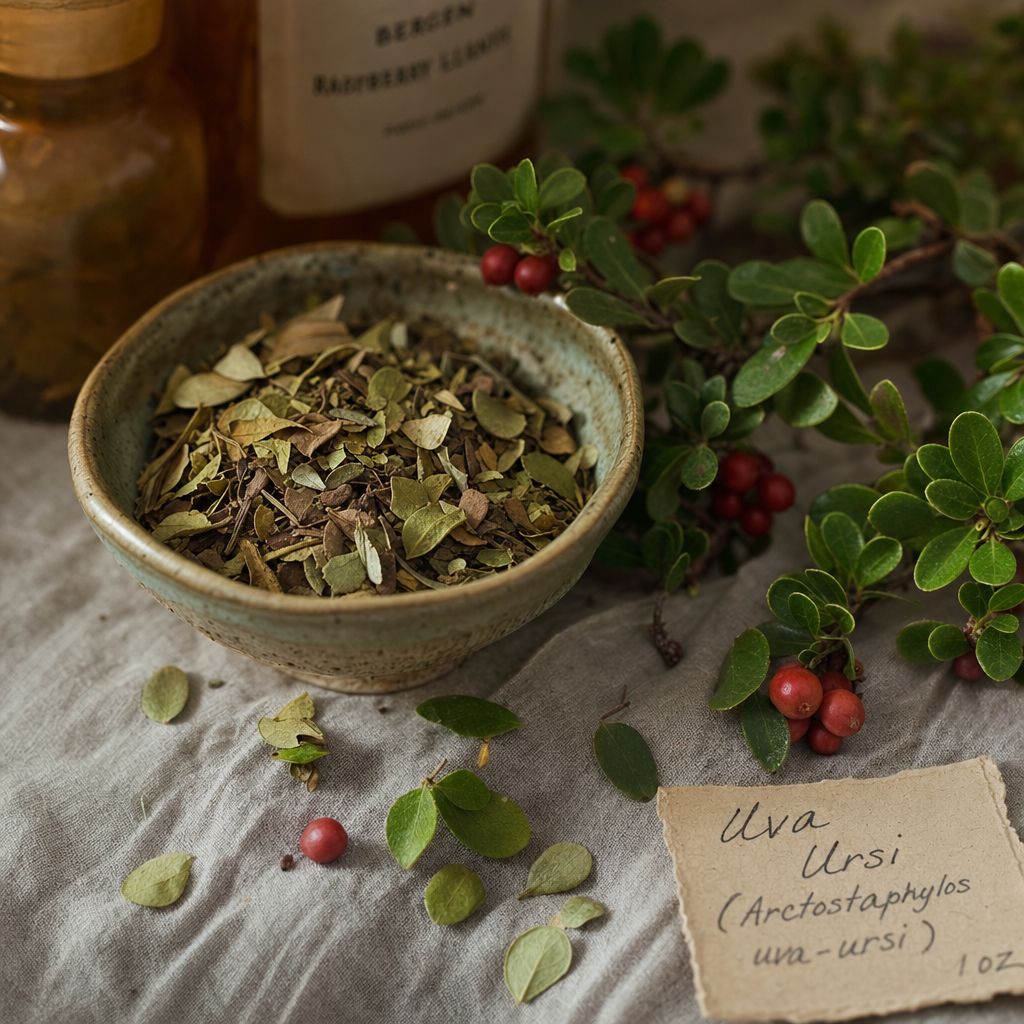
Uva Ursi: Traditional Uses, Modern Evidence, and Safe Application
Overview
Uva ursi, scientifically known as Arctostaphylos uva-ursi, is a low-growing evergreen shrub native to northern Europe, Asia, and North America. The name "uva ursi" comes from Latin, meaning "bear's grape"—a reference to the small red berries that bears favour as food. The plant is also commonly called bearberry or kinnikinnick, the latter a name derived from Indigenous North American traditions where the leaves have been used ceremonially and medicinally for centuries.
The herb has been part of European herbal medicine for over a thousand years. Medieval herbalists documented its use, and it became formally recognised in traditional European herbal practice. Today, uva ursi remains one of the most studied traditional remedies for urinary tract support, though modern clinical evidence presents a more nuanced picture than historical use alone suggests.
Traditional Uses in Herbal Medicine
Historically, uva ursi has been valued across multiple herbal traditions for its astringent and antimicrobial properties. In traditional European herbal medicine, the leaves were prepared as infusions or decoctions to support the urinary system during discomfort. Indigenous peoples of North America used kinnikinnick in ceremonial contexts and as a traditional remedy for various conditions affecting the lower urinary tract.
The European Medicines Agency (EMA) Committee on Herbal Medicinal Products (HMPC) recognises uva ursi as a traditional herbal remedy for short-term symptomatic relief of uncomplicated lower urinary tract symptoms in women. This recognition is based on long-standing traditional use rather than extensive modern clinical trials. The herb's traditional application has been specifically for temporary comfort during episodes of mild urinary discomfort, not as a preventive or curative treatment.
German Commission E, another respected herbal regulatory body, approved uva ursi for inflammatory disorders of the efferent urinary tract, reflecting its place in European phytotherapy. However, it is important to note that traditional use recognition does not equate to proven efficacy in modern clinical terms—it reflects historical safety and use patterns rather than definitive therapeutic proof.
Modern Evidence: What Research Actually Shows
The modern clinical evidence for uva ursi is considerably more limited than its traditional reputation might suggest. A significant 2019 randomised controlled trial published in research literature found that uva ursi provided no statistically significant effect on lower urinary tract symptoms compared to placebo. This finding represents an important shift in how herbalists and practitioners understand the herb's actual therapeutic potential.
According to NIH NCCIH (National Center for Complementary and Integrative Health), there is insufficient evidence to determine whether uva ursi is effective for urinary tract infections or related symptoms. The NCCIH does not maintain a dedicated evidence summary for uva ursi, reflecting the limited body of rigorous modern research available.
LiverTox, the comprehensive hepatotoxicity database maintained by the National Institutes of Health, assigns uva ursi a safety score of E—indicating no documented hepatotoxicity or liver risk associated with the herb. This is reassuring from a safety perspective, though it does not address efficacy questions.
The active compounds in uva ursi include arbutin, a glycoside that converts to hydroquinone in the body. Historically, this conversion was thought to provide antimicrobial action in the urinary tract. However, modern research has not conclusively demonstrated that this mechanism translates to clinically meaningful symptom relief in humans.
How Uva Ursi Is Traditionally Prepared and Used
Traditionally, uva ursi leaves are dried and prepared as a tea or infusion. The standard preparation involves steeping dried leaves in hot water for 5–10 minutes, then straining. Some herbalists prefer a decoction (simmering the leaves for 10–15 minutes) to extract more of the plant's compounds.
Uva ursi is also available in tincture form, capsule supplements, and as a component of herbal blends designed for urinary system support. The dose varies depending on the preparation form and individual circumstances, but traditional use has typically involved modest quantities—often one to three cups of tea daily during symptomatic periods.
It is crucial to understand that uva ursi is not intended for long-term daily use. Traditional practice and modern regulatory guidance both emphasise short-term application only.
Critical Safety Information and Contraindications
Duration Limits: The EMA HMPC specifies that uva ursi should be used for a maximum of 5 consecutive days per episode, and no more than 5 times per year. This strict limitation reflects both traditional practice and safety considerations. Exceeding these limits increases the risk of unwanted effects and is not supported by evidence of benefit.
Pregnancy and Breastfeeding: Uva ursi is unsafe during pregnancy. The active compound hydroquinone is known to be uterotonic (stimulating uterine contractions) and foetotoxic (potentially harmful to the developing fetus). Pregnant individuals should avoid this herb entirely. Safety during breastfeeding has not been adequately studied, so caution is advised.
Children: Uva ursi is not recommended for children under 12 years of age. The herb's safety profile in young children has not been established, and the duration and dosage restrictions make it unsuitable for paediatric use.
Ophthalmologic Concerns: Chronic or excessive use of uva ursi may pose risks to eye health. The hydroquinone metabolite can accumulate in tissues, and long-term exposure has been associated with potential ocular effects in animal studies. This is another reason strict adherence to duration limits is essential.
Kidney Disease: Individuals with kidney or renal disease should consult a healthcare practitioner before using uva ursi. The herb's action on the urinary system means it may not be appropriate for those with compromised kidney function.
Medication Interactions: Uva ursi may interact with certain medications, particularly those affecting urine pH or kidney function. Anyone taking prescription medications should discuss uva ursi use with their healthcare provider.
Gastrointestinal Sensitivity: Some individuals experience mild gastrointestinal upset, nausea, or darkening of urine (due to hydroquinone) when using uva ursi. These effects are generally temporary but warrant awareness.
What Uva Ursi Is Not
It is important to be clear about what uva ursi cannot do. This herb does not treat, cure, or prevent urinary tract infections. It is not a substitute for medical diagnosis or antibiotic treatment when infection is present. If symptoms persist beyond a few days, fever develops, or signs of systemic infection appear, medical evaluation is essential.
Uva ursi is not appropriate for self-diagnosis or self-treatment of urinary symptoms without professional guidance. Symptoms that resemble lower urinary tract discomfort can arise from various causes—some requiring medical intervention—and a qualified healthcare practitioner should assess the situation.
Practitioner Guidance and Disclaimer
This content is for educational purposes only and does not constitute medical advice. Uva ursi is a traditional herbal remedy with limited modern clinical evidence of efficacy. While it has been used historically and is recognised by the EMA for traditional use, the 2019 clinical trial showing no benefit compared to placebo represents important modern evidence that should inform decision-making.
If you are considering uva ursi for any health concern, especially if you have an existing health condition, are pregnant or breastfeeding, or are taking medications, speak to a qualified healthcare professional before using this herb. A practitioner can assess your individual situation, confirm that uva ursi is appropriate for you, ensure you understand the strict duration and frequency limits, and monitor for any adverse effects.
Herbalists and natural health practitioners should be transparent with clients about both the traditional use history and the limitations of modern evidence. Recommending uva ursi should always include clear communication about the 5-day maximum duration, the 5-times-per-year frequency limit, and the lack of proven efficacy in recent clinical trials.
Conclusion
Uva ursi, or bearberry, represents a fascinating intersection of traditional herbal wisdom and modern evidence-based practice. For over a thousand years, this humble plant has held a place in European and Indigenous North American herbal traditions. The EMA recognises it for short-term traditional use, and LiverTox confirms it poses no liver risk. However, modern clinical research—particularly the 2019 randomised controlled trial—suggests that the herb's historical reputation may not translate to measurable therapeutic benefit in contemporary practice.
This does not mean uva ursi has no value; rather, it invites a more honest, nuanced conversation about what we know and do not know. If you are drawn to this traditional remedy, working with a qualified herbalist or healthcare practitioner ensures safe, informed use within established safety parameters. Discover which herbs are right for your specific situation by exploring the remedy library and taking the personalised protocol quiz at Leaves of Healing.