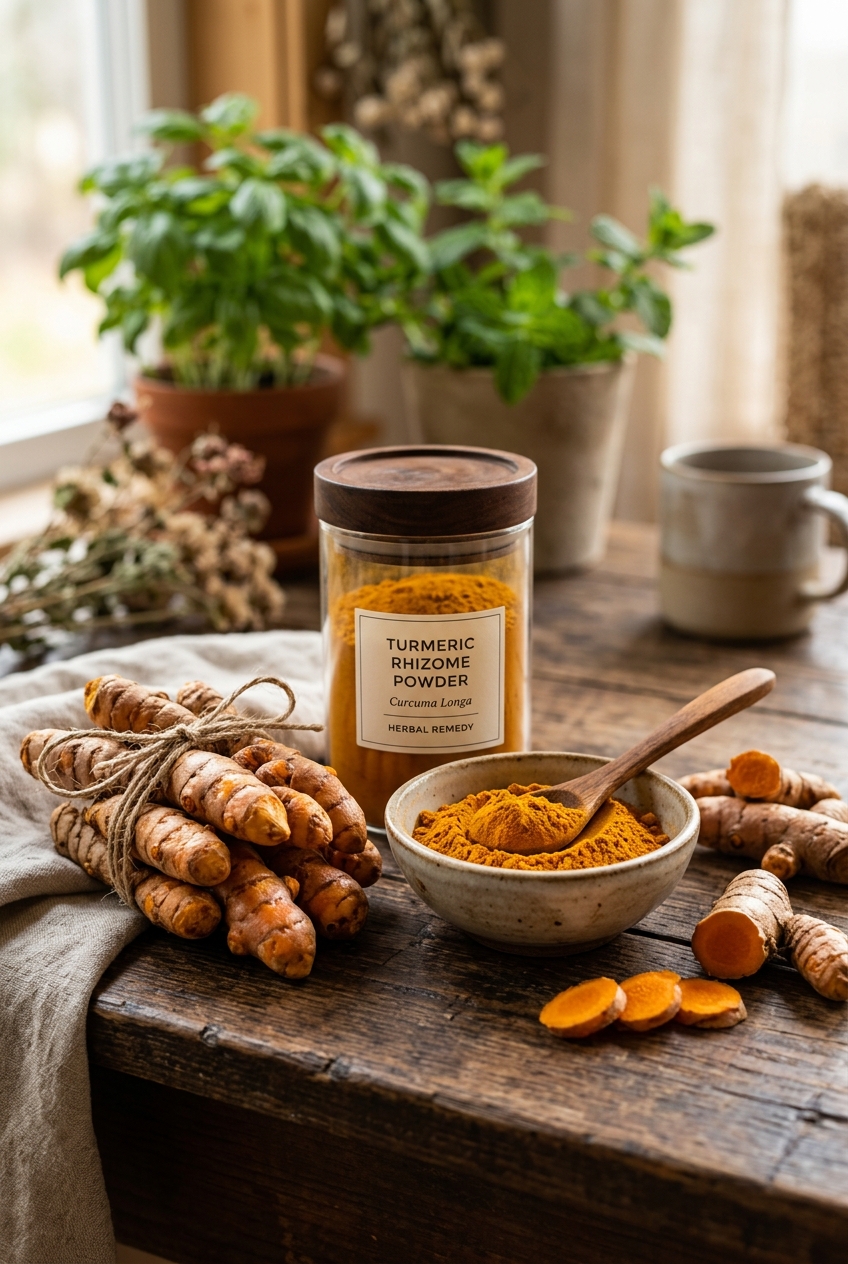
Turmeric: The Golden Root with Ancient Roots and Modern Science
Turmeric (Curcuma longa) has been treasured for thousands of years in traditional medicine systems, particularly in Ayurveda and Traditional Chinese Medicine. This vibrant golden-orange rhizome contains powerful compounds, most notably curcumin, which research suggests may support inflammation management, joint health, and cognitive function [Source 1]. Today, turmeric has become one of the most studied botanical compounds in modern wellness research, bridging ancient wisdom with contemporary science.
What Is Turmeric?
Turmeric is a perennial plant native to South Asia, particularly India and Indonesia. The part used medicinally and culinarily is the rhizome—an underground stem that resembles ginger root. When dried and ground, it becomes the golden powder familiar in kitchens worldwide. The rhizome contains volatile oils, proteins, and curcuminoids, with curcumin comprising approximately 2–8% of dried turmeric powder [Source 2].
The distinctive color and flavor profile make turmeric instantly recognizable. Its warm, slightly bitter, earthy taste complements both savory and sweet applications, making it remarkably versatile for culinary integration.
Traditional and Contemporary Uses
Traditional Applications
In Ayurvedic medicine, turmeric has been traditionally used to support digestive health, skin vitality, and overall wellness for over 4,000 years [Source 3]. Practitioners valued it for its warming properties and believed it helped balance all three doshas (constitutional types). Traditional Chinese Medicine similarly incorporated turmeric to support circulation and emotional balance.
Modern Research-Supported Uses
Contemporary research suggests turmeric may support several health areas:
Joint and Mobility Support: Studies indicate that curcumin may help support healthy inflammatory response in joints. A 2019 meta-analysis found that curcumin supplementation may support joint comfort and mobility in individuals with occasional joint discomfort [Source 4].
Cognitive Function: Research suggests curcumin may cross the blood-brain barrier and support cognitive health. Animal studies indicate potential neuroprotective properties, though human clinical trials are ongoing [Source 5].
Digestive Wellness: Turmeric traditionally supports digestive function, and modern research suggests it may help maintain healthy digestive processes and support gut barrier integrity [Source 6].
Antioxidant Support: Curcumin is a potent antioxidant that may help neutralize free radicals and support the body's natural defense systems [Source 1].
Skin Health: Both traditional use and emerging research suggest turmeric may support skin health when used topically or consumed internally [Source 7].
How to Use Turmeric: Practical Methods
Fresh Turmeric Root
Fresh turmeric root offers the most bioavailable form of curcumin. Use it by:
- Grating into soups, curries, and stir-fries
- Steeping in hot water with ginger and honey for a warming tea
- Juicing with other vegetables and fruits
- Adding to smoothie bowls
Storage: Keep fresh turmeric in the refrigerator for up to 3 weeks, or freeze grated portions in ice cube trays for longer storage.
Dried Turmeric Powder
The most accessible form, dried powder is shelf-stable and convenient:
- Add to curries, rice dishes, and roasted vegetables
- Mix into salad dressings and marinades
- Stir into soups during the last few minutes of cooking
- Combine with black pepper to enhance curcumin absorption
Pro tip: Black pepper contains piperine, which research shows may increase curcumin bioavailability by up to 2,000% [Source 8].
Turmeric Supplements
Available as capsules, tablets, and extracts, supplements offer concentrated doses. Look for products standardized to 95% curcuminoids for consistent potency. Typical doses range from 500–2,000 mg daily, though individual needs vary.
Golden Milk (Turmeric Latte)
This traditional preparation combines turmeric with warming spices and healthy fats to enhance absorption.
Recipes Featuring Turmeric
Golden Milk (Turmeric Latte)
Ingredients:
- 1 cup unsweetened almond milk (or milk of choice)
- ½ teaspoon ground turmeric
- ¼ teaspoon ground ginger
- Pinch of black pepper
- ¼ teaspoon cinnamon
- ½ teaspoon raw honey or maple syrup
- Pinch of sea salt
Instructions:
1. Warm milk gently in a small saucepan over medium heat (do not boil).
2. Whisk in turmeric, ginger, black pepper, and cinnamon until well combined.
3. Pour into a mug and stir in honey and salt.
4. Serve warm, optionally frothed with a milk frother.
Serves: 1 | Prep time: 5 minutes
Turmeric-Ginger Wellness Tea
Ingredients:
- 1-inch piece fresh turmeric root, sliced thin
- 1-inch piece fresh ginger root, sliced thin
- 2 cups filtered water
- 1 squeeze fresh lemon juice
- ½ teaspoon raw honey
- 1 pinch black pepper
Instructions:
1. Bring water to a boil in a kettle.
2. Place turmeric and ginger slices in a tea infuser or directly in a mug.
3. Pour hot water over roots and steep for 8–10 minutes.
4. Strain, add lemon juice and honey, and stir in black pepper.
5. Serve immediately.
Serves: 2 | Prep time: 10 minutes
Turmeric-Roasted Cauliflower
Ingredients:
- 1 medium head cauliflower, cut into florets
- 3 tablespoons extra-virgin olive oil
- 1½ teaspoons ground turmeric
- 1 teaspoon ground cumin
- ½ teaspoon garlic powder
- ½ teaspoon sea salt
- ¼ teaspoon black pepper
- Fresh cilantro for garnish
Instructions:
1. Preheat oven to 425°F (220°C).
2. Toss cauliflower florets with olive oil in a large bowl.
3. In a small bowl, combine turmeric, cumin, garlic powder, salt, and pepper.
4. Sprinkle spice mixture over cauliflower and toss until evenly coated.
5. Spread on a baking sheet in a single layer.
6. Roast for 25–30 minutes, stirring halfway through, until golden and tender.
7. Garnish with fresh cilantro and serve.
Serves: 4 | Prep time: 10 minutes | Cook time: 30 minutes
Anti-Inflammatory Golden Smoothie
Ingredients:
- 1 cup unsweetened almond milk
- ½ frozen banana
- ½ cup frozen mango chunks
- ½ teaspoon ground turmeric
- ¼ teaspoon ground ginger
- ¼ teaspoon cinnamon
- Pinch of black pepper
- 1 tablespoon almond butter
- ½ tablespoon raw honey
- Handful of fresh spinach
Instructions:
1. Add all ingredients to a high-powered blender.
2. Blend on high speed for 60–90 seconds until smooth and creamy.
3. Pour into a glass and serve immediately.
4. Optional: top with coconut flakes or granola.
Serves: 1 | Prep time: 5 minutes
How to Buy Quality Turmeric
What to Look For
Organic Certification: Choose USDA-certified organic turmeric to minimize pesticide residue exposure [Source 9].