Tea Tree (Melaleuca alternifolia): Traditional Uses and What Modern Science Actually Shows
Overview
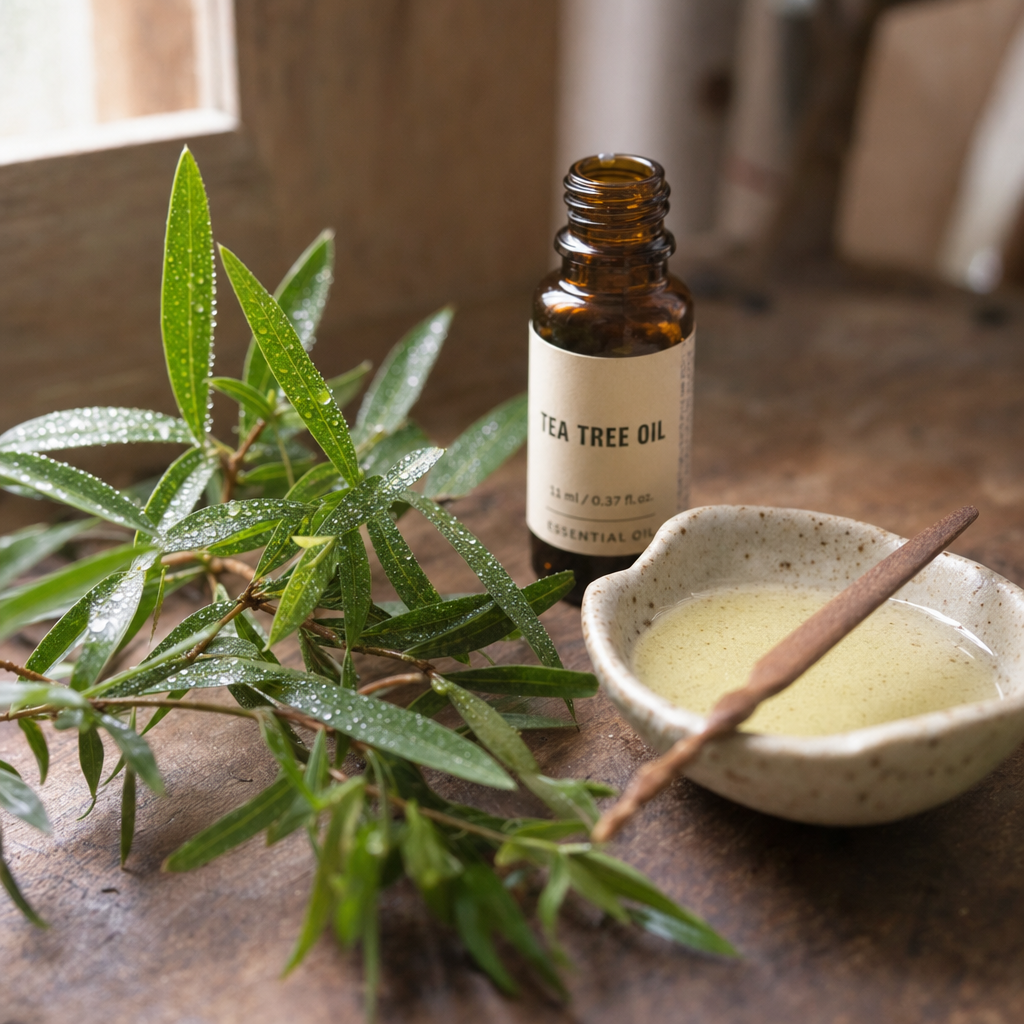
Tea tree oil, derived from the leaves of Melaleuca alternifolia, a native Australian shrub, has become one of the most recognizable herbal remedies in contemporary wellness culture. The oil has been used for centuries in Aboriginal medicine, traditionally applied to wounds, skin irritations, and infections. Today, tea tree appears in everything from skincare products to household cleaners, often marketed as a universal antimicrobial solution. Yet the gap between traditional application and modern scientific evidence is wider than many wellness enthusiasts realise.
This profile separates what we actually know from what marketing has amplified, grounding the discussion in current research and regulatory status.
Traditional Uses
In Aboriginal Australian medicine, tea tree leaves were crushed and applied topically to treat minor cuts, wounds, and skin complaints. The practice reflects a long history of observation: the oil does possess antimicrobial properties, and traditional healers recognised its utility for external wound care.
European herbalists adopted tea tree oil in the early 20th century, particularly after Australian chemist Arthur Penfold's research in the 1920s documented its antimicrobial activity. By the mid-20th century, tea tree oil had entered European herbal practice as a topical remedy for acne, fungal infections, and minor skin irritations. This historical use—always external, always diluted—remains the foundation of how herbalists recommend the oil today.
The traditional framework was clear: tea tree oil was a topical vulnerary (wound healer) and antimicrobial, applied in small amounts to affected skin, never ingested.
Modern Evidence: What Research Actually Shows
According to the National Institutes of Health's National Center for Complementary and Integrative Health (NCCIH), the evidence for tea tree oil is limited and inconsistent across most claimed uses.
Acne: NCCIH notes that a small amount of research supports topical tea tree oil for mild to moderate acne. Some studies suggest it may be comparable to benzoyl peroxide, though evidence remains modest. This is the strongest evidence base for tea tree oil, though clinical trials remain limited in number and scale.
Athlete's Foot and Fungal Conditions: Evidence is mixed and uncertain. While some studies show tea tree oil may help with athlete's foot, NCCIH notes it does not clearly outperform standard antifungal treatments. For fungal nail infections, evidence is insufficient to draw firm conclusions.
Head Lice: Tea tree oil has only been studied in combination with other ingredients, making it impossible to attribute benefit to tea tree alone. NCCIH does not recommend it as a standalone treatment.
Other Claimed Uses: For dandruff, seborrheic dermatitis, and general antimicrobial purposes, evidence is either absent or too preliminary to support clinical recommendations.
Importantly, tea tree oil is not FDA-approved as a drug for any health condition in the United States. It is sold as a cosmetic ingredient and topical dietary supplement, which means it operates under different regulatory oversight than pharmaceuticals.
How Tea Tree Oil Is Traditionally Used (Topical Application Only)
Tea tree oil should never be ingested. All traditional and contemporary herbal applications are topical and external.
For Minor Skin Irritations:
- Dilute 1–2 drops of pure tea tree oil in 1 teaspoon of a carrier oil (coconut, jojoba, or sweet almond oil).
- Apply to the affected area once or twice daily.
- Always perform a patch test on a small area of skin first to check for sensitivity.
For Acne-Prone Skin:
- Mix 1 drop of tea tree oil with 1 teaspoon of a gentle facial oil or unscented moisturiser.
- Apply sparingly to affected areas in the evening.
- Start with the lowest concentration and increase gradually if well tolerated.
For Fungal Concerns:
- Dilute tea tree oil as above and apply to affected skin twice daily.
- Continue for at least 2–4 weeks, as fungal conditions often require sustained application.
- If no improvement occurs after 4 weeks, consult a healthcare practitioner.
Storage: Keep tea tree oil in a dark glass bottle away from direct sunlight and heat. Properly stored, it remains stable for 1–2 years.
Safety, Contraindications, and Critical Warnings
Tea tree oil has a low safety profile for topical use when properly diluted, but carries significant risks if misused.
Topical Safety:
- Always dilute before applying to skin. Undiluted oil can cause irritation, dermatitis, or allergic reactions in sensitive individuals.
- Perform a patch test: apply diluted oil to a small area of inner arm and wait 24 hours before broader use.
- Discontinue use if redness, itching, burning, or rash develops.
- Avoid contact with eyes, mucous membranes, and broken skin.
- Not recommended for use on infants or very young children without professional guidance.
Oral Ingestion — Critical Risk:
Tea tree oil is toxic if swallowed. Even small amounts ingested orally can cause serious neurological effects, including tremors, confusion, loss of coordination, and in severe cases, coma. There is no safe oral dose. Never ingest tea tree oil under any circumstances.
Pregnancy and Breastfeeding:
Limited safety data exists for topical use during pregnancy and breastfeeding. Consult a qualified healthcare practitioner before use.
Drug Interactions:
Tea tree oil may interact with medications that affect the central nervous system or liver metabolism. If you are taking prescription medications, speak with a healthcare professional before using tea tree oil topically.
Allergic Reactions:
Some individuals are sensitive to tea tree oil or its components (particularly limonene and pinene). Allergic contact dermatitis can occur. Discontinue use immediately if an allergic reaction develops.
The Marketing Gap: What Tea Tree Oil Cannot Do
Tea tree oil is frequently marketed as a cure-all antimicrobial, suggested for everything from mouthwash to internal detoxification. These claims exceed the evidence. NCCIH does not support tea tree oil for oral use, internal infections, or systemic health conditions. The traditional use was always external and topical—a distinction modern marketing has often blurred.
Similarly, while tea tree oil does have antimicrobial properties in laboratory settings, this does not automatically translate to clinical efficacy in real-world conditions. Dilution, skin pH, individual variation, and the specific microorganism involved all affect whether tea tree oil will be effective in a given situation.
Conclusion
Tea tree oil represents a case study in how traditional knowledge, legitimate antimicrobial chemistry, and modern marketing can diverge significantly. The evidence supports limited, cautious topical use for mild acne and possibly minor fungal skin concerns—but only when properly diluted and applied with awareness of individual sensitivity. For most other claimed uses, evidence is absent or insufficient.
The safest approach is to view tea tree oil as what it traditionally was: a topical skin remedy, not a systemic cure. If you are considering tea tree oil for any health concern, start with the lowest dilution, patch test first, and discontinue if any irritation occurs. For persistent skin conditions, fungal infections, or any systemic health concern, consult a qualified healthcare practitioner who can assess your individual situation and recommend evidence-based treatment.
---