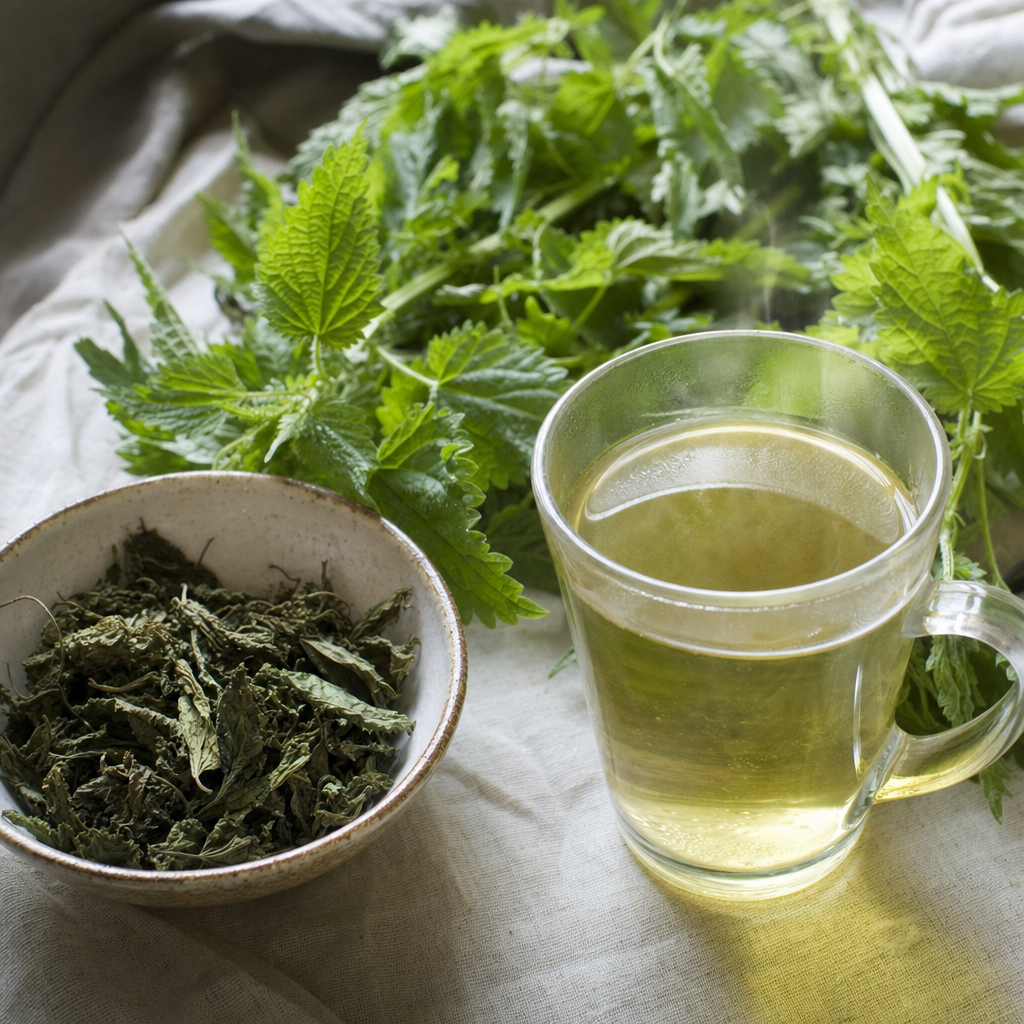
Stinging Nettle: Traditional Uses and Modern Evidence for This Nutritional Powerhouse
Stinging nettle—the plant many of us learned to avoid as children—has been quietly supporting human health for centuries. Known botanically as Urtica dioica, this common nettle is far more than a garden nuisance. Across Europe, Asia, and North America, traditional herbalists have long valued nettle leaf and nettle root for distinct therapeutic purposes. Today, modern research is beginning to validate what herbalists have known for generations: this humble plant deserves a place in your wellness routine.
What Is Stinging Nettle?
Stinging nettle is a perennial herb recognisable by its heart-shaped leaves covered in fine hairs that release irritating compounds when touched—hence the "stinging" in its name. The entire plant is useful, but herbalists typically work with two distinct parts: the leaf (aerial parts) and the root. Each has its own traditional applications and nutritional profile.
The leaf is remarkably nutrient-dense. According to the Herbal Academy, nettle leaf contains significant amounts of calcium, magnesium, iron, selenium, and zinc, along with chlorophyll, flavonoids, and amino acids. This nutritional richness makes it one of the most mineralising herbs available. The root, by contrast, has been the focus of different traditional applications, particularly in European herbal medicine.
Traditional Uses of Stinging Nettle Leaf
In traditional European herbal medicine, nettle leaf has been used to support the body during seasonal transitions and to maintain overall vitality. The European Medicines Agency (EMA) recognises nettle leaf as a traditional herbal remedy for the symptomatic relief of minor articular pain when applied topically. Beyond this, herbalists have traditionally prepared nettle leaf infusions—a long steeping of dried leaf in hot water—to support the body's nutritional status, particularly during times of depletion or recovery.
The mineral content of nettle leaf makes it especially valued in traditional herbalism as a nourishing tonic. Many traditional herbalists recommend nettle leaf infusions as part of seasonal wellness routines, particularly in spring when the fresh plant emerges. The practice of making a strong nettle infusion—sometimes called a "nettle tea" but more accurately a nutrient extraction—has been documented across European folk medicine traditions for generations.
Nettle leaf has also been traditionally used to support healthy inflammatory response in the body, though this use is less formally recognised by regulatory bodies than its topical pain application. Traditional practitioners often recommend nettle as part of a broader wellness protocol rather than as a single-herb solution.
Traditional Uses of Stinging Nettle Root
The root of stinging nettle has a distinct traditional history, particularly in German and Scandinavian herbalism. The EMA HMPC (Herbal Medicinal Products Committee) recognises nettle root as a traditional herbal remedy for symptomatic relief of lower urinary tract symptoms associated with benign prostatic hyperplasia (BPH) in men. This traditional use is supported by multiple prospective clinical studies, which have found nettle root extract to be well-tolerated with minimal adverse effects and no significant liver enzyme changes documented.
Research published in the NIH NCBI database notes that nettle root has been studied for BPH symptoms across numerous trials, with consistent findings of safety and tolerability. The traditional use of nettle root for this purpose reflects centuries of practice in European herbal medicine, now supported by modern clinical investigation.
Modern Evidence: What Research Tells Us
While traditional use provides important context, modern science offers additional insight into how stinging nettle works in the body.
Nettle Leaf: According to NIH NCCIH, research on nettle leaf is ongoing, with preliminary studies suggesting potential support for seasonal allergies and general nutritional status. The high mineral content is well-documented, making nettle leaf a legitimate choice for those seeking to increase dietary mineral intake through herbal supplementation. However, NCCIH notes that large-scale clinical trials specifically examining nettle leaf for particular health conditions remain limited. What we do know is that nettle leaf is nutrient-dense and has been safely consumed for centuries.
Nettle Root: The evidence for nettle root in supporting lower urinary tract symptoms associated with BPH is more robust. Multiple prospective studies have demonstrated consistent, mild-to-moderate benefit, with an excellent safety profile. The Herbal Academy notes that nettle root is one of the few herbal remedies with substantial clinical backing for its traditional use. Men experiencing lower urinary tract symptoms often find nettle root a well-tolerated option worth exploring with their healthcare provider.
How to Use Stinging Nettle
Nettle Leaf Infusion (Nourishing Tea)
The most traditional and accessible way to use nettle leaf is as an infusion. This method extracts the minerals and nutrients effectively.
Basic Recipe:
- 1 ounce (approximately 28 grams) of dried nettle leaf
- 1 quart (approximately 1 litre) of freshly boiled water
- Infuser, teapot, or jar with lid
Instructions:
1. Place dried nettle leaf in your chosen vessel.
2. Pour freshly boiled water over the leaf.
3. Cover and allow to steep for 4–8 hours (or overnight). Longer steeping extracts more minerals.
4. Strain and drink warm or chilled, throughout the day.
5. Store any unused infusion in the refrigerator for up to 48 hours.
A traditional serving is 1–2 cups daily. Many herbalists recommend this as a seasonal tonic rather than a daily year-round practice, though it is safe for regular use.
Nettle Leaf Tea (Quick Brew)
For a faster preparation:
- 1–2 teaspoons of dried nettle leaf per cup of hot water
- Steep for 5–10 minutes
- Strain and drink
This method is less nutrient-extractive than a full infusion but remains nourishing and is convenient for daily use.
Nettle Root Preparation
Nettle root is typically taken as a standardised extract or tincture, often in combination with other herbs. Because root preparations require more processing, most people source these from qualified herbalists or reputable suppliers rather than preparing them at home. If you are interested in nettle root for lower urinary tract support, consult a qualified healthcare practitioner who can recommend an appropriate preparation and dosage.
Safety, Contraindications, and Important Considerations
Stinging nettle leaf is generally recognised as safe and has an excellent safety profile. According to the Herbal Academy, nettle leaf is well-tolerated with minimal adverse effects reported in the literature. It is commonly used as a food ingredient and has been safely consumed for centuries.
Contraindications and Cautions:
- Pregnancy and breastfeeding: While nettle leaf is traditionally used during pregnancy in some cultures for its mineral content, pregnant and breastfeeding individuals should consult a qualified healthcare practitioner before use, as safety data in these populations is limited.
- Medication interactions: Nettle may have mild diuretic properties. If you are taking diuretic medications or blood pressure medications, consult your healthcare provider before regular use.
- Allergies: Individuals with known allergies to plants in the Urticaceae family should avoid nettle.
- Skin contact: Fresh nettle plants cause skin irritation due to their stinging hairs. Wear gloves when harvesting or handling fresh plant material. Dried nettle does not cause this reaction.
Nettle Root Specific Cautions:
If considering nettle root for lower urinary tract symptoms, it is important to have a healthcare provider rule out other conditions that may present with similar symptoms, such as urinary tract infection or prostate cancer. Nettle root should not be used as a substitute for professional medical evaluation.