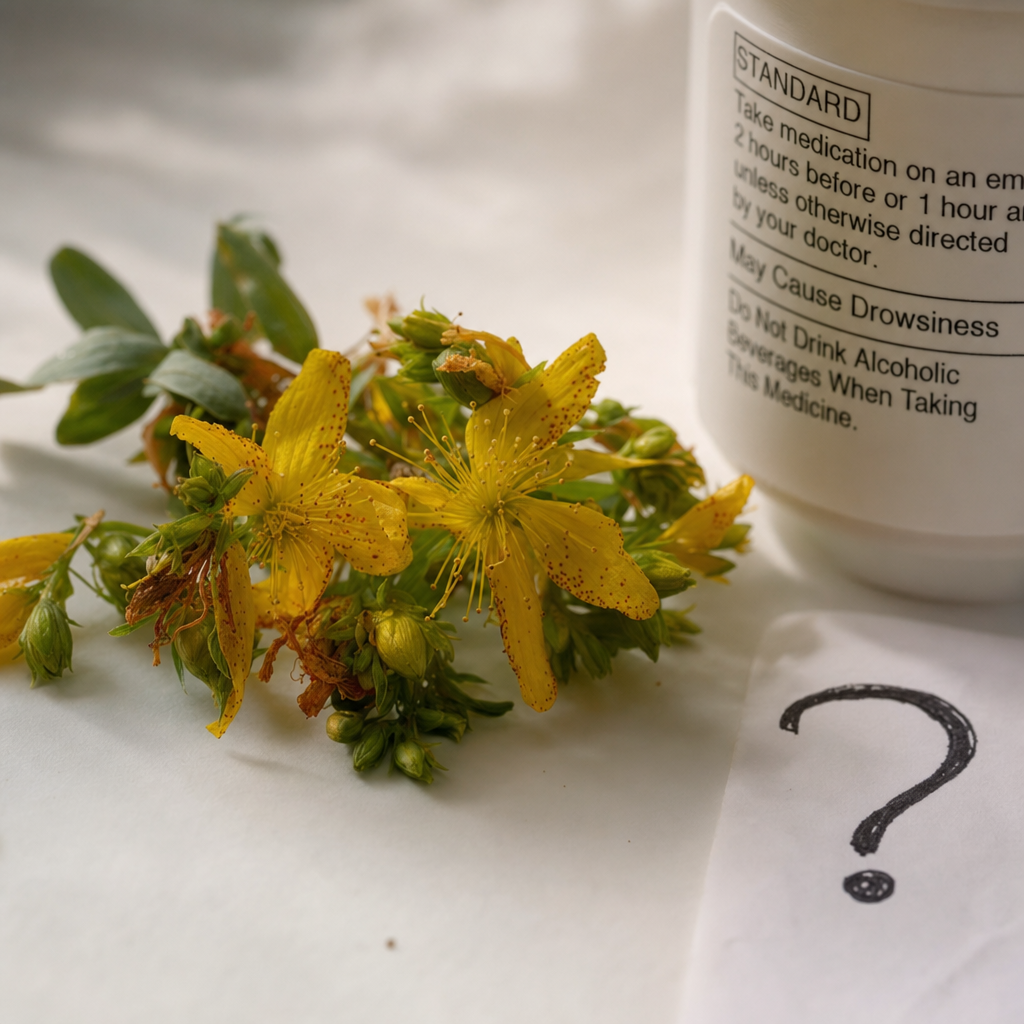
St. John's Wort and Your Medications: The Interactions You Must Know About
St. John's Wort (Hypericum perforatum) is one of the most widely used herbal supplements in the world, yet it remains one of the most misunderstood. While traditional herbalists have valued this bright yellow flower for centuries, modern research has revealed a complex picture: St. John's Wort can be genuinely helpful for some people, but it also carries serious risks that many users never discover until it's too late. If you're considering St. John's Wort—or already taking it—understanding how it interacts with medications and your body is essential.
What Is St. John's Wort?
St. John's Wort is a perennial herb native to Europe and western Asia, now found across temperate regions worldwide. The plant produces small, bright yellow flowers dotted with tiny red glands that contain the herb's active compounds. The name "St. John's Wort" traditionally refers to the flowering tops, which are harvested and dried for use in teas, tinctures, capsules, and extracts.
The herb contains several bioactive constituents, including hypericin, hyperforin, and flavonoids. These compounds are believed to be responsible for St. John's Wort's effects on mood and nervous system function. In the United States, St. John's Wort is sold as a dietary supplement. In several European countries, including Germany, it is regulated as a medicinal herb and approved for mild to moderate depression.
Traditional Uses and Historical Context
For over 2,000 years, herbalists across Europe have used St. John's Wort for emotional support, nervous tension, and wound healing. Medieval healers associated the herb with St. John the Baptist and believed it held protective and restorative powers. Traditional herbalists prepared St. John's Wort as an infusion, tincture, or oil and used it to support emotional resilience during difficult seasons of life.
In traditional European herbal medicine, St. John's Wort was also valued as a vulnerary—a herb believed to support the body's natural healing response to minor wounds and skin irritation. Some herbalists prepared an infused oil by steeping the flowering tops in carrier oil, which was then applied topically to support skin comfort.
What Modern Research Actually Shows
According to NIH NCCIH, St. John's Wort appears to be more effective than placebo and as effective as standard antidepressant medications for mild to moderate depression. However, this finding comes with important caveats: the evidence is strongest for mild depression, study quality varies, and the herb's effects are modest. NCCIH also notes that limited evidence exists for other conditions including hot flashes, somatic symptom disorder, ADHD, irritable bowel syndrome, obsessive-compulsive disorder, premenstrual syndrome, and smoking cessation.
The most significant finding from modern research, however, is not about St. John's Wort's benefits—it's about its dangers. St. John's Wort is a potent inducer of liver enzymes, particularly the cytochrome P450 system. This means it can dramatically reduce the effectiveness of many medications by speeding up how your body breaks them down. This interaction is not theoretical; it has real clinical consequences.
Critical Drug Interactions: What You Must Know
St. John's Wort interacts with a wide range of medications. If you take any of the following, St. John's Wort may reduce their effectiveness or cause serious complications:
Antidepressants and psychiatric medications: St. John's Wort can interact with SSRIs (selective serotonin reuptake inhibitors), SNRIs (serotonin-norepinephrine reuptake inhibitors), and other antidepressants, potentially increasing the risk of serotonin syndrome—a serious condition marked by agitation, confusion, rapid heart rate, and high blood pressure.
Birth control pills: St. John's Wort may reduce the effectiveness of hormonal contraceptives, increasing the risk of unintended pregnancy. This interaction is well-documented and significant enough that healthcare providers routinely counsel patients about it.
Blood thinners: If you take warfarin or other anticoagulants, St. John's Wort may reduce their effectiveness, potentially increasing clot risk.
Heart medications: St. John's Wort can reduce the effectiveness of digoxin and other cardiac glycosides, as well as certain blood pressure medications.
Immunosuppressants: Organ transplant recipients taking immunosuppressive drugs should avoid St. John's Wort, as it may reduce drug levels and increase rejection risk.
HIV medications: St. John's Wort significantly reduces levels of protease inhibitors and non-nucleoside reverse transcriptase inhibitors, making it unsuitable for people with HIV.
Cancer medications: Some chemotherapy drugs may be affected by St. John's Wort's enzyme-inducing effects.
Migraine medications: Triptans and other migraine treatments may interact with St. John's Wort.
This is not an exhaustive list. St. John's Wort interacts with dozens of medications across multiple drug classes. If you take any prescription medication, you must consult a qualified healthcare professional before using St. John's Wort.
How St. John's Wort Is Used
Traditionally, St. John's Wort is prepared as a tea infusion using the dried flowering tops, steeped in hot water for 5–10 minutes. Some herbalists prepare a tincture by macerating the fresh or dried herb in alcohol or glycerin. Standardised extracts, typically standardised to hypericin content, are also widely available as capsules or tablets.
If a qualified healthcare practitioner determines that St. John's Wort is appropriate for your situation, typical dosing in research studies has ranged from 300 to 900 mg daily of standardised extract, divided into multiple doses. However, dosing should always be individualised based on your specific health status, other medications, and practitioner guidance.
St. John's Wort takes time to work. Research suggests that benefits for mood may not appear for 4–6 weeks of consistent use. This delayed onset is similar to prescription antidepressants and reflects how the herb affects neurotransmitter systems.
Safety Considerations and Who Should Avoid St. John's Wort
St. John's Wort is not appropriate for everyone. Beyond drug interactions, several groups should avoid this herb entirely:
Pregnancy and breastfeeding: Insufficient safety data exists for St. John's Wort during pregnancy or while breastfeeding. Pregnant and nursing individuals should not use this herb.
Bipolar disorder: St. John's Wort may trigger manic episodes in people with bipolar disorder and should be avoided.
Photosensitivity: St. John's Wort can increase skin sensitivity to sunlight. People with photosensitive conditions or those taking photosensitising medications should use caution and consider avoiding this herb.
Liver disease: Because St. John's Wort is metabolised by the liver, people with existing liver disease should consult a healthcare professional before use.
Upcoming surgery: St. John's Wort should be discontinued at least two weeks before surgery, as it may interact with anaesthetic agents and other perioperative medications.
Children: Safety and efficacy in children have not been established. St. John's Wort should not be given to children without explicit guidance from a qualified healthcare practitioner.
Even for people without these contraindications, St. John's Wort can cause side effects. Common side effects include photosensitivity, gastrointestinal upset, headache, dizziness, and sexual dysfunction. Some people experience increased anxiety or restlessness, particularly when first starting the herb.
The Bottom Line: When St. John's Wort Might Be Appropriate
For some people—specifically those with mild to moderate depression who are not taking other medications and have no contraindications—St. John's Wort may offer a gentle, evidence-supported option. However, this represents a narrow population. For the vast majority of people considering St. John's Wort, the risks outweigh the benefits, particularly if medications are involved.
The key principle is this: St. John's Wort is not a "natural" alternative to prescription antidepressants that can be used interchangeably or without professional guidance. It is a bioactive herb with real effects on your body and real potential to interfere with your medical care. Treating it as a simple supplement to try without consulting a healthcare provider is genuinely risky.
If you are interested in herbal support for mood, anxiety, or sleep, many other herbs in the Leaves of Healing remedy library offer gentler profiles with fewer drug interactions. Chamomile, Lemon Balm, Lavender, Passionflower, and Skullcap are all traditionally used to support nervous system calm and emotional resilience, with significantly lower interaction risks.
Important Disclaimer
This content is for educational purposes only and should not be construed as medical advice. St. John's Wort is a bioactive herb with significant potential for drug interactions and adverse effects. Before using St. John's Wort—or any herbal supplement—you must speak to a qualified healthcare professional, particularly if you take any medications, have a health condition, are pregnant or breastfeeding, or are scheduled for surgery. Your healthcare provider can assess your individual situation, review your current medications, and determine whether St. John's Wort is appropriate and safe for you. Do not start, stop, or change the dose of any medication or supplement without professional guidance.