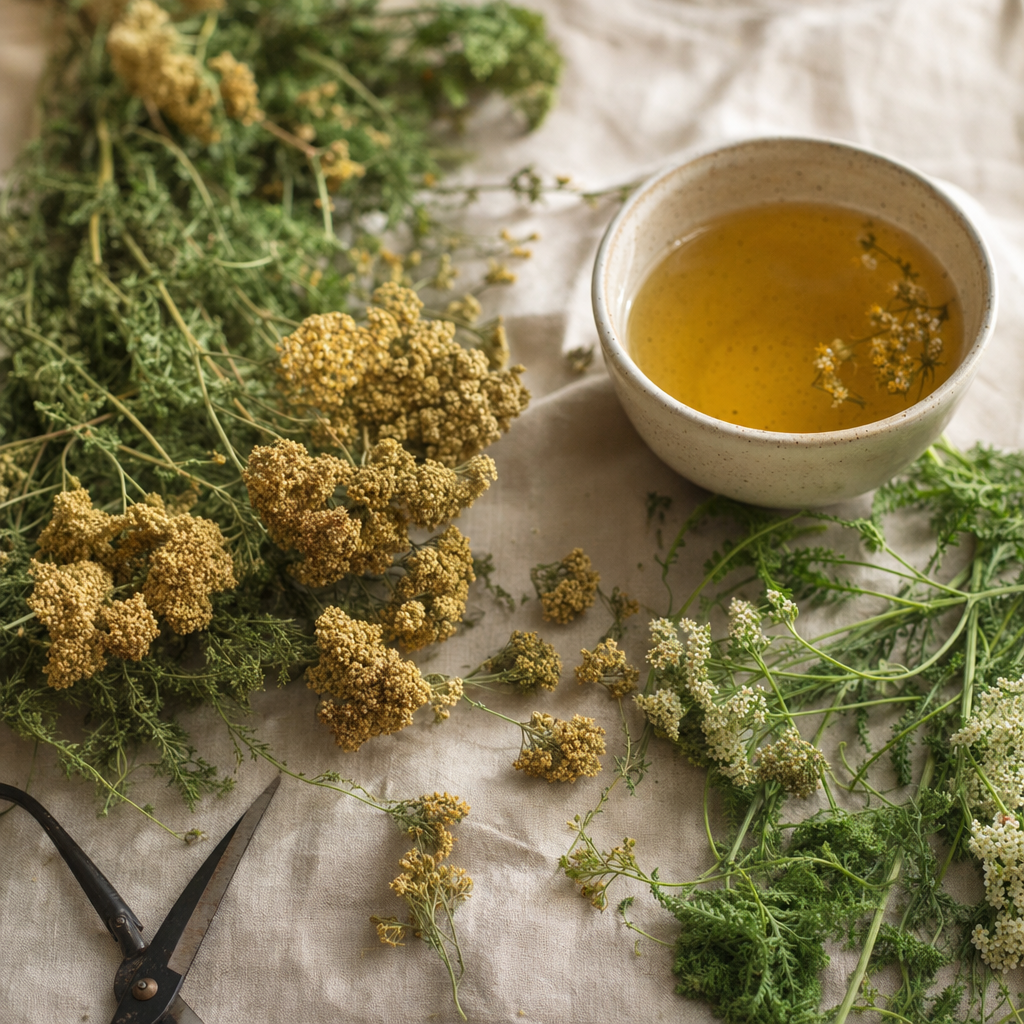
Herb Profile: Yarrow (Achillea millefolium)
Overview
Yarrow, scientifically known as Achillea millefolium, is a perennial flowering plant with feathery, finely divided leaves and delicate flower clusters that range from white and pink to yellow and deep red. Known colloquially as milfoil or common yarrow, this herb has been woven into traditional medicine systems across Europe, Asia, and North America for centuries. The name Achillea itself traces back to Greek mythology—the hero Achilles is said to have used yarrow to staunch wounds on the battlefield, a testament to the herb's historical reputation as a powerful vulnerary.
Today, yarrow remains a cornerstone of herbal wellness routines, valued for its traditional applications in supporting wound healing, digestive comfort, and seasonal wellness. The plant's aerial parts (leaves, stems, and flowers) contain a rich profile of bioactive compounds, including flavonoids, sesquiterpene lactones (notably achillin), alkaloids, and tannins—constituents that herbalists believe contribute to its multifaceted actions.
Traditional Uses
Yarrow has earned its place in herbal medicine cabinets through centuries of documented traditional use. The European Medicines Agency's Herbal Medicinal Products Committee (EMA HMPC) recognises yarrow's traditional applications, particularly for minor wounds and skin irritations when applied topically, and for temporary digestive discomfort and minor loss of appetite when taken internally.
Wound Support and Skin Care
Traditionally, yarrow has been used as a haemostatic—an herb believed to support the body's natural ability to stop bleeding and promote clotting. Herbalists have long applied yarrow poultices, infusions, and salves to minor cuts, scrapes, and wounds. The herb's traditional reputation as a vulnerary (wound-healing herb) rests on its historical use to cleanse wounds and support the skin's natural repair processes. This application remains one of yarrow's most recognised uses in contemporary herbal practice.
Fever and Seasonal Wellness
In traditional European herbalism, yarrow is classified as a diaphoretic—an herb traditionally used to promote gentle sweating during febrile episodes. This action is thought to support the body's natural temperature-regulation processes. Yarrow tea has been a folk remedy across many cultures during times of seasonal discomfort, often combined with other warming or cooling herbs depending on the season and individual need.
Digestive Comfort
The EMA HMPC acknowledges yarrow's traditional use for minor spasmodic gastrointestinal complaints and temporary loss of appetite. Herbalists have traditionally prepared yarrow infusions to support digestive function, particularly when mild cramping or sluggish appetite accompanies seasonal changes or stress. The herb's bitter compounds are thought to stimulate digestive secretions, making it a classic choice in traditional digestive bitters formulas.
Menstrual and Reproductive Wellness
In traditional herbalism, yarrow has been used to support healthy menstrual cycles and ease minor menstrual discomfort. Some herbalists classify it as an emmenagogue—an herb traditionally believed to support menstrual flow. This application, while less formally recognised by modern regulatory bodies, remains embedded in folk practice across Europe and North America.
Modern Evidence Summary
Modern scientific investigation into yarrow remains limited compared to some other traditional herbs, yet emerging research supports several of its traditional applications.
What Research Suggests
Laboratory studies have confirmed that yarrow contains compounds with anti-inflammatory and antimicrobial properties. In vitro research has demonstrated that yarrow extracts exhibit activity against certain bacterial strains and possess flavonoid content consistent with antioxidant potential. However, these laboratory findings have not yet translated into large-scale human clinical trials that would definitively establish yarrow's efficacy for specific health conditions.
The NIH National Center for Complementary and Integrative Health (NCCIH) does not maintain a dedicated research summary for yarrow, reflecting the herb's status as an area requiring further clinical investigation. Most modern evidence remains preliminary, grounded in traditional use documentation and phytochemical analysis rather than robust randomised controlled trials.
Traditional Use Recognition
What yarrow lacks in abundant modern clinical data, it compensates for through centuries of documented traditional use and regulatory recognition. The EMA HMPC's acknowledgement of yarrow for minor wounds, skin irritations, and digestive complaints represents a formal acceptance of its safety and plausibility for these applications based on historical evidence and traditional knowledge.
How to Use Yarrow
Yarrow can be prepared in several traditional forms, each suited to different applications and preferences.
Infusion (Tea)
The most common preparation for internal use is a gentle infusion. Steep 1 to 2 teaspoons of dried yarrow aerial parts in 8 ounces of hot (not boiling) water for 5 to 10 minutes, then strain. This can be sipped once or twice daily to support digestive comfort or seasonal wellness. Some herbalists recommend drinking yarrow tea warm, particularly during cooler months or when fever support is desired. The taste is characteristically bitter and slightly astringent—a flavour profile that signals the presence of tannins and bitter compounds valued in traditional herbalism.
Topical Poultice or Salve
For minor wounds and skin irritations, yarrow can be applied directly to the skin. To make a simple poultice, bruise fresh yarrow leaves and flowers and apply them directly to a clean wound, securing with a clean cloth. Alternatively, prepare a yarrow-infused oil by steeping dried yarrow in a carrier oil (such as olive or calendula oil) for several weeks, then strain and use as a base for homemade salves. Calendula, another herb from the Leaves of Healing remedy library, pairs beautifully with yarrow for enhanced wound support.
Tincture
A yarrow tincture (herb steeped in alcohol) offers a concentrated form suitable for those who prefer not to drink tea. A typical dose is 20 to 40 drops in water, taken once or twice daily. Tinctures have a longer shelf life than infusions and are convenient for travel or busy schedules.
Dried Herb Blends
Yarrow combines well with other herbs in the Leaves of Healing ecosystem. For digestive support, blend yarrow with peppermint and lemon balm. For seasonal wellness, combine yarrow with elderberry and linden flower. For wound support, pair yarrow with plantain and calendula in a topical preparation.
Safety and Contraindications
Yarrow is generally regarded as safe for most adults when used in traditional doses and preparations. The herb has a long history of use with a favourable safety profile, and no serious adverse events have been widely documented in the herbal medicine literature.
Pregnancy and Nursing
Yarrow is traditionally contraindicated during pregnancy due to its historical classification as an emmenagogue and its potential to stimulate uterine contractions. While modern evidence on this risk is limited, the precautionary principle suggests that pregnant individuals should avoid yarrow. Nursing mothers should also exercise caution and consult a qualified healthcare practitioner before use.
Allergic Reactions
Individuals with known allergies to plants in the Asteraceae family (ragweed, chrysanthemums, daisies, and related species) may experience cross-reactivity with yarrow. Those with a history of allergic contact dermatitis should perform a patch test before applying yarrow topically.
Medication Interactions
Yarrow may interact with blood-thinning medications (such as warfarin) due to its traditional haemostatic properties and potential vitamin K content. Individuals taking anticoagulants should consult a healthcare provider before using yarrow internally.
Excessive Internal Use
While yarrow is safe in traditional doses, excessive or prolonged internal use may cause gastrointestinal upset or skin sensitivity in susceptible individuals. Stick to recommended infusion amounts and duration.
Practitioner Disclaimer
This content is for educational purposes only and is not intended to diagnose, treat, cure, or prevent any disease. Yarrow is not a substitute for professional medical care. If you have a health condition, are pregnant or nursing, take medications, or experience adverse reactions, speak to a qualified healthcare professional before using this herb. Always source yarrow from reputable suppliers and ensure proper plant identification before harvesting wild yarrow. When in doubt, consult an herbalist or naturopathic practitioner who can assess your individual health situation and recommend appropriate herbal support.