St. John's Wort and Medication Safety: What You Need to Know Before You Start
WARNING: SAFETY EDUCATIONAL CONTENT
St. John's Wort is one of the most widely used herbal supplements for mood support -- and one of the most important to understand before adding to your routine, especially if you're taking any prescription medications. This guide covers the known interaction risks, who should avoid it, and safer alternatives with lower interaction profiles.
This is educational information only. It is not a substitute for advice from your healthcare provider. Always consult a qualified practitioner before starting any herbal supplement, especially if you take prescription medications.
What St. John's Wort Is
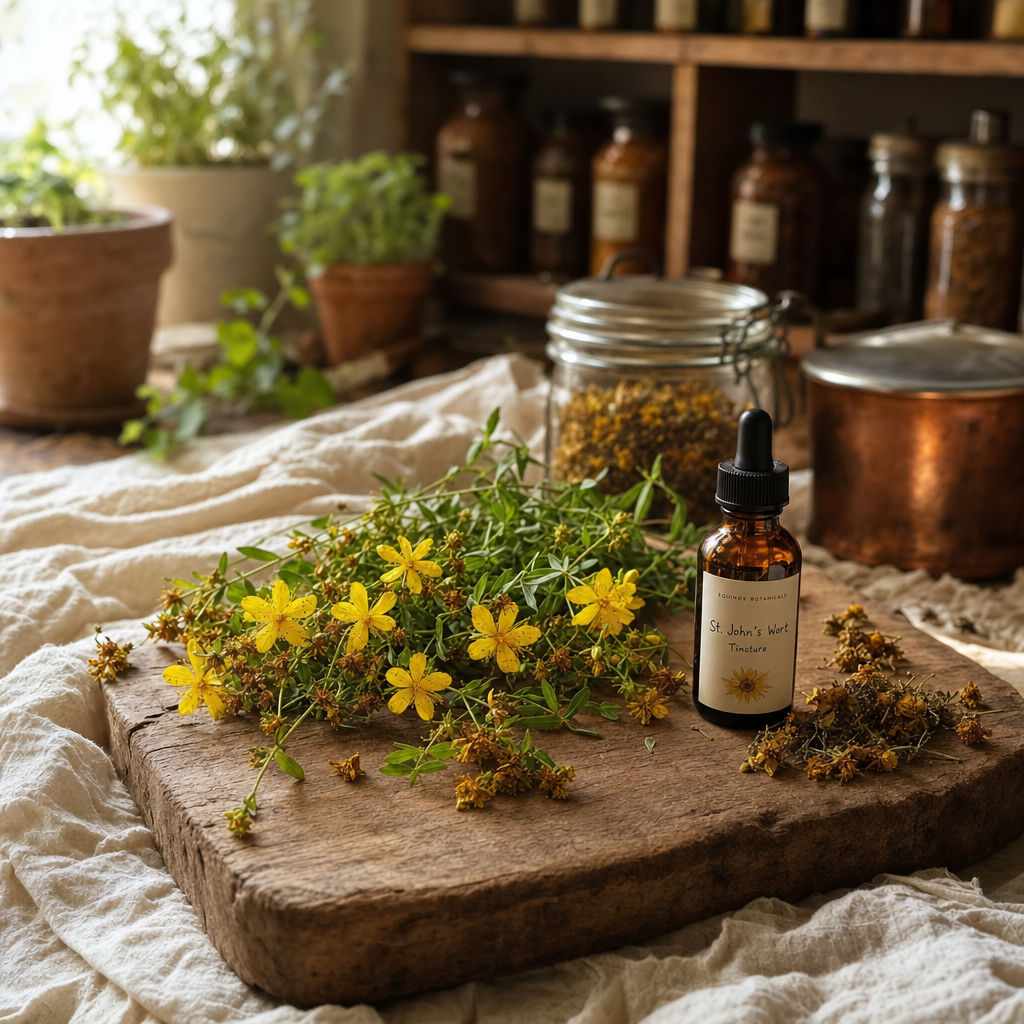
St. John's Wort is a perennial plant with bright yellow flowers that has been used in traditional European medicine for centuries. It is traditionally harvested around the summer solstice, near the feast day of St. John. For generations, it has been used for mood support and nervous system resilience.
The active compounds -- hyperforin and hypericin -- appear to interact with neurotransmitter systems in the brain. Research from the National Institutes of Health's National Center for Complementary and Integrative Health (NIH NCCIH) explores its effects on mood concerns, which is why it is regulated as a medicinal herb in several European countries and sold as a dietary supplement in the United States.
How St. John's Wort Can Interfere With Medications
St. John's Wort can affect how the liver processes certain medications, which means those medications may not reach the levels the body needs. The result is that a medication may become less effective.
Medications that commonly interact with St. John's Wort:
- Oral contraceptives (hormonal birth control): St. John's Wort can reduce their effectiveness.
- Antiretroviral medications (HIV treatments): Reduced drug levels can compromise viral suppression.
- Anticoagulants (blood thinners such as warfarin): Reduced effectiveness increases clotting risk.
- Immunosuppressants (used after organ transplants): Lower levels can trigger rejection.
- Antidepressants and anti-anxiety medications: St. John's Wort can interact with antidepressants in a way that affects how the medication works. If you take any antidepressant, speak with your prescriber before considering this herb.
- Statins (cholesterol medications): Reduced effectiveness.
- Digoxin (heart medication): Lower levels can compromise heart function.
- Certain cancer medications: Reduced effectiveness.
- Migraine medications: Can interact with St. John's Wort in ways that affect how both work -- check with your doctor first.
- Diabetes medications: Potential for altered blood sugar control.
This is not the complete list. St. John's Wort interacts with dozens of medications, and researchers continue to identify new ones.
What Health Authorities Say
The NIH NCCIH acknowledges both the potential benefits and the serious interaction risks. The European Medicines Agency (EMA) requires medical consultation before use in many European healthcare systems.
In 2000, the U.S. Food and Drug Administration issued a specific public health advisory about St. John's Wort reducing the effectiveness of oral contraceptives and other medications. The American Academy of Family Physicians has also issued cautions on the same basis.
Who Should Avoid St. John's Wort Without Medical Guidance
St. John's Wort is not recommended without explicit guidance from a qualified healthcare practitioner for anyone who:
- Takes any prescription medications (the interaction risk is too broad to assume safety)
- Uses hormonal contraception
- Takes blood thinners or has a bleeding disorder
- Has had an organ transplant
- Is pregnant or breastfeeding
- Has bipolar disorder (St. John's Wort may trigger mood changes)
- Is scheduled for surgery (it can interact with anesthesia)
- Takes any other mood-support supplements or medications
A Note on Antidepressants
If you take any antidepressant -- whether an SSRI, SNRI, or another type -- St. John's Wort is one herb where a genuine conversation with your prescriber matters before starting. The two can interact in ways that affect how the medication works. A prescriber can advise whether it is relevant to your situation and help identify alternatives that work safely alongside existing treatment.
Before You Start: Talk to Your Healthcare Provider
The most important step is being fully transparent with your healthcare provider. Before starting St. John's Wort -- or any herbal supplement -- bring a complete list of everything you are taking: prescription medications, contraceptives, supplements, vitamins, minerals, and other herbal products.
Your healthcare provider can assess your specific situation and advise whether St. John's Wort is safe for you, or whether there are better options that will not interfere with your current medications.
Safer Alternatives for Mood and Energy Support
For herbal support for mood, energy, or nervous system resilience, there are options with significantly lower interaction profiles. Herbs including Rhodiola Rosea, Holy Basil (Tulsi), Lemon Balm, and Passionflower have traditionally been used for mood and stress resilience, and they carry considerably lower interaction risks for most people. A personalised herbal protocol, developed with awareness of your full medication picture, is the most effective approach.
Summary
St. John's Wort is a powerful herb with a well-documented interaction profile. The risks are real and established across multiple health authorities. Approaching it with professional guidance -- and full awareness of how it interacts with existing medications -- is the responsible path.
Always consult a qualified healthcare practitioner before using St. John's Wort or any herbal remedy, especially if you take any medications.