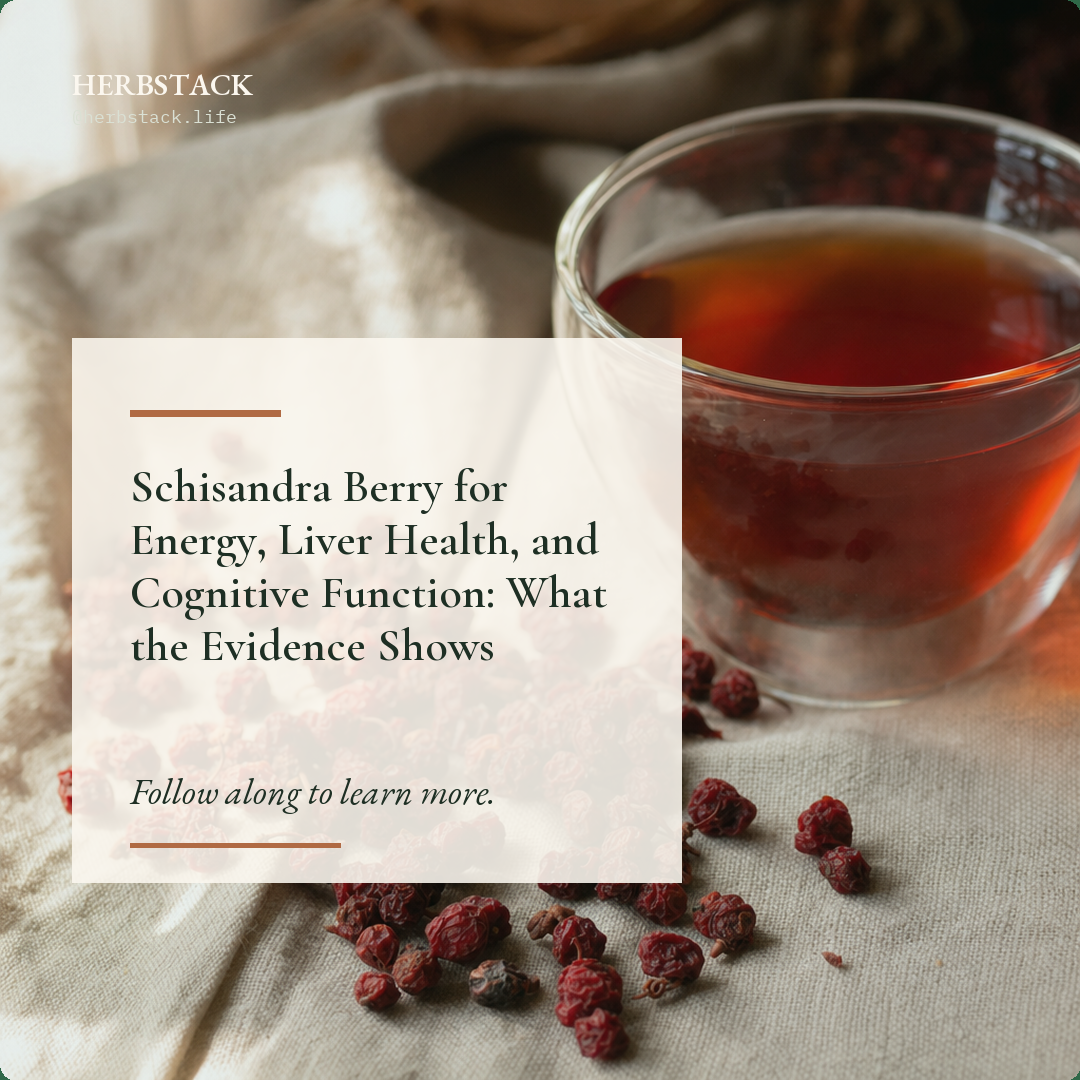
Schisandra Berry for Energy, Liver Health, and Cognitive Function: What the Evidence Shows
Schisandra berry—the small, bright red fruit of Schisandra chinensis—has been used in traditional Chinese medicine for over two thousand years. Known as the "five-flavour berry" because it tastes simultaneously sweet, sour, salty, bitter, and pungent, schisandra has earned a reputation as a powerful adaptogenic herb. Today, it's gaining attention in Western wellness circles as women and families seek natural support for sustained energy, mental clarity, and liver resilience. But what does the science actually say about this ancient berry?
What Is Schisandra Berry?
Schisandra is a woody vine native to northeastern China, Russia, Korea, and Japan. The berry itself is small—roughly the size of a peppercorn—with a thin red skin and a single seed inside. Traditional herbalists prize it not just for its flavour profile, but for its complex chemistry: schisandra contains lignans (particularly schisandrin), essential oils, and organic acids that appear to support multiple body systems simultaneously.
In traditional Chinese medicine, schisandra is classified as a "qi tonic"—an herb believed to restore vital energy and support the body's adaptive capacity. It's also been traditionally used to support liver function, promote restful sleep, and enhance mental focus during demanding seasons.
Traditional Uses and Historical Context
For centuries, schisandra has been valued by herbalists and practitioners across Asia. Traditional applications include:
- Energy and endurance: Used to combat fatigue and support sustained vitality, particularly during physically or mentally demanding periods
- Liver support: Traditionally employed to promote healthy liver function and resilience
- Cognitive clarity: Historically used to support focus, memory, and mental stamina
- Sleep quality: Traditionally used to promote restful sleep and calm the nervous system
- Stress resilience: Valued as an adaptogenic herb to help the body respond more gracefully to stress
These traditional uses reflect schisandra's classification as an adaptogen—a category of herbs believed to help the body maintain balance and respond more effectively to life's demands.
What Does Modern Research Suggest?
The scientific investigation of schisandra is still evolving, but several lines of research offer encouraging insights:
Energy and Physical Performance
Research published in Phytotherapy Research and other peer-reviewed journals has explored schisandra's effects on fatigue and endurance. Some studies suggest that schisandra may help support physical stamina and reduce feelings of tiredness, particularly in individuals experiencing stress-related fatigue. However, the evidence base remains modest, and more large-scale human studies are needed to establish definitive recommendations.
Liver Health and Detoxification
Schisandra has been the subject of hepatoprotective (liver-protective) research, particularly in Asian scientific literature. Studies suggest that the lignans in schisandra may support the liver's natural detoxification processes and help maintain healthy liver enzyme levels. According to research reviewed by herbalists and phytotherapists, schisandra appears to support liver resilience during periods of metabolic stress. Again, while the traditional use is well-established, Western clinical evidence in humans remains limited.
Cognitive Function and Mental Clarity
Some preliminary research suggests that schisandra may support cognitive performance, particularly under conditions of stress or fatigue. The herb's traditional use for mental focus aligns with emerging evidence that its active compounds may support neurotransmitter function and mental endurance. However, most studies have been conducted in laboratory or animal models; human clinical trials are sparse.
Adaptogenic Properties
As an adaptogen, schisandra is theoretically believed to help the body maintain homeostasis during stress. While the adaptogenic category itself remains somewhat controversial in Western science—the term lacks a universally agreed-upon definition—herbs like schisandra have shown promise in preliminary research for supporting stress resilience and emotional balance.
Important Note on Evidence: The research on schisandra is promising but not yet conclusive. Most human studies are small, and many have been conducted in Asia with varying methodological rigor. Western clinical evidence, particularly in large randomized controlled trials, remains limited. Schisandra should be understood as a traditionally used herb with emerging scientific interest, not as a clinically proven treatment for any specific condition.
How to Prepare and Use Schisandra Berry
Schisandra can be prepared in several accessible ways:
Dried Berry Tea
The simplest preparation is a gentle tea. Steep 1–2 teaspoons of dried schisandra berries in 8 ounces of hot (not boiling) water for 5–10 minutes. Strain and drink. The tea will have a distinctive tart, slightly sweet flavour. You can prepare this once or twice daily, ideally in the morning or early afternoon to support energy without interfering with sleep.
Schisandra Tincture
A tincture (alcohol or glycerin extract) offers concentrated support. A typical dose is 1–2 millilitres (roughly 20–40 drops) in water, taken once or twice daily. Tinctures are convenient for busy families and offer a longer shelf life than dried berries.
Schisandra in Herbal Blends
Schisandra pairs well with other adaptogenic and energy-supporting herbs from the HerbStack ecosystem, such as:
- Rhodiola Rosea for additional stress resilience and mental clarity
- Holy Basil (Tulsi) for nervous system support and calm energy
- Oat Straw (Avena Sativa) for gentle, sustained nourishment
- Lion's Mane Mushroom for cognitive support
A simple energy-supporting blend might combine equal parts dried schisandra berries, holy basil leaf, and oat straw. Steep 1–2 teaspoons of the blend in hot water for 10 minutes, strain, and drink once or twice daily.
Schisandra Syrup
For families seeking a more palatable option, schisandra can be gently simmered with honey and water to create a syrup. Simmer 2 tablespoons of dried berries in 1 cup of water for 15–20 minutes, strain, and stir in 2–3 tablespoons of raw honey. Store in a glass jar in the refrigerator and use 1 teaspoon daily as needed.
Preparation Tips:
- Use dried berries rather than fresh; they're more concentrated and shelf-stable
- Avoid boiling water, which can degrade delicate compounds
- Schisandra's flavour is distinctive and somewhat acquired; blending with milder herbs can improve palatability
- Consistency matters: herbal support typically requires regular use over weeks, not occasional doses
Safety, Contraindications, and When to Consult a Professional
Schisandra is generally considered safe for most adults when used as directed. However, certain individuals should exercise caution or avoid it altogether:
Who Should Avoid Schisandra:
- Pregnant or breastfeeding women: Limited safety data exists for pregnancy and lactation. Consult a qualified healthcare practitioner before use.
- Individuals with active liver disease: While schisandra is traditionally used to support liver health, those with diagnosed liver conditions should seek professional guidance before use.
- People taking medications that affect liver metabolism: Schisandra may interact with certain pharmaceutical drugs processed by the liver. Speak with your healthcare provider if you take medications regularly.
- Those with high stomach acid or active ulcers: Schisandra's sour taste and acidic nature may aggravate these conditions.
- Individuals with seizure disorders: Some traditional sources suggest caution, though evidence is limited. Consult a healthcare professional.
Possible Side Effects:
Most people tolerate schisandra well. Rarely, some individuals report:
- Mild digestive upset or heartburn
- Sleep disruption if taken late in the day (schisandra is energizing)
- Allergic reactions (uncommon but possible)
Drug Interactions:
Schisandra may interact with:
- Medications metabolized by the liver (cytochrome P450 enzymes): Consult your healthcare provider
- Sedative medications: Schisandra's stimulating properties may counteract sedatives
- Blood pressure medications: Limited evidence suggests schisandra may affect blood pressure; monitor if you take antihypertensive drugs
When to Seek Professional Guidance:
- Before using schisandra if you have a diagnosed medical condition
- If you take prescription medications regularly
- If you experience adverse effects
- If you are pregnant, breastfeeding, or planning to become pregnant
- If you have a family history of liver disease
Always consult a qualified healthcare practitioner before using herbal remedies, particularly if you have existing health conditions or take medications.
How HerbStack Works: Real Herbs, Real Support for Your Family
At HerbStack, we believe that herbal wellness is most effective when it's personalized. Schisandra berry is one of many carefully selected herbs in our protocol library—each chosen for its traditional use, emerging research, and safety profile. Rather than recommending schisandra to everyone, we recognize that each person's needs are unique.
Our free personalized protocol quiz helps you discover which herbs are right for your specific situation. Based on your answers about energy levels, stress, sleep quality, cognitive focus, and seasonal wellness needs, the quiz generates a customized 4-week herbal protocol. This might include schisandra alongside complementary herbs like Rhodiola Rosea for stress resilience, Lion's Mane Mushroom for cognitive support, or Oat Straw for gentle nourishment—depending on what your body needs most.
The HerbStack approach is grounded in three principles:
1. Real herbs, real evidence: We prioritize herbs with both traditional use and emerging scientific support, avoiding hype and unfounded claims.
2. Personalization over one-size-fits-all: Your protocol is built for you, not for a generic "wellness seeker."
3. Education and empowerment: We teach you why these herbs matter, how to use them safely, and when to seek professional support.
Schisandra berry exemplifies this philosophy. It's a herb with centuries of traditional use, promising early research, and genuine potential to support energy, liver health, and cognitive clarity—but it's not right for everyone, and it works best as part of a thoughtful, personalized approach.
The Bottom Line
Schisandra berry is a fascinating adaptogenic herb with deep roots in traditional medicine and growing scientific interest. For women and families seeking natural support for sustained energy, mental clarity, and liver resilience, schisandra offers a time-tested option backed by emerging research. Its distinctive five-flavour profile makes it a memorable addition to your herbal toolkit, and its versatility—whether steeped as a tea, taken as a tincture, or blended with complementary herbs—makes it accessible for busy households.
However, schisandra is not a substitute for professional medical care, nor is it a "cure" for fatigue, cognitive fog, or liver stress. It's best understood as a supportive herb that may help ease these concerns when used consistently, thoughtfully, and in consultation with a qualified practitioner if you have existing health conditions.
Ready to discover which herbs are right for your unique needs? Visit the HerbStack remedy library to explore the full guide on schisandra and other adaptogenic herbs, or take the free personalized protocol quiz to receive a customized 4-week herbal protocol tailored to your energy, stress, and wellness goals.