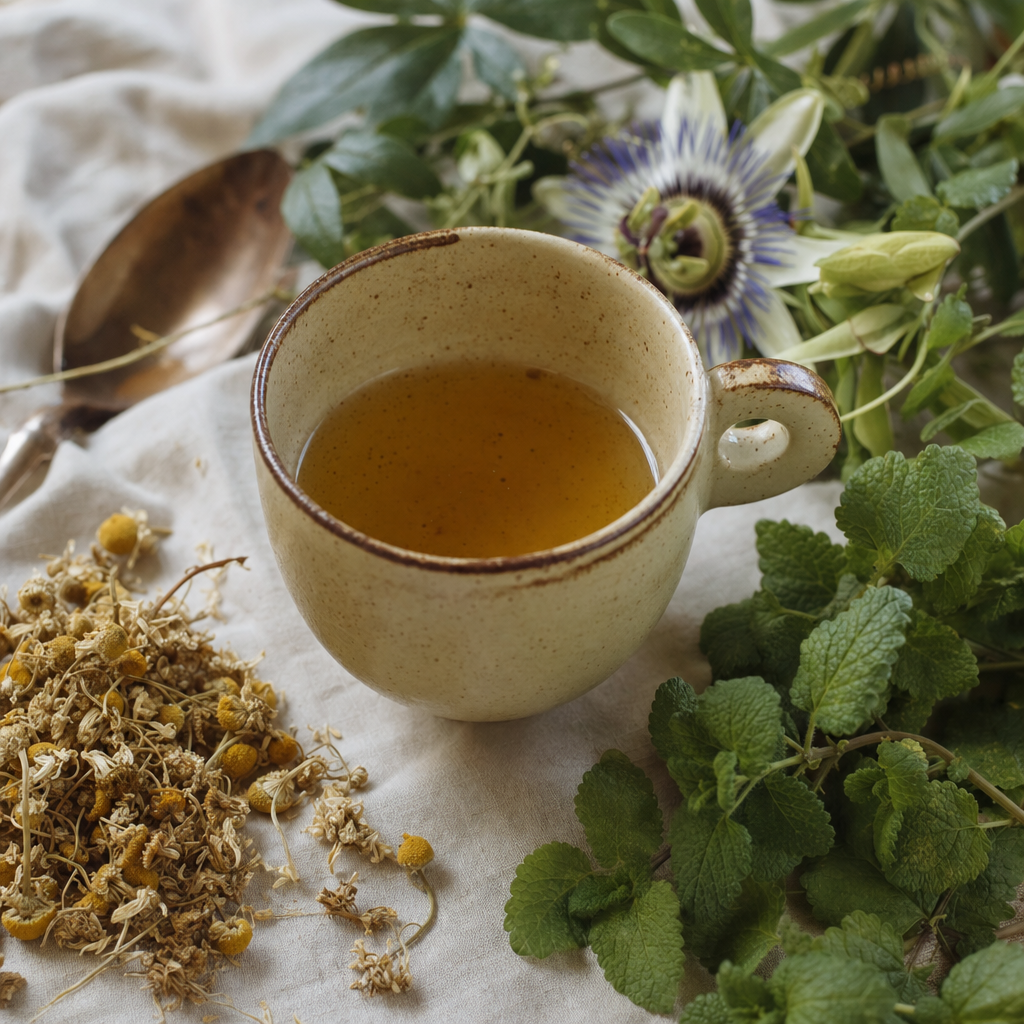
Natural Sleep Protocol Herbs: Clinical Evidence and How to Use Them at Home
Sleep deprivation is one of the most common struggles for mothers—whether you're managing newborn schedules, supporting growing children, or simply trying to reclaim rest for yourself. While there's no substitute for consistent sleep, herbal support can play a meaningful role in helping your nervous system wind down and prepare for restorative rest. This guide explores three well-researched herbs that form the foundation of a natural sleep protocol: chamomile, lemon balm, and passionflower.
Understanding the Sleep-Supporting Herb Trio
These three herbs have been used traditionally across cultures for centuries to support relaxation and sleep quality. What makes them particularly valuable for mothers is that they're gentle enough for family use, yet backed by modern research exploring their mechanisms. Each herb works slightly differently, and when combined thoughtfully, they create a synergistic protocol that addresses multiple aspects of the sleep challenge.
Chamomile: The Gentle Nervine
Chamomile (Matricaria chamomilla) is perhaps the most recognisable sleep herb in Western wellness culture. According to the National Institutes of Health's National Center for Complementary and Integrative Health (NIH NCCIH), preliminary research suggests chamomile may help with generalised anxiety disorder and associated depression—both of which commonly disrupt sleep in mothers managing stress and household demands.
Traditional uses: Chamomile has been used for centuries as a calming tea, particularly in European herbal traditions. It's traditionally employed to ease nervous tension, support digestion before bed, and promote a sense of ease that naturally transitions into sleep.
What the research shows: While studies have not produced sufficient reliable evidence for chamomile for most specific sleep conditions, the preliminary data is encouraging. Chamomile contains compounds including apigenin, a flavonoid that may interact with receptors in the brain associated with relaxation. The evidence for sleep benefit is preliminary rather than definitive, but the safety profile is excellent, making it a low-risk starting point for a sleep protocol.
Lemon Balm: The Mood-Calming Leaf
Lemon balm (Melissa officinalis) is a gentle herb from the mint family that has been studied in randomised controlled trials for anxiety, mood, and sleep quality. According to research reviewed by the NIH, lemon balm has shown no significant liver enzyme changes during treatment, and it carries a Generally Recognised as Safe (GRAS) status as a food ingredient in the United States.
Traditional uses: In European herbalism, lemon balm has long been valued for calming an overactive mind and easing nervous tension. It's traditionally used to support emotional balance and create the mental quiet necessary for sleep onset.
What the research shows: Multiple studies have examined lemon balm's effects on anxiety and sleep, often in combination with other nervine herbs like valerian. Evidence for calming effects is preliminary, but the herb's excellent safety profile and long history of use make it a reliable foundation for a natural sleep protocol. Mothers particularly appreciate lemon balm because it can be used throughout the day to support mood and nervous system resilience, not just at bedtime.
Passionflower: The Sleep-Time Ally
Passionflower (Passiflora edulis and related species) has gained attention in recent years for its potential to support sleep quality. According to NIH NCCIH, a small amount of research suggests oral passionflower might help reduce symptoms of anxiety, including pre-surgical anxiety, though conclusions are not definite. Small studies also suggest it might improve total sleep time in adults with insomnia, though effects on sleep onset and maintenance are mixed.
Traditional uses: Passionflower has been used in traditional medicine systems to ease restlessness and support deeper sleep. It's particularly valued when anxiety or racing thoughts are the primary barrier to rest.
What the research shows: While the evidence base is still developing, passionflower is sold as a dietary supplement in the United States and is generally regarded as safe as a food flavouring. The herb is often combined with other nervines in clinical studies, suggesting it works best as part of a protocol rather than in isolation. Research indicates it may help extend total sleep time, making it particularly useful for mothers who struggle to stay asleep rather than fall asleep.
Building Your Natural Sleep Protocol
A natural sleep protocol combines these three herbs strategically to address different aspects of the sleep challenge. Rather than relying on a single herb, this approach recognises that sleep disruption often has multiple causes—racing thoughts, physical tension, mood dysregulation, and nervous system activation all play a role.
The protocol structure:
The most effective approach uses chamomile and lemon balm as foundational herbs taken consistently (ideally several times daily, not just at bedtime), with passionflower added in the evening as a sleep-specific support. This layered approach allows the calming effects to build throughout the day, creating a nervous system that's already primed for rest by bedtime.
How to Prepare and Use These Herbs
Chamomile Tea (Daily Foundation)
Ingredients:
- 1 to 2 teaspoons dried chamomile flowers
- 8 ounces freshly boiled water
- Optional: honey or lemon to taste
Preparation:
Steep the dried chamomile in hot water for 5 to 10 minutes, then strain. Drink one cup in the morning and one in the afternoon as part of your daily routine. This consistent use helps build the calming effect over time rather than relying on a single bedtime dose.
Timing: Morning and afternoon doses support nervous system resilience throughout the day. Many mothers find that this consistent use creates a noticeable shift in their baseline stress levels within one to two weeks.
Lemon Balm Infusion (Daytime and Evening)
Ingredients:
- 1 tablespoon fresh lemon balm leaves (or 1 teaspoon dried)
- 8 ounces hot water
- Optional: chamomile flowers to combine
Preparation:
Pour hot water over fresh or dried lemon balm and steep for 5 to 10 minutes. Strain and drink. You can combine lemon balm with chamomile for a more complex, synergistic blend.
Timing: Lemon balm can be used throughout the day to support mood and mental clarity, then again in the evening as part of your wind-down routine. The herb's gentle action makes it suitable for multiple daily doses.
Passionflower Evening Tea (Sleep-Specific Support)
Ingredients:
- 1 to 2 teaspoons dried passionflower aerial parts
- 8 ounces hot water
- Optional: chamomile or lemon balm to combine
Preparation:
Steep passionflower in hot water for 10 to 15 minutes (longer steeping extracts more of the active compounds). Strain and drink 30 to 60 minutes before bedtime.
Timing: Passionflower is best used as an evening tea rather than throughout the day. The longer steeping time is important—this herb benefits from extended contact with hot water to release its calming constituents.
Combined Sleep Protocol Tea (Evening Ritual)
Ingredients:
- 1 teaspoon dried chamomile flowers
- 1 teaspoon dried lemon balm
- 1 to 2 teaspoons dried passionflower
- 10 ounces hot water
- Honey to taste
Preparation:
Combine all dried herbs in a teapot or infuser. Pour hot water over the blend and steep for 10 to 15 minutes. Strain and drink slowly as part of an evening wind-down ritual, ideally 30 to 60 minutes before bed.
Ritual value: Beyond the herbal constituents themselves, the act of preparing and sipping a warm tea signals to your nervous system that rest is coming. This ritualistic element is particularly valuable for mothers whose minds are often racing with tomorrow's tasks.
Safety, Contraindications, and When to Seek Professional Support
General Safety Profile
All three herbs—chamomile, lemon balm, and passionflower—carry a low safety concern rating. They have been used safely for centuries and are widely available as dietary supplements. However, individual responses vary, and certain situations warrant caution.
Who Should Avoid or Use With Caution
Chamomile:
- Avoid if you have a known allergy to plants in the Asteraceae family (ragweed, chrysanthemums, daisies)
- Use with caution if pregnant or breastfeeding; consult a healthcare practitioner first
- May interact with blood-thinning medications; discuss with your doctor if you take warfarin or similar drugs
Lemon Balm:
- Generally very safe; no major contraindications for most people
- Use with caution if you have thyroid conditions, as some sources suggest it may affect thyroid function; discuss with your healthcare provider
- Safe during breastfeeding in culinary amounts; consult a practitioner for therapeutic doses
Passionflower:
- Avoid if pregnant or breastfeeding without professional guidance
- May cause drowsiness; do not drive or operate machinery after use
- Use with caution if you take sedative medications or other central nervous system depressants
- May interact with blood-thinning medications
Potential Side Effects
Most mothers using these herbs experience no adverse effects. Occasionally reported mild effects include:
- Drowsiness or dizziness (particularly with passionflower)
- Mild digestive upset
- Allergic reactions (rare, but possible with chamomile in those sensitive to Asteraceae plants)
If you experience any unusual symptoms, discontinue use and consult a healthcare practitioner.
Drug Interactions
These herbs are generally safe with most medications, but certain interactions are possible:
- Chamomile and passionflower may enhance the effects of sedative medications
- Lemon balm may interact with thyroid medications
- All three herbs may have mild blood-thinning properties; discuss with your doctor if you take anticoagulants
When to Consult a Healthcare Practitioner
Seek professional guidance before using this protocol if you:
- Are pregnant or breastfeeding
- Take prescription medications, particularly sedatives, blood thinners, or thyroid medications
- Have a history of allergies to plants in the mint or Asteraceae families
- Have liver or kidney disease
- Are considering these herbs for a child under 12 years old
- Have experienced previous adverse reactions to herbal remedies
Optimising Your Sleep Protocol: Beyond the Tea
While herbal support is valuable, sleep quality depends on multiple factors. For best results, combine this natural sleep protocol with:
Nervous system preparation: Begin your wind-down routine 60 to 90 minutes before bed. Dim lights, reduce screen time, and create a calm environment. The herbal tea becomes part of this ritual, signalling to your body that rest is approaching.
Consistency matters: These herbs work best when used regularly, not just occasionally. Daily use of chamomile and lemon balm builds a foundation of nervous system resilience that makes passionflower more effective when added in the evening.
Dosage and duration: Most mothers notice a shift in sleep quality within one to two weeks of consistent use. If you don't notice improvement after three weeks, consider consulting a qualified herbalist or healthcare practitioner to adjust your protocol.
Seasonal adjustments: Your sleep needs may shift with seasons and life circumstances. A protocol that works beautifully in winter might need adjustment during high-stress periods or seasonal transitions.
The Bigger Picture: Sleep as Self-Care
For mothers, sleep is often treated as a luxury rather than a necessity. Reclaiming rest—even incrementally—is an act of self-care that ripples through every area of your life. A natural sleep protocol using chamomile, lemon balm, and passionflower offers a gentle, accessible entry point into herbal support for rest.
These herbs work best when combined with realistic expectations about sleep, compassion for the seasons of motherhood when sleep is genuinely disrupted by circumstances beyond your control, and a commitment to small, consistent actions that support your nervous system.
The goal isn't perfection or eight uninterrupted hours (though that would be lovely). The goal is to give your body and mind the tools to move toward rest when rest is possible, and to build resilience during the seasons when it isn't.
Always consult a qualified healthcare practitioner before using herbal remedies, particularly if you are pregnant, breastfeeding, or taking prescription medications.