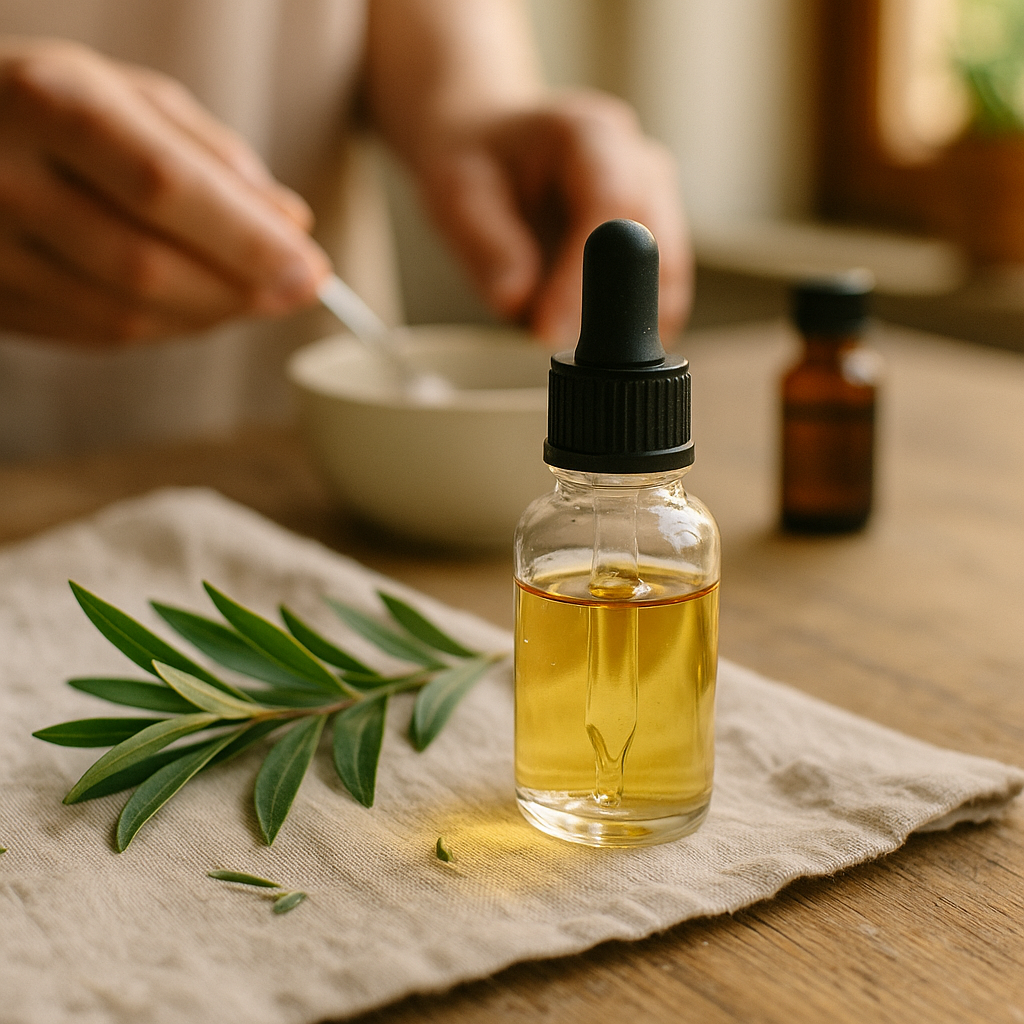
Natural Remedies for Busy Moms: Tea Tree Oil — Traditional Uses, Evidence, and Safe Home Protocols
Tea tree oil has become a staple in many modern medicine cabinets, but its story begins long before wellness trends. For centuries, Indigenous Australian peoples used the leaves of Melaleuca alternifolia to address minor skin concerns and support wound care. Today, busy moms often reach for tea tree oil as a natural option for household and personal care challenges — but understanding what the science actually says, and how to use it safely, is essential.
This guide walks you through the traditional uses of tea tree, what current research tells us, practical preparation methods, and the safety boundaries every parent should know.
What Is Tea Tree Oil?
Tea tree oil is a concentrated essential oil extracted from the leaves of Melaleuca alternifolia, a small tree native to Australia. The oil contains over 100 chemical compounds, with terpineol and cineole being the most abundant. These components give tea tree oil its distinctive sharp, medicinal aroma and its historical reputation in traditional medicine.
It's important to distinguish between tea tree oil (the essential oil) and tea tree extract or dried leaf preparations. The essential oil is highly concentrated and requires careful dilution before use. Many commercial tea tree products — including soaps, creams, and shampoos — contain diluted tea tree oil formulated for topical application.
Traditional Uses and Historical Context
In traditional Aboriginal medicine, tea tree leaves were crushed and applied topically to minor cuts, grazes, and skin irritations. The leaves were also brewed into a weak infusion for general wellness support. Early European settlers in Australia adopted these practices, and tea tree became a valued part of colonial home remedy kits.
By the 1920s, Australian researchers began studying tea tree oil's antimicrobial properties, and the oil gained recognition in professional and home medicine throughout the 20th century. Traditional applications included:
- Minor skin irritations and blemishes
- Scalp care and cleanliness
- Wound support and minor cuts
- General topical hygiene
These traditional uses remain the foundation for how tea tree is used in modern home remedy protocols today.
What Does Current Research Say?
According to the National Institutes of Health's National Center for Complementary and Integrative Health (NIH NCCIH), the evidence for tea tree oil is limited and mixed across most conditions. Here's what the research landscape actually looks like:
Acne: A small amount of research supports the use of diluted tea tree oil for minor acne-prone skin. Some studies suggest that tea tree oil may be comparable to benzoyl peroxide for mild cases, though research remains limited. However, this does not mean tea tree oil "treats" acne — rather, some evidence indicates it may help support skin clarity when used as part of a broader skincare routine.
Athlete's Foot and Fungal Concerns: Evidence is limited and uncertain. While tea tree oil has been studied for athlete's foot, it may not outperform standard treatments, and the research base is too small to draw firm conclusions.
Head Lice: Tea tree has only been studied in combination with other ingredients, making it difficult to isolate its individual contribution. The evidence is insufficient to recommend it as a standalone remedy.
Other Uses: Claims about tea tree oil for nail fungus, dandruff, and other conditions lack sufficient clinical evidence. Traditional use does not equal modern scientific validation.
The NIH NCCIH emphasizes that tea tree oil is not FDA-approved as a drug for any health condition. In the United States, it is sold as a cosmetic ingredient and topical dietary supplement. In Australia, where the Tea Tree Industry Association (TTIA) maintains quality standards, tea tree oil is widely available over-the-counter.
How to Prepare and Use Tea Tree Oil Safely
Tea tree oil is a concentrated essential oil and should never be used undiluted on skin or ingested orally. Here are safe preparation methods for busy moms:
Diluted Topical Spray for Minor Skin Concerns
Ingredients:
- 10 drops of pure tea tree essential oil
- 2 tablespoons of coconut oil or jojoba oil
- 1 small glass bottle with a dropper
Preparation:
Mix the tea tree oil with the carrier oil in the glass bottle. Shake well before each use. Apply a small amount to clean skin using a cotton ball or clean fingertip. Use once or twice daily on minor blemishes or small areas of concern. Do not apply to large areas of the body or broken skin without consulting a healthcare practitioner.
Tea Tree-Infused Scalp Oil
Ingredients:
- 5 drops of pure tea tree essential oil
- 3 tablespoons of coconut oil or almond oil
- 1 small glass jar
Preparation:
Combine the tea tree oil with the carrier oil in a glass jar. Shake well. Apply a small amount to the scalp, massaging gently. Leave on for 15–20 minutes, then shampoo thoroughly. Use once weekly. This preparation is for scalp care only — do not apply to the face or sensitive areas.
Household Cleaning Spray
Ingredients:
- 15 drops of pure tea tree essential oil
- 2 cups of water
- 1 tablespoon of white vinegar
- 1 spray bottle
Preparation:
Add the tea tree oil, vinegar, and water to a spray bottle. Shake well before each use. Use on hard surfaces, doorknobs, and bathroom areas. Do not use on surfaces that will contact food or on items that babies or young children will mouth. Ensure the room is well-ventilated during use.
Safety Notes: What Every Parent Needs to Know
Tea tree oil safety is not negotiable, especially in homes with children and pets.
Never Ingest Tea Tree Oil: This is the most critical safety rule. Ingesting even small amounts of undiluted tea tree oil can cause neurological toxicity, including tremors, confusion, loss of coordination, and in severe cases, coma. There is no safe oral dose for tea tree oil. If accidental ingestion occurs, contact Poison Control immediately.
Always Dilute Before Topical Use: Undiluted tea tree oil can cause skin irritation, dermatitis, and allergic reactions. Never apply neat (undiluted) tea tree oil directly to skin. Always mix with a carrier oil at a ratio of no more than 1–2% tea tree oil to carrier oil (approximately 5–10 drops per tablespoon of carrier oil).
Patch Test First: Before using any tea tree preparation on your skin or your child's skin, perform a patch test. Apply a small amount to the inner arm or behind the ear and wait 24 hours. If redness, itching, or irritation develops, discontinue use.
Keep Away from Children and Pets: Tea tree oil should be stored in a locked cabinet out of reach of children and pets. Accidental ingestion or application to sensitive areas can cause serious harm. Do not use tea tree oil on children's skin without explicit guidance from a pediatrician.
Avoid During Pregnancy and Breastfeeding: Limited safety data exists for tea tree oil during pregnancy and lactation. Speak to your healthcare provider before using tea tree products if you are pregnant or breastfeeding.
Do Not Use on Broken or Severely Irritated Skin: Tea tree oil can irritate damaged skin further. If skin is broken, bleeding, or severely inflamed, consult a healthcare practitioner before use.
Possible Allergic Reactions: Some people experience contact dermatitis or allergic reactions to tea tree oil. Symptoms include redness, swelling, itching, or hives. If these occur, wash the area thoroughly with soap and water and discontinue use. Seek medical attention if the reaction is severe.
Who Should Avoid Tea Tree Oil
- Children under 12: Limited safety data exists for tea tree oil in young children. Consult a pediatrician before use.
- People with sensitive or reactive skin: Those with eczema, psoriasis, or other chronic skin conditions should consult a dermatologist before using tea tree oil.
- Pregnant and breastfeeding women: Safety data is insufficient. Speak to your healthcare provider.
- People taking medications: Tea tree oil may interact with certain medications. Consult your doctor if you take immunosuppressants or other medications.
- Those with a history of allergic reactions to essential oils: If you have had reactions to other essential oils, proceed with caution and patch test first.
A Word on Expectations: What Tea Tree Oil Is Not
Tea tree oil is not a cure-all. It is not a substitute for medical treatment. It is not proven to treat infections, fungal conditions, or serious skin concerns. If you have a skin infection, persistent acne, fungal nail infection, or any condition that worsens or does not improve within a few days of home care, consult a healthcare professional.
Tea tree oil is best understood as a traditional remedy that some evidence suggests may support minor skin clarity and general household hygiene when used safely and appropriately. It is one tool in a busy mom's wellness toolkit — not a replacement for professional medical care.
Practitioner Disclaimer
The information in this guide is educational and is not intended to diagnose, treat, cure, or prevent any disease. Tea tree oil is not FDA-approved as a drug for any health condition. Always consult a qualified healthcare practitioner before using herbal remedies, especially if you are pregnant, breastfeeding, taking medications, or have a pre-existing health condition. If you experience an allergic reaction, skin irritation, or any adverse effect, discontinue use and seek medical attention immediately. In case of accidental ingestion, contact Poison Control or emergency services at once.