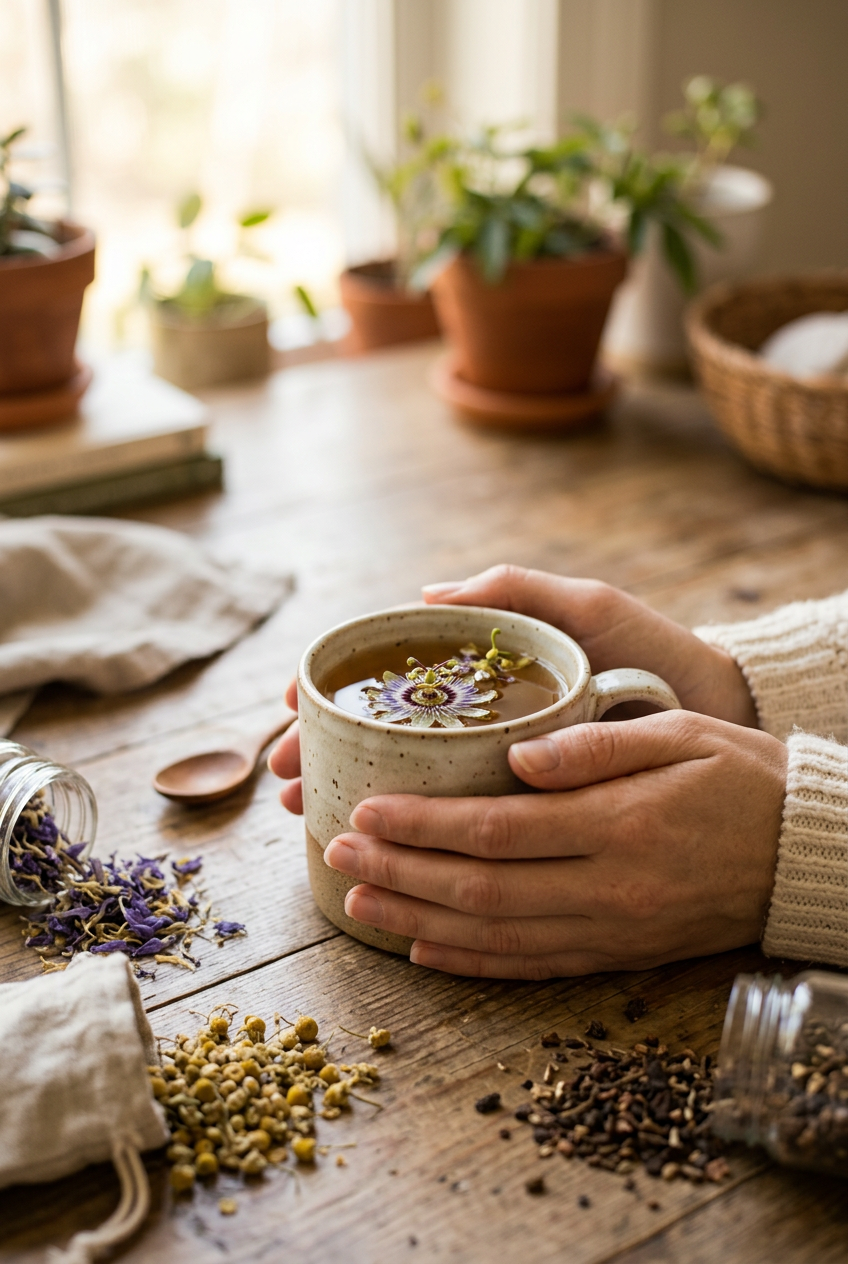
DIY Herbal Sleep Tonic: A Gentle Remedy for Restful Nights
Sleep troubles are one of the most common wellness challenges mothers and women face, and this week, we're sharing a simple, natural remedy you can make at home using just a few herbal ingredients.
This DIY herbal sleep tonic combines time-tested botanicals that have been traditionally used to support relaxation and restful sleep. Unlike synthetic sleep aids, this remedy works gently with your body's natural rhythms—and you control every ingredient that goes into it.
Why These Herbs?
Passionflower has been used in traditional herbal medicine for centuries to ease nervous tension and promote calm.[1] Some studies suggest it may help support sleep quality, particularly when stress or racing thoughts keep you awake.[2]
Chamomile is perhaps the most beloved sleep herb. This gentle flower has traditionally been used to soothe the nervous system and prepare the body for rest.[3]
Lavender adds both flavor and function—it's traditionally used to promote relaxation and may help ease the mental chatter that interferes with sleep.[4]
Lemon balm is a mild, pleasant-tasting herb from the mint family that has been traditionally used to support calm and ease tension.[5]
DIY Herbal Sleep Tonic Recipe
Ingredients:
- 1 tablespoon dried passionflower
- 1 tablespoon dried chamomile flowers
- ½ teaspoon dried culinary lavender
- 1 teaspoon dried lemon balm
- 8 ounces filtered water
- Optional: 1 teaspoon raw honey or maple syrup
- Optional: squeeze of fresh lemon juice
Equipment:
- Small saucepan or kettle
- Strainer or infuser
- Mug
- Measuring spoons
Step-by-Step Instructions:
Step 1: Measure Your Herbs
Gather your dried herbs and measure them according to the recipe above. If you're new to herbal remedies, start with these proportions—they're gentle and well-balanced for most people.
Step 2: Heat Your Water
Pour 8 ounces of filtered water into your saucepan and bring it to a gentle simmer (not a rolling boil). Water that's too hot can damage some of the delicate plant compounds you're trying to extract.
Step 3: Add the Herbs
Once the water is steaming, add all your dried herbs directly to the pot. Stir gently to combine.
Step 4: Steep
Remove from heat and let the herbs steep for 8–10 minutes. This allows the beneficial compounds to infuse into the water. You'll notice the liquid turning a pale golden color.
Step 5: Strain
Pour the tea through a fine strainer into your mug, pressing gently on the herbs to extract any remaining liquid. Discard the spent herbs (they make excellent compost).
Step 6: Sweeten and Serve
If desired, stir in honey or maple syrup while the tea is still warm. Add a squeeze of fresh lemon juice if you like. Drink 30–60 minutes before bedtime.
How to Use This Remedy
Drink this tonic 3–4 times per week, or as needed. Many women find that making it part of an evening wind-down ritual—sipping it while reading or journaling—enhances its calming effects. Consistency matters more than daily use; herbal remedies often work best when used regularly over time.
Storage and Shelf Life
Store your dried herbs in airtight glass jars away from direct sunlight and heat. Properly stored, they'll maintain potency for 6–12 months. Keep a small batch of this blend pre-mixed in a labeled jar for quick preparation on busy evenings.
Important Safety Notes
Contraindications: If you're pregnant, nursing, or taking medications (especially sedatives or blood thinners), consult your healthcare provider before using this remedy.[6] Passionflower and chamomile may interact with certain medications.
Allergies: If you have allergies to plants in the daisy family, avoid chamomile. If you're allergic to mint family plants, skip the lemon balm.
When to Seek Professional Help: If sleep issues persist despite consistent use of herbal remedies, or if they're accompanied by other symptoms, consult a healthcare provider. Sleep problems can sometimes signal underlying health concerns that need professional attention.
Why Make It Yourself?
Creating your own herbal remedies gives you transparency and control. You know exactly what's in your cup—no fillers, no artificial flavors, no mystery ingredients. Plus, there's something grounding about the ritual of making your own medicine. Many women find that the act of brewing becomes part of the healing process itself.
This simple tonic is an excellent entry point into herbal home remedies. Once you're comfortable with this blend, you can experiment with other sleep-supporting herbs like valerian root, skullcap, or ashwagandha—though always research herb interactions and consult a practitioner if you're new to them.
---