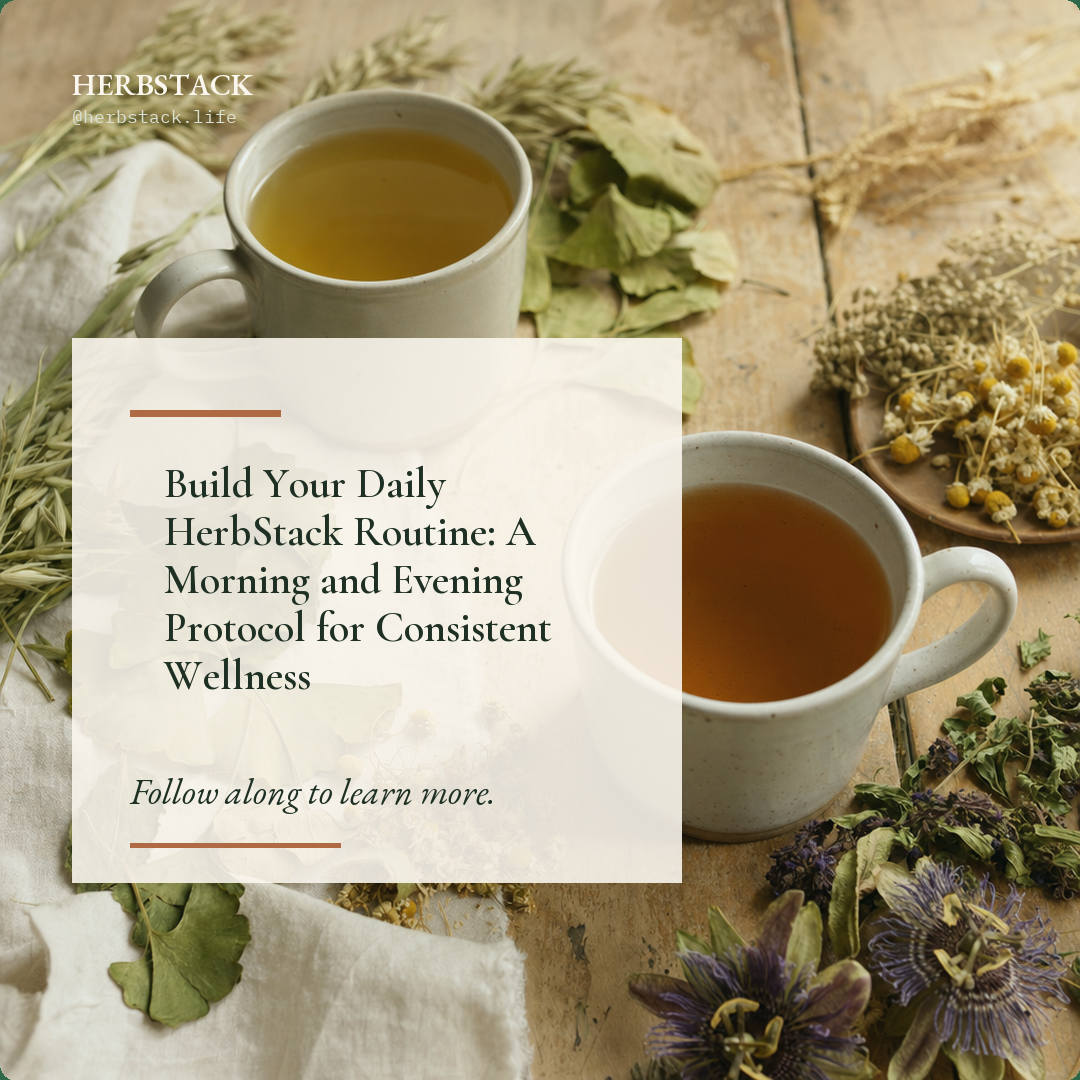
Build Your Daily HerbStack Routine: A Morning and Evening Protocol for Consistent Wellness
Introduction
The foundation of herbal wellness isn't found in occasional remedies or one-off tonics—it's built through consistency. A daily herbal routine, thoughtfully designed and gently maintained, creates the conditions for your body to thrive. Whether you're navigating the demands of motherhood, seeking steadier energy, or simply wanting to support your body's natural rhythms, a morning and evening protocol offers a practical framework for weaving herbs into your everyday life.
This guide walks you through creating two simple, nourishing routines: a grounding morning blend to support clarity and sustained energy, and a calming evening ritual to ease your nervous system as the day winds down. Both are built around accessible, well-researched herbs that work synergistically—meaning they're designed to support each other's effects—to create a gentle but meaningful shift in how you feel.
The beauty of a daily stack is that it meets you where you are. You're not committing to complicated protocols or exotic ingredients. You're building a rhythm that fits into your life, one cup at a time.
---
Morning Protocol: Clarity and Grounded Energy
Ingredients (Makes 1 serving)
- 1 teaspoon dried Oat Straw (Avena sativa) — a nourishing nervine that traditionally supports calm focus and sustained energy without the crash
- ½ teaspoon dried Lemon Balm leaf — traditionally used to support mental clarity and a gentle lift in mood
- ¼ teaspoon dried Holy Basil (Tulsi) leaf — an adaptogenic herb that may help your body manage daily stress and support steady alertness
- 1 pinch of dried Ginkgo Biloba leaf — traditionally associated with cognitive support and mental clarity
- 8 ounces filtered water
- Optional: ½ teaspoon raw honey or maple syrup (add after brewing, when cooled slightly)
- Optional: squeeze of fresh lemon juice for brightness and enhanced mineral absorption
Step-by-Step Method
1. Measure your herbs. In a small bowl, combine the Oat Straw, Lemon Balm, Holy Basil, and Ginkgo. Stir gently to distribute evenly.
2. Heat your water. Bring 8 ounces of filtered water to a gentle simmer (around 160–180°F). If you don't have a thermometer, let boiled water cool for 2–3 minutes before pouring.
3. Steep your blend. Place your herb mixture in a small infuser, tea ball, or directly into a mug lined with cheesecloth or a fine mesh strainer. Pour the hot water over the herbs and let steep for 5–7 minutes. Longer steeping (up to 10 minutes) will create a stronger infusion; shorter steeping will be more delicate.
4. Strain carefully. Pour through your strainer into a clean mug, pressing gently on the herbs to release their essence—but don't squeeze hard, as this can extract unwanted bitterness.
5. Sweeten if desired. Once the tea has cooled slightly (so the honey doesn't lose its enzymes), stir in honey or maple syrup and a squeeze of fresh lemon if you like.
6. Drink mindfully. Sip slowly, ideally 15–20 minutes before breakfast or as part of your morning ritual. This allows the herbs to begin their work before your day accelerates.
---
Evening Protocol: Calm and Restorative Rest
Ingredients (Makes 1 serving)
- 1 teaspoon dried Chamomile flowers — traditionally used to ease tension and support gentle relaxation
- ½ teaspoon dried Passionflower leaf — traditionally associated with calming an overactive mind and easing restlessness
- ½ teaspoon dried Lemon Balm leaf — supports a sense of ease and gentle mood balance
- ¼ teaspoon dried Skullcap leaf — traditionally used to soothe nervous tension and support restful sleep
- 1 small piece of dried Nettle Leaf (about ½ teaspoon) — deeply nourishing and mineral-rich, supports overall calm
- 8 ounces filtered water
- Optional: ½ teaspoon raw honey (add after brewing)
- Optional: 1 small cinnamon stick or pinch of ground cinnamon for warmth and gentle digestive support
Step-by-Step Method
1. Prepare your evening space. Dim the lights, put your phone on silent, and create a small ritual around this moment. This signals to your nervous system that rest is coming.
2. Measure and combine herbs. In a small bowl, mix the Chamomile, Passionflower, Lemon Balm, Skullcap, and Nettle Leaf. Stir to blend evenly.
3. Heat water gently. Bring 8 ounces of filtered water to a gentle simmer. If using a cinnamon stick, you can add it to the water now to infuse as it heats.
4. Steep your blend. Place your herb mixture in an infuser or tea ball and pour the hot water over it. Let steep for 7–10 minutes. Evening blends often benefit from a longer steep, which allows the calming compounds to fully extract.
5. Strain and serve. Pour through a fine strainer into your favourite mug. If using cinnamon, remove the stick or strain out any powder.
6. Sweeten gently. Stir in honey if desired, and let the tea cool to a comfortable drinking temperature.
7. Sip as a closing ritual. Drink this tea 30–60 minutes before bed, in a quiet space. Use this time to journal, read, or simply sit with your thoughts as your nervous system begins to downshift.
---
How to Use This Protocol
Consistency is the key. These routines work best when practised daily for at least 2–4 weeks. Your body responds to rhythm; the more regularly you offer it these supportive herbs, the more noticeably you may feel their effects.
Morning routine: Drink your clarity blend upon waking or shortly after, ideally before breakfast. This sets a calm, focused tone for your day and may help sustain your energy without the jitteriness of caffeine alone.
Evening routine: Enjoy your calming blend 30–60 minutes before your intended bedtime. This gives the herbs time to begin their work on your nervous system before you're trying to fall asleep. Pair this with other wind-down practices: turning off screens, gentle stretching, or reading.
Flexibility matters. If you miss a day, simply resume the next day without guilt. If one herb doesn't feel right for your body, you can swap it for another from the HerbStack ecosystem—for example, replacing Skullcap with Passionflower, or Oat Straw with Nettle Leaf. The goal is a routine that feels sustainable and nourishing for you.
Seasonal adjustments. In warmer months, you might enjoy these as iced infusions—simply brew as directed, let cool, and pour over ice. In colder months, warming spices like cinnamon or ginger can be added to the evening blend for extra comfort.
---
Expected Benefits
When practised consistently, this daily protocol may support:
- Clearer thinking and sustained focus — the morning blend's combination of Oat Straw, Lemon Balm, and Ginkgo traditionally work together to support mental clarity without overstimulation
- Steadier energy throughout the day — Holy Basil and Oat Straw are traditionally used to help your body adapt to stress and maintain balanced energy
- Easier transition into evening — the calming herbs in your evening blend may help ease the nervous system as your day winds down
- More restful sleep — Chamomile, Passionflower, and Skullcap are traditionally associated with supporting deeper relaxation and sleep quality
- Overall sense of groundedness — Nettle Leaf's mineral richness and the adaptogenic support of Holy Basil may contribute to a feeling of being more resourced and resilient
- Improved digestion and gut comfort — the warming, gentle nature of these blends may support digestive ease, particularly the evening protocol with its calming effect on the nervous system
These benefits typically become more noticeable after 2–3 weeks of consistent use. Some people notice shifts within days; others take longer. Patience and consistency are your allies.
---
Safety Notes and Contraindications
General safety: These herbs are gentle and well-tolerated by most people when used as directed. However, herbal medicine is not one-size-fits-all, and individual responses vary.
Pregnancy and breastfeeding: If you are pregnant or breastfeeding, consult a qualified healthcare practitioner before using this protocol. Some of these herbs, while traditionally used, require professional guidance during these sensitive periods.
Medication interactions: Ginkgo Biloba may interact with blood-thinning medications (such as warfarin or aspirin). Passionflower and Skullcap may potentiate the effects of sedative medications. If you take any prescription medications, particularly for blood clotting, anxiety, or sleep, speak with your healthcare provider before beginning this protocol.
Allergies and sensitivities: If you have known allergies to plants in the Asteraceae family (which includes Chamomile and related plants), avoid the morning and evening protocols as written. Lemon Balm is in the mint family; if you have mint sensitivities, omit it.
Liver or kidney concerns: If you have a history of liver or kidney disease, consult a healthcare practitioner before using this protocol regularly, as the body processes herbal compounds through these organs.
Sleep medication: If you take prescription sleep aids, do not combine them with the evening protocol without professional guidance. The calming herbs may enhance sedative effects.
Caffeine sensitivity: The morning protocol is designed as a gentle alternative or complement to caffeine, not a replacement for it if you're accustomed to high doses. If you drink coffee, you can enjoy both—simply space them 30 minutes apart to avoid overstimulation.
Discontinuation: If you experience any unusual symptoms—headaches, digestive upset, or mood changes—discontinue use and consult a healthcare practitioner. Herbal protocols should support your wellbeing, not create discomfort.
---
Practitioner Disclaimer
This guide is for educational purposes and is not intended to diagnose, treat, cure, or prevent any disease. The information provided is based on traditional herbal use and emerging research, but it is not a substitute for professional medical advice.
Always consult a qualified healthcare practitioner—such as a registered herbalist, naturopath, or your primary care physician—before beginning any new herbal protocol, particularly if you have existing health conditions, take medications, are pregnant or breastfeeding, or have a history of allergies or sensitivities.
Individual responses to herbs vary widely. What supports one person's wellness may not be appropriate for another. A qualified practitioner can assess your unique health picture and recommend a protocol tailored to your specific needs.
This protocol is designed for generally healthy adults seeking to support their everyday wellness through consistent herbal practice. It is not a treatment protocol for acute illness or chronic disease.